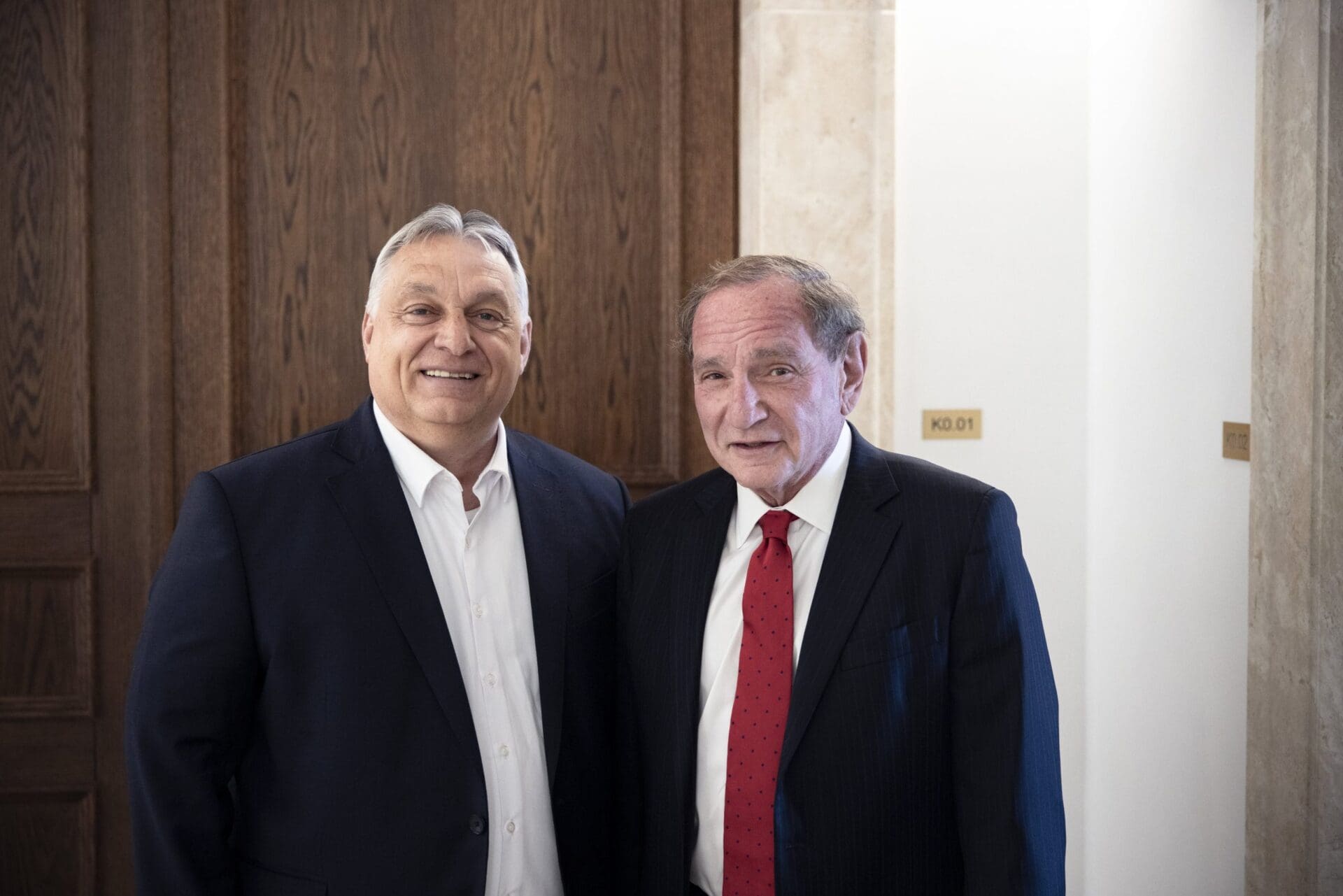
George Friedman
Hungarian-American political scientistWikipedia
13
MENTIONS
9
EPISODES
6
PODCASTS
Search complete. 13 mentions across 9 episodes found for "George Friedman".
Sep 29, 2026

Christian SmithHOST
Hello, welcome to this podcast from Geopolitical Futures.
Christian SmithHOST
I'm Christian Smith, and I'm joined by Geopolitical Futures chairman and founder, George Friedman.
Christian SmithHOST
Now, last week, we promised you an assessment on the podcast of the US-China summit, and we will be bringing you that in just a bit.
Christian SmithHOST
To start off with, though, first of all, remember you can go to geopoliticalfutures.com to find out all our analysis and forecasting on the world of geopolitics.
Christian SmithHOST
I'm Christian Smith.
Christian SmithHOST
I'm joined, as always, by Geopolitical Futures chairman and founder, George Friedman.
Christian SmithHOST
Now, early next week, we should say, we'll be bringing you an analysis of what is very potentially a hugely consequential summit between Presidents Xi and President Trump of China and America, respectively.
Christian SmithHOST
But on this episode, we wanted to run through a number of issues and tee up that summit as well, because it has, as I said, been a bit busier than normal this week in terms of geopolitics.

Danuta IslerHOST
Welcome to the show.
Danuta IslerHOST
[upbeat music] In this edition, American geopolitical forecaster George Friedman visited Poland in mid-September 2026 for an event hosted by the Polish president and the Sobieski Institute, discussing Poland's rise as a regional power.
Danuta IslerHOST
Speaking afterwards, Friedman stated that Poland has firmly established itself as the most crucial regional power as well as the leader in this part of Europe.
Danuta IslerHOST
He also remarked on European security dynamics, noting that Russia's capacity to destroy Ukraine has diminished, and that Russia no longer poses the same existential threat to a stronger Europe, expressing a view that European fear of Russia is overblown given current capabilities.
Danuta IslerHOST
His remarks reaffirm predictions from his 2009 book, The Next 100 Years, where he long ago forecasted that Poland would organically grow into a dominant continental power in Europe due to its strategic positioning, economic growth, and demographic resilience.
Danuta IslerHOST
George Friedman, welcome back to Poland after 10 years you said?
George FriedmanGUEST
I think it was 10 years.
Danuta IslerHOST
So you have come now to, I want to say, a totally different reality.

Richard PalmerHOST
But the article says, well, this is reminiscent of what historians call the German question.
Richard PalmerHOST
George Friedman, he had a lot to say about the German question.
Richard PalmerHOST
Mr. Ron Fraser used to write a lot about the German question.
Richard PalmerHOST
And back, that was after Germany reunified and the press had a lot to say about the German question.
Christian SmithHOST
Welcome to this podcast from Geopolitical Futures.
Christian SmithHOST
I'm joined, of course, by Geopolitical Futures chairman and founder George Friedman as we dive into what is going on with, uh, the far right, right-wing populists, the radical right, whatever you wanna call it, in Europe at the moment.
Christian SmithHOST
George, before we come to you though, just a note to say thank you to all of you out there for subscribing.
Christian SmithHOST
We just hit 80,000 subscribers on YouTube.

speaker_5UNKNOWN
that
Scott HortonHOST
so yep that's no question about that as George Friedman from Stratford put it it's the primordial fear of the Anglo-American establishment is German manufacturing power with Russian natural resources and an alliance together that essentially precludes every power they would combine they rule the world supposedly you know Which is not really true because what? Oh, then they're going to march on Beijing and then they're going to march on Paris.
Scott HortonHOST
No, but whatever.
Scott HortonHOST
Yeah, but

speaker_5UNKNOWN
that
Scott HortonHOST
so yep that's no question about that as George Friedman from Stratford put it it's the primordial fear of the Anglo-American establishment is German manufacturing power with Russian natural resources and an alliance together that essentially precludes every power they would combine they rule the world supposedly you know Which is not really true because what? Oh, then they're going to march on Beijing and then they're going to march on Paris.
Scott HortonHOST
No, but whatever.
Scott HortonHOST
Yeah, but
Christian SmithHOST
This is a podcast from Geopolitical Futures.
Christian SmithHOST
And to look at the geopolitics of all these developments, I'm joined by Geopolitical Futures chairman and founder George Friedman.
Christian SmithHOST
George, let's start with the top, really, with that news from last week of John Ratcliffe, the CIA director, visiting Moscow very publicly.
Christian SmithHOST
Why did he do it, do you think?

Andrew MillerCORRESPONDENT
It mainly serves as a reserve in cases that like if the Strait of Hormuz shut down and oil spiked over $100 a barrel, we've got another source, we've got a backup source that now makes sense to use.
Andrew MillerCORRESPONDENT
But also just like the geopolitical angle is that like Cuba, George Friedman at Geopolitical Futures does a good job of explaining this, that like The Battle of New Orleans and the War of 1812 is not something that gets much attention, even here in American schools where we learn quite a bit about the War of 1812.
Andrew MillerCORRESPONDENT
It's kind of like, okay, we were fighting Britain and like Andrew Jackson did something at New Orleans on the sidelines of this battle, saying that it was actually probably the most important battle of that war.
Andrew MillerCORRESPONDENT
Um, the fact that we had control over the mouth to the Mississippi River, because much of America's power is based on you've got the world's largest contiguous piece of arable land connected by the world's longest navigable river system.
Andrew MillerCORRESPONDENT
We may not need Cuba's 65 million barrels, but Cuba sure does.
Andrew MillerCORRESPONDENT
And so making sure that we control that oil, even if it is expensive to extract, gives us a lever over Cuba, which is the real... existential threat to the US.
Andrew MillerCORRESPONDENT
George Friedman called that back in January when Trump first arrested Maduro.
Andrew MillerCORRESPONDENT
And he said, actually, he's like, the arrest of Maduro is more about Cuba than it is about Venezuela.