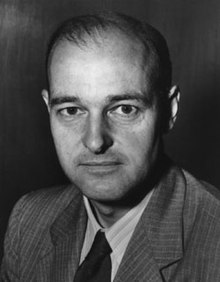
George Frost Kennan
Historian and former Counselor of the United States Department of StateWikipedia
107
MENTIONS
42
EPISODES
26
PODCASTS
Search complete. 107 mentions across 42 episodes found for "George Frost Kennan".
Sep 12, 2026

Pascal LottazHOST
By the way, just a side note, you were right.
Pascal LottazHOST
It was George Kennan, not John McCain, of course.
Pascal LottazHOST
George Kennan, yes.
Pascal LottazHOST
Yeah, yeah, the great diplomats.
Pascal LottazHOST
So now we got it square.

Dave CollumGUEST
Catastrophic.
Dave CollumGUEST
And as some very prominent diplomats like George Kennan and stuff said, this is stupid.
Dave CollumGUEST
We should not be pressing his buttons this way.
Dave CollumGUEST
It would be the equivalent if Russia started arming the Mexicans.

Ashe in AmericaHOST
For example, in February of 1918, Arthur Bullard was in Russia as head of the Russian branch of the Committee on Public Information, which was the war propaganda arm of the U.S. government.
Ashe in AmericaHOST
Bullard was aptly described by historian George Kennan as a, quote, liberal socialist, freelance writer and private eye of Colonel House.
Ashe in AmericaHOST
In his official capacity, he had many occasions to consult with Raymond Robbins, and in a report describing one of these conversations, Bullard wrote, quote, He, Robbins, had one or two reservations, in particular that recognition of the Bolsheviks was long overdue, that it should have been effective immediately, and that had the U.S. so recognized the Bolsheviks, quote, I believe that we would now be in control of the surplus resources of Russia and have control officers at all points on the frontier.
CannConHOST
wolves behind why do you

Walter IsaacsonGUEST
And so at the end of-
Joe ScarboroughHOST
Let's just pretend we had wise men in Washington, DC right now, that we had people like George Marshall, that we had people, you know, like Averell Harriman, that we had people like, you know, uh, Geo- George Kennan, that we had wise men, uh, Zbigniew Brzezinski, Henry Kissinger.
Joe ScarboroughHOST
Let's pretend we had wise men in Washington.
Joe ScarboroughHOST
What would they do? Looking back at history, what would a commission, what, what would an approach to this possible, you know, humanity-ending technology, what would the best approach be?

Thomas777GUEST
But that's that's why even even thinkers far more kind of orthodox in their thinking than Yaki.
Thomas777GUEST
Understood this George Kennan, who I have a whole lot of respect for, as I think people know.
Thomas777GUEST
He made that point again and again, and he was criticized for it roundly by, you know, what was then the equivalent of deep state types.
Thomas777GUEST
And, you know, Zionist types who just hated the Soviet Union for their own kind of ethno-sectarian reasons.

ThomasGUEST
But that's that's why even even thinkers far more kind of orthodox in their thinking than Yaki.
ThomasGUEST
Understood this George Kennan, who I have a whole lot of respect for, as I think people know.
ThomasGUEST
He made that point again and again, and he was criticized for it roundly by, you know, what was then the equivalent of deep state types.
ThomasGUEST
And, you know, Zionist types just hated the Soviet Union for their own kind of ethno-sectarian reasons.

Emma AshfordGUEST
So I mean, there is an active debate in the US foreign policy community about US foreign policy grand strategy in the early 1990s.
Emma AshfordGUEST
It's very comparable to the debates we had in the '70s around Nixon or the, the f- '40s and '50s, um, at the start of the Cold War, right? It's people in Washington debating, you know, well, the, the existing framework that we use to understand the world, which is containment of the Soviet Union, you know, that's, that's gone, right? The Soviet Union's gone, so what is our framework for the world? I remember reading a quote, somebody once jokingly referring to this in the early '90s as the Kennan sweepstakes.
Emma AshfordGUEST
Who's gonna be the next George Kennan with our new grand strategy for the post-Cold War period? And you know, you start to see this reflected even in official documents.
Emma AshfordGUEST
The Clinton administration, one of the national security strategies was a strategy of enlargement and engagement, right? That was the- that was their grand strategy.
Emma AshfordGUEST
And so the, the notion that starts to take hold pretty quickly is that the US should try and effectively expand the sphere of sort of liberalism globally, whether that's democracy domestically or human rights, or whether that is sort of open free trading, things like opening the WTO to China.

David RothkopfGUEST
That has to be factored in.
David RothkopfGUEST
And most of all, I wanna see a Democrat who comes in and says what George Kennan, the famous foreign policy specialist, said in his Long Telegram in 1947, and that is that while we face threats around the world, the place we must begin if we wanna be secure is with the wellsprings of our own strength at home.
David RothkopfGUEST
We have to make sure we have a good economy.
David RothkopfGUEST
We may have to make sure we do not have a divided society.

David RothkopfGUEST
That has to be factored in.
David RothkopfGUEST
And most of all, I want to see a Democrat who comes in and says, What George Kennan, the famous foreign policy specialist, said in his long telegram in 1947, and that is that while we face threats around the world, the place we must begin if we want to be secure is with the wellsprings of our own strength at home.
David RothkopfGUEST
We have to make sure we have a good economy.
David RothkopfGUEST
We may have to make sure we do not have a divided society.

Glenn DiesenHOST
So recognizing the dangers this had.
Glenn DiesenHOST
And of course, he was joined by many others criticizing this senior officials like George Kennan or yourself.
Glenn DiesenHOST
But according to William Perry, whenever he asked other people in the Clinton administration why they still went along with this, they didn't dispute that this would be seen as a threat by Russia.
Glenn DiesenHOST
Rather, the argument was that Russia was weak.
32 more episodes mention George Frost Kennan.
Create an account to see the whole feed, search across every transcript, and follow the entities you care about.