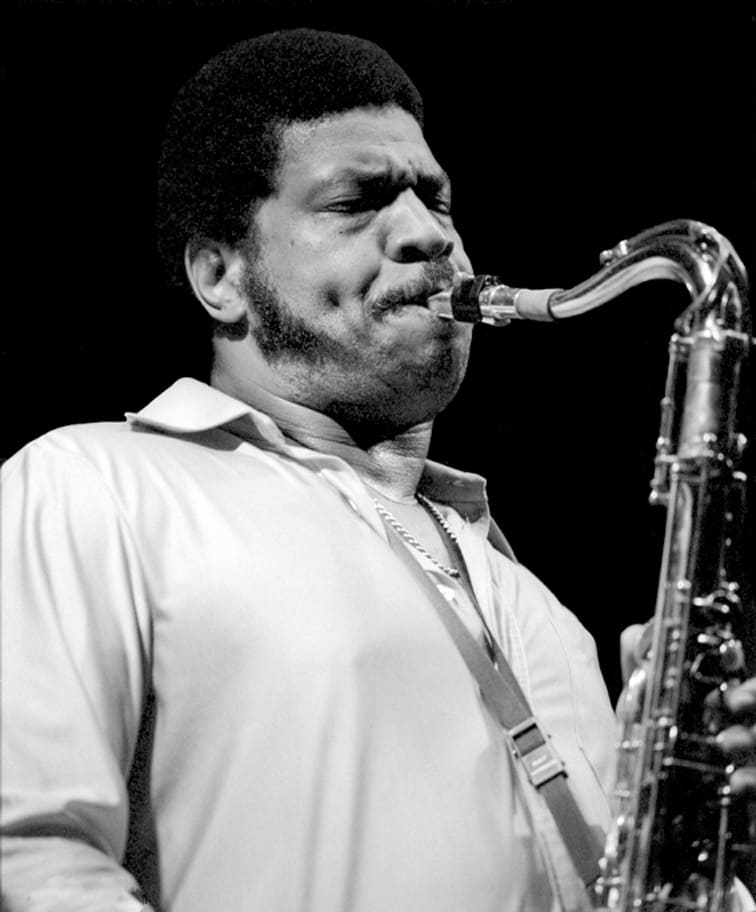
George Coleman
American saxophonistWikipedia
8
MENTIONS
6
EPISODES
6
PODCASTS
Search complete. 8 mentions across 6 episodes found for "George Coleman".
Oct 14, 2026

Ari LehmanGUEST
I would just go downstairs on University Place and I could see Hank Jones and Tommy Flanagan and Soros and McCoy Tyner.
Ari LehmanGUEST
Oh my God, George Coleman played the saxophone and oh my god it was incredible and then at that time too you know punk was happening and metal was happening and i met oh just some amazing players and so so like i don't know uh the lead singer for reagan youth which was a great punk band and he would bring me over to cbgb's to see the bad brains and dead kennedys and oh i even saw this guy With his band, and they were called White Zombie at the time.
Ari LehmanGUEST
Yeah, yeah.
Ari LehmanGUEST
The great Rob Zombie.

Jim SpakeCORRESPONDENT
He got the name Hank from Memphis band leader Al Jackson Senior because he looked and sounded like a local alto man named Hank O'Day.
Jim SpakeCORRESPONDENT
But Bennie Ross Crawford was born here in Memphis in 1934 and was hanging out with fellow Manassas High schoolmates George Coleman, Charles Lloyd, and Phines and Calvin Newburn, and playing with the bands of B.B. King, Percy Mayfield, and Ike Turner before he was 20.
Jim SpakeCORRESPONDENT
But when he was attending Tennessee State University in the late '50s, he was heard by a man who would turn things around forever for him, Ray Charles.
Jim SpakeCORRESPONDENT
Hank joined Ray's band on baritone sax, and here's his first composition for Ray's band from the Newport Jazz Festival in 1958, Sherry.

Ken LasterHOST
It's called Four Generations of Miles, a live tribute to Miles Davis, featuring musicians from different eras of Miles Davis's music.
Ken LasterHOST
Jimmy Cobb on drums, George Coleman on tenor saxophone, Mike Stern on electric guitar, and Ron Carter on bass.
Ken LasterHOST
That was recorded in May of 2002.
Ken LasterHOST
And before that, we heard Chick Corea in a trio setting from the album The Song of Singing.

Jay SweetHOST
Yeah, there's no people, yeah.
Abraham BurtonGUEST
I, I had never seen George Coleman before.
Jay SweetHOST
Yeah, yeah.
Abraham BurtonGUEST
You understand? [laughs]
Jay SweetHOST
Oh, yeah.
Abraham BurtonGUEST
I was like, I was like, "Wait a minute, that was George Coleman?"
Jay SweetHOST
[laughs]
Abraham BurtonGUEST
Oh my God.

Peter MartinHOST
Yeah.
Peter MartinHOST
And it's almost like Justin's more like the George Coleman to Miles-
Adam ManessHOST
Yeah, yeah
Peter MartinHOST
... as opposed to the Wayne Shorter or the John Coltrane.
Adam ManessHOST
Yeah.
Peter MartinHOST
But George Coleman was great.
Adam ManessHOST
Yeah.
Peter MartinHOST
I mean, that's, that's a good place to be.

speaker_2HOST
This is one of those tricky songs to cover, because it has such a strong identity and frankly runs along that thin line between ecstatic and cheesy that only Stevie Wonder can ride safely.
speaker_2HOST
And there are tons of jazz renditions, even by jazz giants like Sony Rawlings, Woody Herman or George Coleman, that, at least to my ears, fall rather flat.
speaker_2HOST
But there are also great ones, from the likes of Stéphane Grappelli, Joe Alterman, Aaron Goldberg, Tom Misch, Rhoda Scott or Jackie Tarrison, just to name a few.
speaker_2HOST
They stay truthful to the original without trying to stick too closely to it.