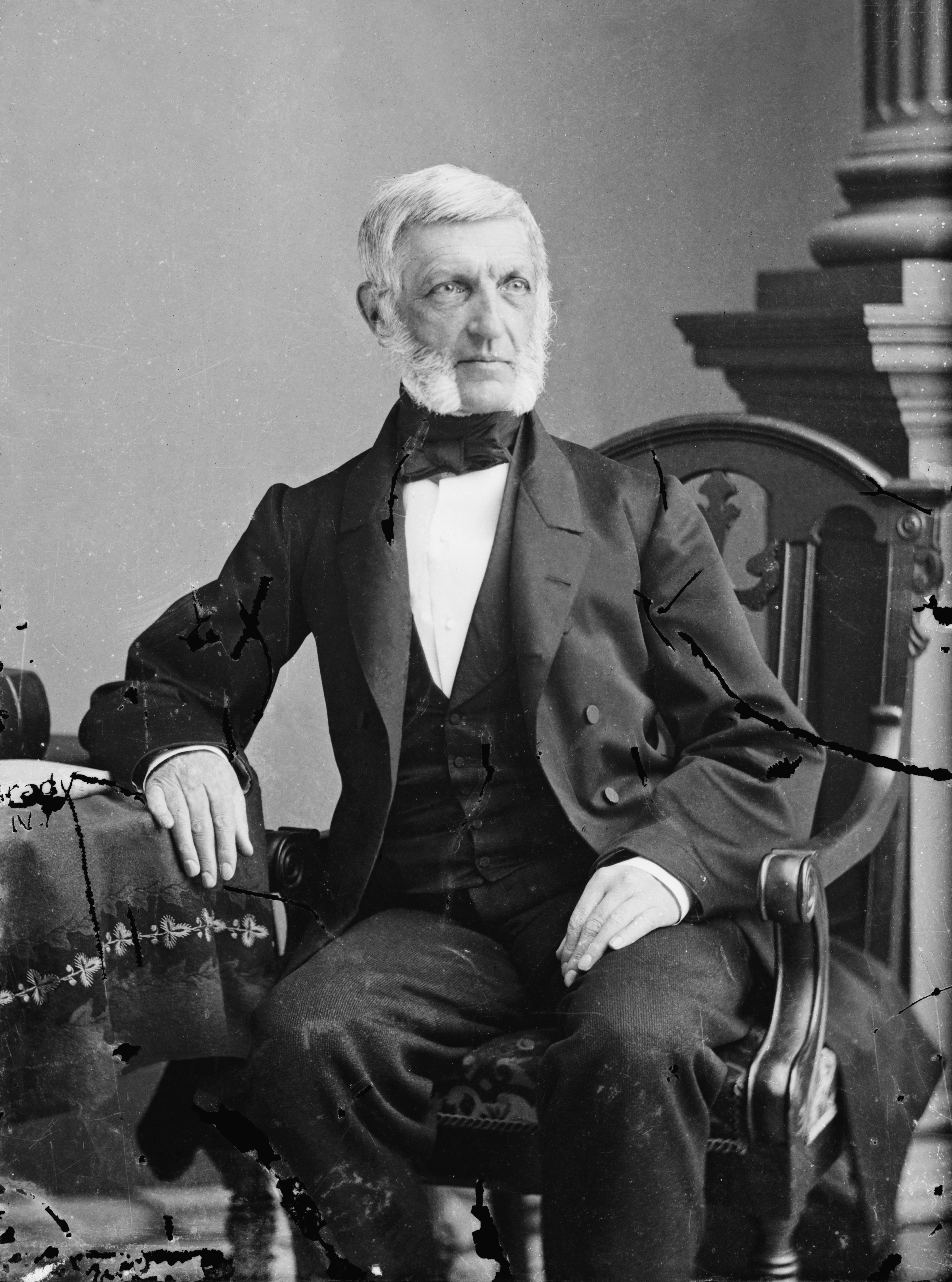
George Bancroft
Historian and former United States Secretary of the NavyWikipedia
12
MENTIONS
12
EPISODES
12
PODCASTS
Search complete. 12 mentions across 12 episodes found for "George Bancroft".
Oct 3, 2026

speaker_3NARRATOR
The Confederate Army, Meade's critics said, had been permitted to slip from the Union grasp.
speaker_3NARRATOR
part v lincoln and gettysburg establishment of a burial ground for the residents of gettysburg the aftermath of battle was almost as trying as the three days of struggle that had swirled about them the town's twenty four hundred inhabitants and the nearby country folk bore a heavy share of the burden of caring for the twenty one thousand wounded and dying of both sides who were left behind when the armies moved on spacious rooms in churches and schools and hundreds of homes were turned over to the care of the wounded and kindly folk from neighboring towns came to help those of gettysburg in ministering to the needs of the maimed and shattered men adequate attention to the wounded was an immediate necessity but fully as urgent was the need of caring for the dead nearly six thousand had been killed in action and hundreds died each day from mortal wounds in the earlier stages of the battle soldiers of both armies performed the tasks of burying their fallen comrades but the struggle had reached such large proportions and the scenes of battle had so shifted that fallen men had come within enemy lines because of the emergencies of battle therefore hundreds of bodies had been left unburied or only partially covered it was evident that the limited aid which could be offered by local authorities must be supported by a well-organized plan for disinterment of the dead from the temporary burial grounds on the field and reburial in a permanent place at gettysburg or in home cemeteries a few days after the battle the governor of the commonwealth hon andrew curtin visited the battlefield to offer assistance in caring for the wounded when official duties required his return to harrisburg he appointed attorney david wills of gettysburg to act as his special agent at the time of his visit the governor was especially distressed by the condition of the dead in response to the governor's desire that the remains be brought together in a place set aside for the purpose mr wills selected land on the northern slope of cemetery hill and suggested that the state of pennsylvania purchase the ground at once in order that interments could begin without delay he proposed that contributions for the purpose of laying out and landscaping the grounds be asked from legislatures of the states whose soldiers had taken part in the battle within six weeks mr wills had purchased seventeen acres of ground on cemetery hill and engaged william saunders an eminent landscape gardener to lay out the grounds in state lots apportioned in size to the number of graves for the fallen of each state each of the union states represented in the battle made contributions for planning and landscaping the reinterment of three thousand five hundred and twelve bodies in the cemetery was accomplished only after many months great care had been taken to identify the bodies on the field and at the time of reinterment remains were readily identified by marked boards which had been placed in the field grave or by items found on the bodies even so the names of one thousand six hundred and sixty four remained unknown nine hundred and seventy nine of whom were without identification either by name or by state within a year appropriations from the states made possible the enclosure of the cemetery with a massive stone wall and an iron fence on the baltimore street front imposing gateways of iron headstones for the graves and a keeper's lodge since the original burials the total of civil war interments has reached three thousand seven hundred and six including those of later wars the total number now is four thousand three hundred and ninety-nine the removal of confederate dead from the field burial plots was not undertaken until seven years after the battle during the years eighteen seventy to seventy three upon the initiative of the ladies memorial association of richmond raleigh savannah and charleston three thousand three hundred and twenty bodies were disinterred and sent to cemeteries in those cities for reburial two thousand nine hundred and thirty-five being interred in hollywood cemetery richmond 73 bodies were reburied in home cemeteries the commonwealth of pennsylvania incorporated the cemetery in january eighteen sixty four the cemetery having been completed and the care of it by commissioners from so many states being burdensome and expensive the board of commissioners authorized by act of the general assembly of pennsylvania in eighteen sixty eight recommended the transfer of the cemetery to the federal government the secretary of war accepted title to the cemetery for the united states government on may first eighteen seventy two dedication of the cemetery having agreed upon a plan for the cemetery the commissioners believed it advisable to consecrate the grounds with appropriate ceremonies mr wills representing the governor of pennsylvania was selected to make proper arrangements for the event with the approval of the governors of the several states he wrote to hon edward everett of massachusetts inviting him to deliver the oration on the occasion and suggested october twenty three eighteen sixty three as the date for the ceremony mr everett stated in reply that the invitation was a great compliment but that because of the time necessary for the preparation of the oration he could not accept a date earlier than november nineteenth this was the date agreed upon edward everett was the outstanding orator of his day he had been a prominent boston minister and later a university professor a cultured scholar he had delivered orations on many notable occasions in a distinguished career he became successively president of harvard governor of massachusetts united states senator minister to england and secretary of state the gettysburg cemetery at the time of the dedication was not under the authority of the federal government it had not occurred to those in charge therefore that the president of the united states might desire to attend the ceremony when formally printed invitations were sent to a rather extended list of national figures including the president the acceptance from mr lincoln came as a surprise mr wills was thereupon instructed to request the president to take part in the program and on november two a personal invitation was addressed to him throngs filled the town on the evening of november the special train from washington bearing the president arrived in gettysburg at dusk mr lincoln was escorted to the spacious home of mr wills on center square some time later in the evening the president was serenaded and at a late hour he retired at ten o'clock on the following morning the appointed time for the procession to begin mr lincoln was ready the various units of the long procession marshalled by ward layman began moving on baltimore street the president riding horseback the elaborate order of march also included cabinet officials judges of the supreme court high military officers governors commissioners the vice-president the speaker of the house of representatives members of congress and many local groups difficulty in getting the procession under way and the tardy return of mr everett from his drive over the battle ground accounted for a delay of an hour in the proceedings at high noon with hundreds scurrying about for points of vantage the ceremonies were begun with the playing of a dirge by one of the bands as the audience stood uncovered a prayer was offered by the rev thomas h stockton chaplain of the house of representatives old hundred was played by the marine band then mr everett arose and stood a moment in silence regarding the battlefield and the distant beauty of the south mountain range for nearly two hours he reviewed the funeral customs of athens spoke of the purposes of war presented a detailed account of the three days battle offered tribute to those who died on the battlefield and reminded his audience of the bonds which are common to all americans upon the conclusion of his address a hymn was sung then the president arose and spoke his immortal words fourscore and seven years ago our fathers brought forth on this continent a new nation conceived in liberty and dedicated to the proposition that all men are created equal now we are engaged in a great civil war testing whether that nation or any nation so conceived and so dedicated can long endure we are met on a great battlefield of that war we have come to dedicate a portion of that field as a final resting-place for those who here gave their lives that that nation might live it is altogether fitting and proper that we should do this but in a larger sense we cannot dedicate we cannot consecrate we cannot hallow this ground the brave men living and dead who struggled here have consecrated it far above our poor power to add or detract the world will little note nor long remember what we say here but it can never forget what they did here it is for us the living rather to be dedicated here to the unfinished work which they who fought here have thus far so nobly advanced It is rather for us to be here dedicated to the great task remaining before us, that from these honored dead we take increased devotion to that cause for which they gave the last full measure of devotion, that we here highly resolve that these dead shall not have died in vain, that this nation under God shall have a new birth of freedom, and that government of the people, by the people, for the people shall not perish from the earth a hymn was then sung and rev h l bower pronounced the benediction genesis of the gettysburg address the theme of the gettysburg address was not entirely new must a government of necessity be too strong for the liberties of its people lincoln had once asked or too weak to maintain its own existence speaking of war aims he said we shall nobly save or meanly lose the last best hope of earth when he referred at gettysburg to the unfinished work which they who fought here have thus far so nobly advanced he had in mind the high purpose of the preservation of the union and the welfare of all the people more than a year after gettysburg lincoln in his second inaugural address uttered words which might very well be considered a companion sentiment to those expressed at gettysburg with malice toward none with charity for all with firmness in the right as god gives us to see the right this profession of faith came from the heart of a man of humility who sought then as he did throughout the war to assuage suffering and anxiety everywhere rather than accept the address as a few brief notes hastily prepared on the route to gettysburg an assumption which has long gained much public acceptance it should be regarded as a pronouncement of the high purpose dominant in lincoln's thinking throughout the war habitually cautious of words in public address spoken or written it is not likely that the president on such an occasion failed to give careful thought to the words which he would speak after receiving the belated invitation on november two he yet had ample time to prepare for the occasion and the well-known correspondent noah brooks stated that several days before the dedication lincoln told him in washington that his address would be short short short and that it was written but not finished the five autograph copies of the gettysburg address even after his arrival at gettysburg the president continued to put finishing touches to his address the first page of the original text was written in ink on a sheet of executive mansion paper the second page either written or revised at the wills residence was in pencil on a sheet of foolscap and according to lincoln's secretary nicolet the few words changed in pencil at the bottom of the first page were added while in gettysburg the second draft of the address was written in gettysburg probably on the morning of its delivery as it contains certain phrases that are not in the first draft but are in the reports of the address as delivered and in subsequent copies made by lincoln it is probable as stated in the explanatory note accompanying the original copies of the first and second drafts in the library of congress that it was the second draft which lincoln held in his hand when he delivered the address quite opposite to lincoln's feeling expressed soon after the delivery of the address that it would not scour the president lived long enough to think better of it himself and to see it widely accepted as a masterpiece early in eighteen sixty four mister everett requested him to join in presenting manuscripts of the two addresses given at gettysburg to be bound in a volume and sold for the benefit of stricken soldiers at a sanitary commission fair in new york the draft lincoln sent became the third autograph copy known as the everett keys copy and it is now in the possession of the illinois state historical library george bancroft requested a copy in april eighteen sixty four to be included in autograph leaves of our country's authors this volume was to be sold at a soldiers and sailors sanitary fair in baltimore as this fourth copy was written on both sides of the paper it proved unusable for this purpose and mr bancroft was allowed to keep it this autographed draft is known as the bancroft copy as it remained in that family for many years it has recently been presented to the cornell university library finding that the copy written for autograph leaves could not be used mr lincoln wrote another a fifth draft which was accepted for the purpose requested it is the only draft to which he affixed his signature in all probability it was the last copy written by lincoln and because of the apparent care in its preparation it has become the standard version of the address the final draft which long remained in the hands of the family of colonel alexander bliss publisher of autograph leaves is known as the bliss copy it was purchased in nineteen forty nine by oscar p sentes of havana cuba soldiers national monument as a fitting memorial to the union dead who fell at gettysburg the commissioners arranged for the erection of a monument in the center of the semicircular plot of graves a design submitted by j g batterson was accepted and the services of randolph rogers a distinguished american sculptor were secured for the execution of the monument projecting from the four angles of the gray granite shaft are allegorical statues in white marble representing war history peace and plenty surmounting the shaft is a white marble statue representing the genius of liberty known as the soldiers national monument the cornerstone was laid july fourth eighteen sixty five and the monument dedicated july one eighteen sixty nine the lincoln address memorial the few appropriate remarks of lincoln at gettysburg came to be accepted with the passing of years not only as a fine expression of the purposes for which the war was fought but as a masterpiece of literature an effort to have the words of the martyr president commemorated on this battlefield culminated with the inclusion in the act approved february twelfth eighteen ninety five which established gettysburg national military park of a provision for the erection of such a memorial Pursuant to this authority, the Park Commission erected the Lincoln Address Memorial in January 1912 near the west gate of the National Cemetery.
speaker_3NARRATOR
part six of gettysburg national military park pennsylvania by frederick tilburg this librivox recording is in the public domain part six guide tour of the park see map on page fifty two the self guide tour of the park begins on mcpherson ridge a mile west of gettysburg upon arrival in gettysburg the visitor should first locate center square then drive a mile westward on u s number thirty to the statue of generals reynolds and buford stop one mcpherson ridge please face westward with the statue of reynolds on your right the battle of gettysburg began on this ridge at eight a m july one eighteen sixty three the confederate army approaching along the chambersburg pike formed line of battle on the ridge one-half mile westward where you see the brick house hare tavern they first attacked the union cavalry on this ridge then infantry on the ridge two hundred yards to your rear in the afternoon the confederates renewed their drive from the west along the pike and also struck the union right flank oak hill number two on tour the union forces finally gave way retreating first to the seminary buildings and then to cemetery hill south of gettysburg general reynolds commanding a union corps was killed in the woods a quarter of a mile southeast of this point buford whose statue is just in front of you commanded the union cavalry on this ridge the marked gun at the base of the buford statue fired the first cannon shot at gettysburg oak ridge lies one-half mile back of you and the same wooded ridge extending south of the chambersburg pike is seminary ridge general lee the confederate commander used the valley beyond the south mountains to the west as an avenue of approach into pennsylvania stop two oak hill please face southward with the peace memorial to your rear the battle of gettysburg which began at eight a m on the two ridges a mile south of here halted at noon and the confederates withdrew at one o'clock a strong confederate force arrived from the north on this hill and fired into the flank of the union men on the ridges to the south faced with this powerful fire and with renewed attack from the west part of the union forces were shifted to oak ridge see monuments on the ridge to your left to meet the attack from this direction union troops on the plain east of this ridge were soon forced by another strong confederate charge to retreat headlong through the streets of gettysburg opening the union line on oak ridge to flank and rear attack by mid-afternoon the union position on oak ridge was abandoned and the confederates pursued the retreating union troops through gettysburg halting in the western part of the town the gap in the south mountains to your right is cashtown pass where lee's army crossed the range stop three oak ridge please face eastward toward the monuments on the plain When Rhodes Confederate troops reached Oak Hill at one o'clock, Union troops on McPherson Ridge, as well as reserves, were shifted hurriedly to this ground.
speaker_3NARRATOR
The Union troops, posted back of the stone wall, faced the Confederate charge from the west and north.

Patrick EatonNARRATOR
It is altogether fitting and proper that we should do this.
Patrick EatonNARRATOR
but in a larger sense we cannot dedicate we cannot consecrate we cannot hallow this ground the brave men living and dead who struggled here have consecrated it far above our poor power to add or detract the world will little note nor long remember what we say here but it can never forget what they did here it is for us the living rather to be dedicated here to the unfinished work which they who fought here have thus far so nobly advanced it is rather for us to be here dedicated to the great task remaining before us, that from these honored dead we take increased devotion to that cause for which they gave the last full measure of devotion, that we here highly resolve that these dead shall not have died in vain, that this nation, under God, shall have a new birth of freedom, and that government of the people, by the people, for the people shall not perish from the earth a hymn was then sung and rev h l bower pronounced the benediction genesis of the gettysburg address the theme of the gettysburg address was not entirely new must a government of necessity be too strong for the liberties of its people lincoln had once asked or too weak to maintain its own existence speaking of war aims he said we shall nobly save or meanly lose the last best hope of earth when he referred at gettysburg to the unfinished work which they who fought here have thus far so nobly advanced he had in mind the high purpose of the preservation of the union and the welfare of all the people more than a year after gettysburg lincoln in his second inaugural address uttered words which might very well be considered a companion sentiment to those expressed at gettysburg with malice toward none with charity for all with firmness in the right as god gives us to see the right this profession of faith came from the heart of a man of humility who sought then as he did throughout the war to assuage suffering and anxiety everywhere rather than accept the address as a few brief notes hastily prepared on the route to gettysburg an assumption which has long gained much public acceptance it should be regarded as a pronouncement of the high purpose dominant in lincoln's thinking throughout the war habitually cautious of words in public address spoken or written it is not likely that the president on such an occasion failed to give careful thought to the words which he would speak after receiving the belated invitation on november two he yet had ample time to prepare for the occasion and the well-known correspondent noah brooks stated that several days before the dedication lincoln told him in washington that his address would be short short short and that it was written but not finished the five autograph copies of the gettysburg address even after his arrival at gettysburg the president continued to put finishing touches to his address the first page of the original text was written in ink on a sheet of executive mansion paper the second page either written or revised at the wills residence was in pencil on a sheet of foolscap and according to lincoln's secretary nicolet the few words changed in pencil at the bottom of the first page were added while in gettysburg the second draft of the address was written in gettysburg probably on the morning of its delivery as it contains certain phrases that are not in the first draft but are in the reports of the address as delivered and in subsequent copies made by lincoln it is probable as stated in the explanatory note accompanying the original copies of the first and second drafts in the library of congress that it was the second draft which lincoln held in his hand when he delivered the address quite opposite to lincoln's feeling expressed soon after the delivery of the address that it would not scour the president lived long enough to think better of it himself and to see it widely accepted as a masterpiece early in eighteen sixty four mister everett requested him to join in presenting manuscripts of the two addresses given at gettysburg to be bound in a volume and sold for the benefit of stricken soldiers at a sanitary commission fair in new york the draft lincoln sent became the third autograph copy known as the efrit keys copy and it is now in the possession of the illinois state historical library george bancroft requested a copy in april eighteen sixty four to be included in autograph leaves of our country's authors this volume was to be sold at a soldiers and sailors sanitary fair in baltimore as this fourth copy was written on both sides of the paper it proved unusable for this purpose and mr bancroft was allowed to keep it this autographed draft is known as the bancroft copy as it remained in that family for many years it has recently been presented to the cornell university library finding that the copy written for autograph leaves could not be used mr lincoln wrote another a fifth draft which was accepted for the purpose requested it is the only draft to which he affixed his signature in all probability it was the last copy written by lincoln and because of the apparent care in its preparation it has become the standard version of the address the final draft which long remained in the hands of the family of colonel alexander bliss publisher of autograph leaves is known as the bliss copy it was purchased in nineteen forty nine by oscar p sentes of havana cuba soldiers national monument as a fitting memorial to the union dead who fell at gettysburg the commissioners arranged for the erection of a monument in the center of the semicircular plot of graves a design submitted by j g batterson was accepted and the services of randolph rogers a distinguished american sculptor were secured for the execution of the monument projecting from the four angles of the gray granite shaft are allegorical statues in white marble representing war history peace and plenty surmounting the shaft is a white marble statue representing the genius of liberty the lincoln address memorial the few appropriate remarks of lincoln at gettysburg came to be accepted with the passing of years not only as a fine expression of the purposes for which the war was fought but as a masterpiece of literature an effort to have the words of the martyr president commemorated on this battlefield culminated with the inclusion in the act approved february twelfth eighteen ninety five which established gettysburg national military park of a provision for the erection of such a memorial Pursuant to this authority, the Park Commission erected the Lincoln Address Memorial in January 1912 near the West Gate of the National Cemetery.
Patrick EatonNARRATOR
part six of gettysburg national military park pennsylvania by frederick tilburg this librivox recording is in the public domain part six guide tour of the park see map on page fifty two The self-guide tour of the park begins on McPherson Ridge, a mile west of Gettysburg.
Patrick EatonNARRATOR
Upon arrival in Gettysburg, the visitor should first locate Center Square, then drive a mile westward on U.S. No. 30 to the statue of Generals Reynolds and Buford.

Ted LeinhartNARRATOR
As a specialist in the trans-Allegheny field, Draper practically stood alone.
Ted LeinhartNARRATOR
George Bancroft, Hildreth, S.G. Drake, Parkman, Sparks, Lossing, and others displayed much interest in the Draper collections, which several of them personally examined and publicly praised.
Ted LeinhartNARRATOR
they sent him encouraging letters urging him to enter upon his proposed task of writing up the heroes of the border in eighteen fifty four lost went so far as to enter upon a literary co-partnership with draper for the joint production of a series of border biographies boone clark severe robertson brady kenton martin crawford whitley the wetzels harmar st clair wayne and others being selected the titles of the several biographies were agreed upon at a meeting in madison between lossing and draper but while as a collector draper was ever in the field eager enterprising and shrewd as a writer he was a procrastinator and nothing was done at the time in eighteen fifty seven he displayed renewed interest in the scheme and sent broadcast over the country a circular informing the public that the long-promised work was at last to be performed and yet nothing came of it nineteen years had now elapsed since draper entered fully upon his career as a collector he had up to that time made a collection of material nearly as valuable in all essential points as it was at his death his accumulations and after years were more in the direction of details and much of this class of matter in the getting of which he spent the last thirty-five years of his life would doubtless be considered as unimportant by most historical writers trained in modern methods draper however considered no detail regarding his heroes as too trivial for collection and preservation his design was to be encyclopaedic he would have his biographies embrace every scrap of attainable information regardless of its relative merit he has more than once confessed to me with some sadness that he felt himself quite lacking in the sense of proportion could not understand what were meant by the terms historical perspective or historical philosophy and as for generalisation he abhorred it yet his literary style was incisive and he sometimes shone in controversy i have wasted my life in puttering he once lamented but i see no help for it i can write nothing so long as i fear there is a fact no matter how small as yet ungarnered a newspaper editor fearing to put his journal to press because something else might happen when too late to insert it in that day's issue would not be a success in his profession an historian must also realize the fact that others will surely follow him each one with fresh material to add to his own draper not only feared to go to press but even refrained from writing up his notes literally from an apprehension that the next mail might bring information which would necessitate a recasting of his matter.
Ted LeinhartNARRATOR
At the time of his contract with Lossing, he had completed some twenty chapters of his proposed life of boone perhaps half of the number contemplated it is likely that this manuscript was written before he came to madison it seems certain from its present appearance that he added to it nothing of importance during the succeeding thirty-four years of his other projected biographies i cannot find that he had written more than a few scattering skeleton chapters on the twenty ninth of january eighteen forty nine the state historical society of wisconsin was formed at madison it had at first but a sickly existence for there was no person at its service with the technical skill necessary to the advancement of an undertaking of this character larrabee draper's old college mate had drifted to wisconsin and was now a circuit judge he was one of the founders of the society in full knowledge of the quality of his friends labors he urged upon his associates the importance of attracting such a specialist to madison harlow s orton afterwards a member of the wisconsin supreme court together with governor farwell and others heartily co-operated with judge larrabee and about the middle of october eighteen fifty two draper arrived in madison his patron remsen had died the spring before and the following year draper married the widow who was also his cousin on the twenty third of may eighteen eighty eight draper lost this his first wife whose last years were those of a chronic invalid a fact which did much to hamper him in his literary work on the tenth of october eighteen eighty nine at cheyenne wyoming he married mrs catherine t hoyt of that place who survived him about a year and note the historian was then thirty-seven years of age full of vigor and push kindly of disposition persuasive in argument devoted to his life task of collecting self-denying in the cause and of unimpeachable character for various reasons it was the eighteenth of january eighteen fifty four before the society was thoroughly reorganized and draper as corresponding secretary made its executive officer then for the first time the institution began to move the new secretary entered with joyous enthusiasm upon the undertaking of accumulating books for the library relics and curiosities for the museum portraits of pioneers for the gallery and documents for publication in the wisconsin historical collections his administration opened with a library of but fifty volumes contained in a small case with glass doors that is to-day exhibited in the museum as a suggestive relic the society's library now housed in one of the most beautiful library buildings in america has expanded to over two hundred and fifty thousand volumes and rich stores of pamphlets and manuscripts its museum and art gallery annually attract sixty thousand visitors its possessions are probably marketable at a million and a half dollars and in usefulness to the people of this state are beyond price but the story of the Society's remarkable progress is familiar and need not here be dwelt upon.

Pamela NagamiNARRATOR
The various units of the long procession, marshalled by Ward Lehman, began moving on Baltimore Street, the President riding horseback.
Pamela NagamiNARRATOR
The elaborate order of march also included cabinet officials, judges of the supreme court high military officers governors commissioners the vice-president the speaker of the house of representatives members of congress and many local groups difficulty in getting the procession under way and the tardy return of mr everett from his drive over the battle-ground accounted for a delay of an hour in the proceedings at high noon with hundreds scurrying about for points of vantage the ceremonies were begun with the playing of a dirge by one of the bands as the audience stood uncovered a prayer was offered by the rev thomas h stockton chaplain of the house of representatives old hundred was played by the marine band then mr everett arose and stood a moment in silence regarding the battlefield and the distant beauty of the south mountain range for nearly two hours he reviewed the funeral customs of athens spoke of the purposes of war presented a detailed account of the three days battle offered tribute to those who died on the battlefield and reminded his audience of the bonds which are common to all americans upon the conclusion of his address a hymn was sung then the president arose and spoke his immortal words fourscore and seven years ago our fathers brought forth on this continent a new nation conceived in liberty and dedicated to the proposition that all men are created equal now we are engaged in a great civil war testing whether that nation or any nation so conceived and so dedicated can long endure we are met on a great battlefield of that war we have come to dedicate a portion of that field as a final resting-place for those who here gave their lives that that nation might live it is altogether fitting and proper that we should do this but in a larger sense we cannot dedicate we cannot consecrate we cannot hallow this ground the brave men living and dead who struggled here have consecrated it far above our poor power to add or detract the world will little note nor long remember what we say here but it can never forget what they did here it is for us the living rather to be dedicated here to the unfinished work which they who fought here have thus far so nobly advanced it is rather for us to be here dedicated to the great task remaining before us that from these honored dead we take increased devotion to that cause for which they gave the last full measure of devotion that we here highly resolve that these dead shall not have died in vain that this nation under god shall have a new birth of freedom and that government of the people by the people for the people shall not perish from the earth a hymn was then sung and rev h l bower pronounced the benediction genesis of the gettysburg address the theme of the gettysburg address was not entirely new must a government of necessity be too strong for the liberties of its people lincoln at once asked or too weak to maintain its own existence speaking of war aims he said we shall nobly save or meanly lose the last best hope of earth when he referred at gettysburg to the unfinished work which they who fought here have thus far so nobly advanced he had in mind the high purpose of the preservation of the union and the welfare of all the people more than a year after gettysburg lincoln in his second inaugural address uttered words which might very well be considered a companion sentiment to those expressed at gettysburg with malice toward none with charity for all with firmness in the right as god gives us to see the right this profession of faith came from the heart of a man of humility who sought then as he did throughout the war to assuage suffering and anxiety everywhere rather than accept the address as a few brief notes hastily prepared on the route to gettysburg an assumption which has long gained much public acceptance it should be regarded as a pronouncement of the high purpose dominant in lincoln's thinking throughout the war habitually cautious of words in public address spoken or written it is not likely that the president on such an occasion failed to give careful thought to the words which he would speak after receiving the belated invitation on november two he yet had ample time to prepare for the occasion and the well-known correspondent noah brooks stated that several days before the dedication lincoln told him in washington that his address would be short short short and that it was written but not finished the five autograph copies of the gettysburg address even after his arrival at gettysburg the president continued to put finishing touches to his address the first page of the original text was written in ink on a sheet of executive mansion paper the second page either written or revised at the wills residence was in pencil on a sheet of foolscap and according to lincoln's secretary nicolay the few words changed in pencil at the bottom of the first page were added while in gettysburg the second draft of the address was written in gettysburg probably on the morning of its delivery as it contains certain phrases that are not in the first draft but are in the reports of the address as delivered and in subsequent copies made by lincoln it is probable as stated in the explanatory note accompanying the original copies of the first and second drafts in the library of congress that it was the second draft which lincoln held in his hand when he delivered the address quite opposite to lincoln's feeling expressed soon after the delivery of the address that it would not scour the president lived long enough to think better of it himself and to see it widely accepted as a masterpiece early in eighteen sixty four mister everett requested him to join in presenting manuscripts of the two addresses given at gettysburg to be bound in a volume and sold for the benefit of stricken soldiers at a sanitary commission fair in new york the draft lincoln sent became the third autograph copy known as the efrit keys copy and it is now in the possession of the illinois state historical library george bancroft requested a copy in april eighteen sixty four to be included in autograph leaves of our country's authors this volume was to be sold at a soldiers and sailors sanitary fair in baltimore as this fourth copy was written on both sides of the paper it proved unusable for this purpose and mr bancroft was allowed to keep it this autograph draft is known as the bancroft copy as it remained in that family for many years it has recently been presented to the cornell university library finding that the copy written for autograph leaves could not be used mr lincoln wrote another a fifth draft which was accepted for the purpose requested it is the only draft to which he affixed his signature in all probability it was the last copy written by lincoln and because of the apparent care in its preparation it has become the standard version of the address the final draft which long remained in the hands of the family of colonel alexander bliss publisher of autograph leaves is known as the bliss copy it was purchased in nineteen forty nine by oscar p sentes of havana cuba soldier's national monument as a fitting memorial to the union dead who fell at gettysburg the commissioners arranged for the erection of a monument in the center of the semicircular plot of graves a design submitted by j g batterson was accepted and the services of randolph rogers a distinguished american sculptor were secured for the execution of the monument projecting from the four angles of the gray granite shaft are allegorical statues in white marble representing war history peace and plenty surmounting the shaft is a white marble statue representing the genius of liberty the lincoln address memorial the few appropriate remarks of lincoln at gettysburg came to be accepted with the passing of years not only as a fine expression of the purposes for which the war was fought but as a masterpiece of literature an effort to have the words of the martyr president commemorated on this battlefield culminated with the inclusion in the act approved february twelfth eighteen ninety five which established gettysburg national military park of a provision for the erection of such a memorial pursuant to this authority the park commission erected the lincoln address memorial in january nineteen twelve near the west gate of the national cemetery part six of gettysburg national military park pennsylvania by frederick tilburg this librivox recording is in the public domain part six guide tour of the park see map on page fifty two the self guide tour of the park begins on mcpherson ridge a mile west of gettysburg upon arrival in gettysburg the visitor should first locate center square then drive a mile westward on u s number thirty to the statue of generals reynolds and buford stop one mcpherson ridge please face westward with the statue of reynolds on your right the battle of gettysburg began on this ridge at eight a m july one eighteen sixty three the confederate army approaching along the chambersburg pike formed line of battle on the ridge one-half mile westward where you see the brick house hare tavern they first attacked the union cavalry on this ridge then infantry on the ridge two hundred yards to your rear in the afternoon the confederates renewed their drive from the west along the pike and also struck the union right flank oak hill number two on tour the union forces finally gave way retreating first to the seminary buildings and then to cemetery hill south of gettysburg general reynolds commanding a union corps was killed in the woods a quarter of a mile southeast of this point buford whose statue is just in front of you commanded the union cavalry on this ridge the marked gun at the base of the buford statue fired the first cannon shot at gettysburg oak ridge lies one-half mile back of you and the same wooded ridge extending south of the chambersburg pike is seminary ridge generally the confederate commander used the valley beyond the south mountains to the west as an avenue of approach into pennsylvania stop two oak hill please face southward with the peace memorial to your rear the battle of gettysburg which began at eight a m on the two ridges a mile south of here halted at noon and the confederates withdrew at one o'clock a strong confederate force arrived from the north on this hill and fired into the flank of the union men on the ridges to the south faced with this powerful fire and with renewed attack from the west part of the union forces were shifted to oak ridge see monuments on the ridge to your left to meet the attack from this direction union troops on the plain east of this ridge were soon forced by another strong confederate charge to retreat headlong through the streets of gettysburg opening the union line on oak ridge to flank and rear attack by mid-afternoon the union position on oak ridge was abandoned and the confederates pursued the retreating union troops through gettysburg halting in the western part of the town the gap in the south mountains to your right is cashtown pass where lee's army crossed the range stop three oak ridge please face eastward toward the monuments on the plain When Rhodes Confederate troops reached Oak Hill at one o'clock, Union troops on McPherson Ridge, as well as reserves, were shifted hurriedly to this ground.
Pamela NagamiNARRATOR
The Union troops, posted back of the stone wall, faced the Confederate charge from the west and north.
Pamela NagamiNARRATOR
Tenaciously holding this ground through repeated Confederate attacks, the Union men were finally forced to give way.

C.Jay EngelGUEST
Democracy knows no higher principle, basically.
Pete QuiñonesHOST
While Tocqueville and Guizot underlined the link between American democracy and America's decentralized republic, a new and fateful view of the American regime surfaced in the theorizing of George Bancroft, 1800 to 1891.
Pete QuiñonesHOST
Jacksonian Democrat, career diplomat, and author of the 10-volume History of the United States, Bancroft admired German idealist philosophy, which he popularized in the United States.
Pete QuiñonesHOST
As a young man, he had studied in Göttingen, Berlin, and Heidelberg, and while in Germany, he had become intimately familiar with the historical speculation of Hegel.

C.Jay EngelGUEST
Yeah.
Pete QuiñonesHOST
While Tocqueville and Guizot underlined the link between American democracy and America's decentralized republic, a new and fateful view of the American regime surfaced in the theorizing of George Bancroft, 1800 to 1891.
Pete QuiñonesHOST
Jacksonian Democrat, career diplomat, and author of the 10-volume History of the United States, Bancroft admired German idealist philosophy, which he popularized in the United States.
Pete QuiñonesHOST
As a young man, he had studied in Göttingen, Berlin, and Heidelberg, and while in Germany, he had become intimately familiar with the historical speculation of Hegel.
2 more episodes mention George Bancroft.
Create an account to see the whole feed, search across every transcript, and follow the entities you care about.