Genome
20
MENTIONS
5
EPISODES
5
PODCASTS
Search complete. 20 mentions across 5 episodes found for "Genome".
Sep 5, 2026

RyanHOST
Yeah, I mean, the fact that that just seems to be part of the business model is crazy.
RyanHOST
Like, again, I work for the Genomes and the two branded team names we've really seen here.
RyanHOST
is the genomes or are the genome is the genomes uh whatever the genomes and the mobiles right pocket mobiles right and both those were one year things uh and so like a branded team name in this country is just not really it's not a baseline expectation yeah and and they tried by the way with their post about it they said something along the lines of you know this is uh they knew the criticism so they were like well this is a thing that you know it's very common in asian baseball korea japan all that and i just need to express the damn difference right
NickHOST
noted korean city irvine california

Michael KennedyHOST
Even so, he opened the Django tutorial and started reading.
Michael KennedyHOST
Six years later, that app is Foundry 120, holding 10 terabytes of clinical and genomics data with agentic AI running on top of it.
Michael KennedyHOST
This is Talk Python to Me, episode 560, recorded August 26th, 2026.
speaker_1SOUNDBITE_SPEAKER
Uh, Talk Python to me Yeah, we ready to roll Upgrading the code No fear of getting old ASync in the air New frameworks in sight Geeky rap on deck QWERTH crew, it's time to unite We started in Pyramid Cruising old school lanes Had that stable base, yes, sir
17 MINS LATER
Shaun ChuahGUEST
So the, the life cycle of a experimental sample then leads you on to dealing with the data that comes back.
Shaun ChuahGUEST
Now, because we were taking so many different types of samples, one of the key challenges that's faced our team was how do you handle the data that was coming back at us? 'Cause we have stool samples that becomes, you know, microbiome data.
Shaun ChuahGUEST
We have, uh, blood samples that become, uh, geno- genomics data.
Shaun ChuahGUEST
And every data type that comes back just looks a little bit different, comes back in different formats, uh, you know.

Steve SullivanHOST
That's really interesting.
Steve SullivanHOST
About 15 years ago, I did a short little, uh, bioinformatics course that I was learning a little bit about that, and we talked a lot about the Human Genome Project and how people had donated their computer power.
Steve SullivanHOST
So because it took so much CPU power that people would allow their computers to be used online so that they could map out the human genome.
Steve SullivanHOST
Were you-- Did you ever hear about that?
Caralynn WilczewskiGUEST
I did not realize people are also donating their, like, own computing power to it, but that makes a lot of sense.
9 MINS LATER
Caralynn WilczewskiGUEST
It can regulate some of the actual messenger RNA that may otherwise get translated to proteins.
Caralynn WilczewskiGUEST
Some of it also encodes for the kind of machinery that helps build that protein, so that's really important.
Caralynn WilczewskiGUEST
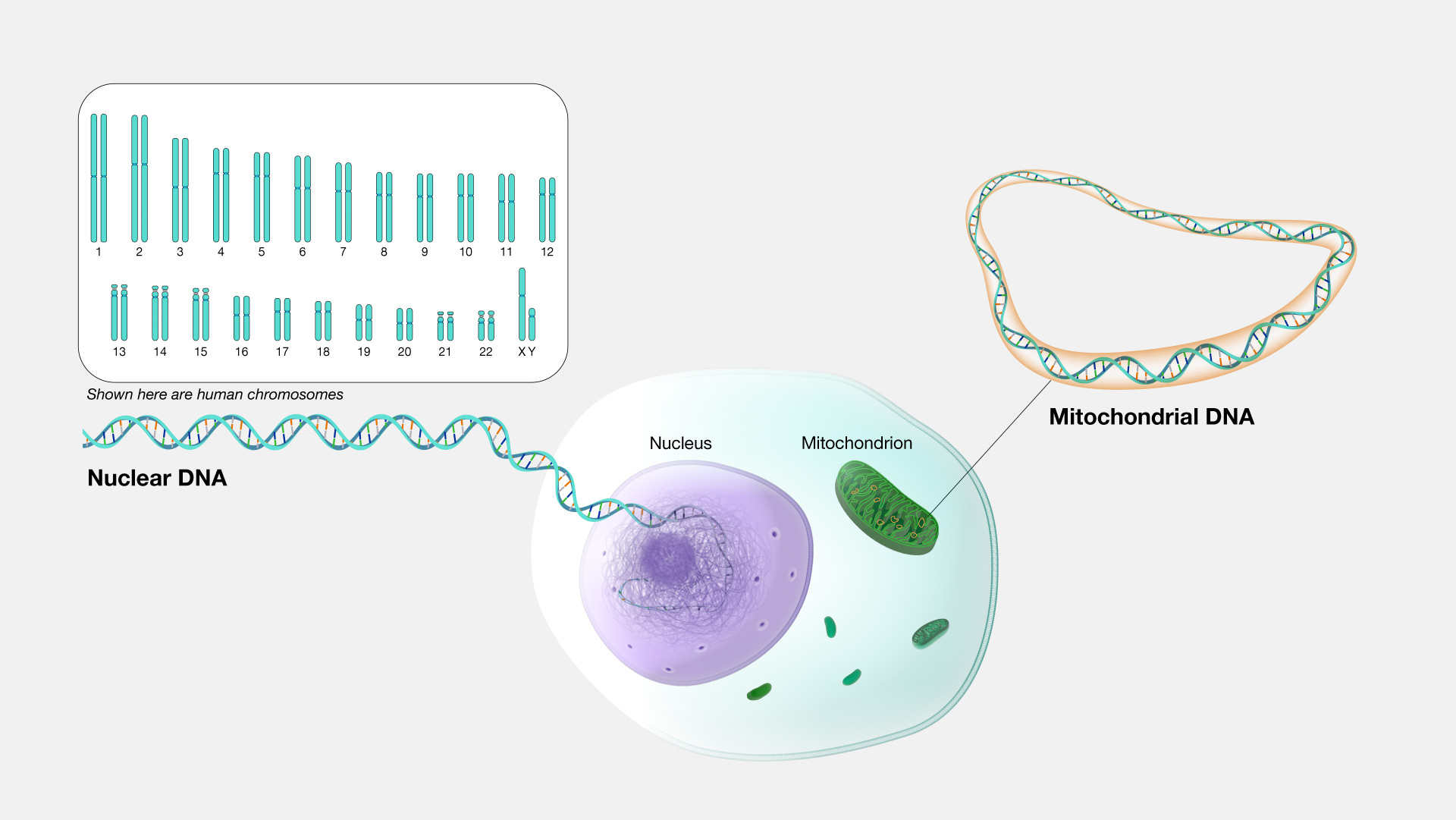
And then there's also sections of our DNA that can actually copy themselves and move throughout the genome, uh, so they're called transposons or more kind of layman's terms some people might call them jumping genes.

Dennis NobleGUEST
And it was all done by a team at University College London.
Dennis NobleGUEST
It's not yet appreciated, particularly in the mainstream media, that that study which put the genome output to the best possible test because here in the united kingdom we've kept all that information on a website called the um multi, what is it called, polygenic repository.
Dennis NobleGUEST
That's right, the polygenic score repository.
Dennis NobleGUEST
All of that is there together with the information of what subsequently people suffered from.
32 MINS LATER
Dennis NobleGUEST
are epigenetic processes capable of being inherited indefinitely? If the environmental change is long term, the answer is yes.
Dennis NobleGUEST
I don't see any way in which people can argue against that.
Cameron BorgHOST
Could I quickly clarify some of this epigenetic inheritance? Are you suggesting it doesn't necessarily have to be carried in the genome? There's other types, right? And these other types of inheritance...
Cameron BorgHOST
These other types of inheritance are based on what, in your estimation at this time? It's

speaker_6NARRATOR
quieter frontier, re-analysing data we already have.
speaker_6NARRATOR
Genomes that were sequenced 10 years ago, when methods were cruder, can be re-examined with new statistical tools.
speaker_6NARRATOR
Ancient DNA datasets that were initially scanned only for Neanderthal or Denisovan ancestry can be probed for more subtle, off-tree patterns.
speaker_6NARRATOR
Fossils sitting in museum drawers can be redated, remeasured or sampled again with improved techniques.
speaker_6NARRATOR
Tree rings with missing years.
speaker_6NARRATOR
Ice cores with weird spikes.
speaker_6NARRATOR
Genomes with segments that don't match anything in our reference panels.
speaker_6NARRATOR
Maps with blank patches labelled, here be something, but we're not sure what yet.