Genetic diversity
15
MENTIONS
5
EPISODES
5
PODCASTS
Search complete. 15 mentions across 5 episodes found for "Genetic diversity".
Sep 20, 2026

Cody JacksonGUEST
So we focus on trout, redfish, and flounder.
Cody JacksonGUEST
And what our facility does is we get broodstock fish from the wild to ensure genetic diversity.
Cody JacksonGUEST
We bring them into the hatchery.
Cody JacksonGUEST
We put them on what we call a photothermal cycle and get them to spawn, collect the eggs, raise them up for a little while, release them back into the wild.
Jonathan DaigleGUEST
But all of our brood stock are wild caught.
Jonathan DaigleGUEST
We rotate them about every five years.
Jonathan DaigleGUEST
We rotate the males and females each year, as Cody mentioned, for genetic diversity.
Jonathan DaigleGUEST
And then the whole tank of fish is released every five years.

speaker_2HOST
Push for transparency.
speaker_2HOST
Treat genetic diversity like a planetary asset, the way we safeguard seeds in S-V-A-H-L-BARD.
speaker_2HOST
Chase the benefits without bulldozing the resilience that kept us fed this long.
speaker_3GUEST
Bottom line for you, more thrilled or more uneasy?

Aliyu BelloHOST
But there's a bigger question here.
Aliyu BelloHOST
What if Africa's genetic diversity, disease patterns and scientific talent were not simply part of the data used by global pharmaceutical research, but also central to where new medicines are discovered? And can Africa help move from being merely a consumer of medicines to being a major creator of them? And what will it take to make that happen? And can African scientists build the data, skills, laboratories and investment needed to turn this opportunity into a lasting pharmaceutical ecosystem? Those are some of the questions we are going to look at today.
Aliyu BelloHOST
And to help us understand where this transformation could be heading, I'm joined virtually by Professor Kelly Shibali.
Aliyu BelloHOST
Mr. Shibali is a professor of organic chemistry at the University of Cape Town and the founding director of the university's H3D Drug Discovery and Development Center.
Aliyu BelloHOST
But thankfully, artificial intelligence plus the human aspect of it, like you have emphasized, could at least make this a little bit easier.
Aliyu BelloHOST
I know that you have given us quite details on how you go about these things.
Aliyu BelloHOST
If you could give us why you think accounting for African genetic diversity is very important when ensuring that these treatments that you are making with the use of machine learning are both safe and effective.
Kelly ChibaleGUEST
So first of all, before I even ask that question, is to say this to the listeners.

Alice LennoxGUEST
Rare, priority, then we have at risk, and then any other native breeds.
Alice LennoxGUEST
And they're determined by assessments of a range of factors, including breed registration, data, trend lines, geographic distribution, genetic diversity, and threat from diseases.
Alice LennoxGUEST
So within our rare and priority categories, we have different breeds of sheep, cattle, equine, goat, pig and poultry.
Alice LennoxGUEST
Some of our more at risk breeds currently for this year are the Eriscae Pony, the Hackney Horson Pony, Ancient Cattle of Wales, Gloucester Cattle, North Ronaldsey Sheep, Sawyer sheep, Boreray sheep, large black pig, British lot pig and then we have all the all other native poultry breeds including Scots dumpy, Scots grey chickens, Shetland ducks and Shetland geese.
Alice LennoxGUEST
So we have herd books and we have flock books for registration data from breed societies and breeders.
Alice LennoxGUEST
Other data is recorded through information and assessments by keepers and breeders and breed societies.
Alice LennoxGUEST
As I say, we do scientific research into factors such as genetic diversity and we also get a lot of our data from DEFRA.
Alice LennoxGUEST
So each year we then combine that data and from then we're able to see on a year-to-year basis if a breed status has moved up or down depending on the numbers for a certain breed, but we also take into account certain measures of inbreeding in the rarer breeds and the rarer populations, because obviously if it's going to be incredibly rare, the gene pool is not going to be as varied as some other breeds.

Edward ParkHOST
But in general, you have male and female plants and very much so male and female animals.
Edward ParkHOST
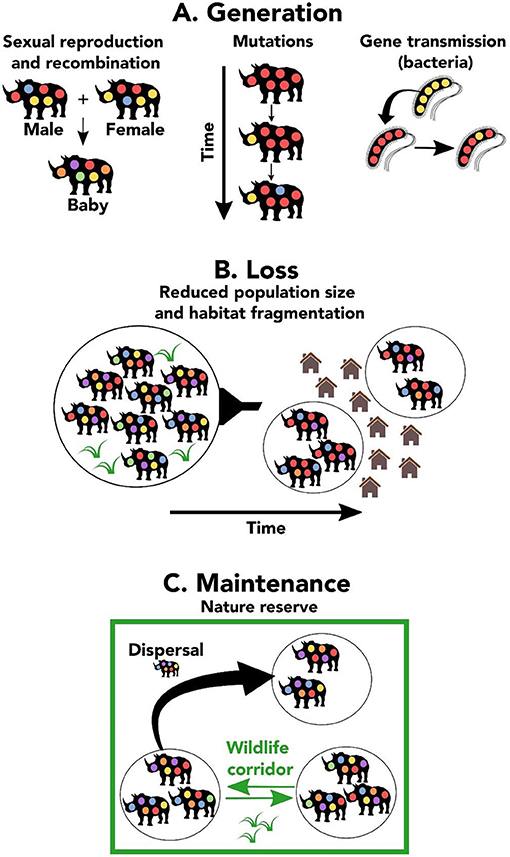
Now, why is that? I submit this is for genetic diversity.
Edward ParkHOST
Think of your chromosomes as decks of cards.
Edward ParkHOST
Now, if you only had... cards from one parent, eventually mistakes would enter.
Edward ParkHOST
but it is true that our genetics are to some extent destiny.
Edward ParkHOST
So let's talk a little bit about taboo.
Edward ParkHOST
So why is it taboo to have incest? Well, because there's lack of genetic diversity.
Edward ParkHOST
Let's say you're in an isolated population.