Genesis 10
124
MENTIONS
31
EPISODES
27
PODCASTS
Search complete. 124 mentions across 31 episodes found for "Genesis 10".
Sep 12, 2026

Matt KingGUEST
We get 70.
Matt KingGUEST
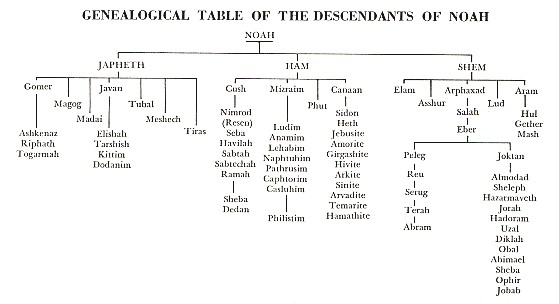
But what's interesting in Genesis 10, it never states there were 70.
Matt KingGUEST
Now there are rules that we find that whenever you look at the counting to come to 70, and I'll touch base on that just a minute, but there are rules, there are four sets of rules generally that people use.
Matt KingGUEST
We find this in Jewish tradition as well, heavily throughout Jewish tradition to come to the 70.
Matt KingGUEST
So, you know, we just, I think it was last Sabbath, we heard the sermon on the, oh, now I just hit it.
Matt KingGUEST
Huh? Huh? No, not last Sabbath, but we recently, I'm sorry, we recently had a sermon on the Good Samaritan.
Matt KingGUEST
And the question came up, and we didn't answer the question, who is your brother? In Genesis 10, it starts with family.
Matt KingGUEST
Do we look at the world and each other like God does, or do we look at each other like humans do? Because there is a time when there's only family.

Gary WayneGUEST
So when you see in Psalms 82 for Christians, the council of the gods, that's the Baalim council, council that is being referred to.
Gary WayneGUEST
And they rule over the 70 nations that are recorded in Deuteronomy 32 and numbered by the s- the 70 nations listed in the table of nations in Genesis 10 and 1 Chronicles, and that this was the same number of nations as numbered by the 70 sons of Adam before the flood.
Gary WayneGUEST
So there's constant.
Gary WayneGUEST
And then Israel numbered by their sons as part of a, what I call a dual prophecy that they will fulfill in the millennium.
Gary WayneGUEST
And that, that number 70 is counted by the nations in Genesis 10 and by Exodus 1:5, where it says Jacob had 70 sons in Egypt.
RobHOST
Oh, wow.
Gary WayneGUEST
Yeah.

speaker_2NARRATOR
It reshaped the unseen spiritual world, split the nations off from God's direct rulership, and set the stage for the entire rest of the biblical story all the way to Jesus.
speaker_2NARRATOR
Today we're going back to Genesis 11, and we will trace the idea all the way to the New Testament.
speaker_2NARRATOR
Here is the big picture background we are working with today.
speaker_2NARRATOR
In this reading of Scripture, the brokenness of our world and the corruption we see among the nations trace back to three connected rebellions.
speaker_2NARRATOR
The first rebellion we find in Genesis 3, the Garden of Eden where the serpent deceives Adam and Eve and humanity's trust in God fractures for the first time.
speaker_2NARRATOR
The second rebellion we find in Genesis 6, the strange and saddling episode where the sons of God corrupt the human race and the Nephilim appear on the earth.
speaker_2NARRATOR
And the third rebellion, Genesis 11, Babel, where humanity rebels not as individuals, but as a community, a group of people, as one unified civilization standing against God's plan.
speaker_2NARRATOR
Today's episode is entirely about that third rebellion and why it matters so much more than a tower that wasn't finished and everyone started speaking different languages.

TimHOST
It's that the, the more dark bloodline is the one I've been tracking lately and following.
TimHOST
And y- and I know I've, I've talked to you on your show about this, but just diving into the sons of Ham and getting into Genesis 10, which, which, you know, it's, it's not too far down on that scroll you're talking about.
TimHOST
In ancient times they didn't have the Bible, they had a scroll, and it, it's not too far fro- removed from Genesis 3:15.
TimHOST
And then, eh, that you get Genesis 6 of course, and you have this event with the watchers.

Ken OrtizeHOST
I mean, s- you put it, try to put it in, into a measurable terminology, um, 30%, uh, one third of the Bible is prophecy.
Ken OrtizeHOST
From Genesis to Revelation, one third is prophecy.
Ken OrtizeHOST
80% of those prophecies have been fulfilled, which is important because what it does is gives a control measurement.
Ken OrtizeHOST
We can look at those fulfilled prophecies and see that God didn't just sort of closely, uh, fulfill them, He fulfilled them exactly in the manner and the time and the way that He said it would come to pass.
15 MINS LATER
Ken OrtizeHOST
This is what I saw.
Ken OrtizeHOST
This is what God's..." Because he says there, "The Lord said to me." [laughs] He didn't say, "He, the Lord said to me, 'See if you can figure this one out.
Ken OrtizeHOST
I'm gonna give you a bunch of riddles that make no sense, and then you're gonna figure out...'" Is it surprising that the two books of the Bible that are the most neglected by pastors is Genesis and Revelation?
J.D. FaragGUEST
Yeah.

speaker_4UNKNOWN
no
Tim ConstantineHOST
to them and that they thought that they believed that the line of cain was their ancestors and it's crazy that they you know there's a lot to break down there i don't want to get into it right now right they think that you know because it goes on here you know, you get into, once you get to Genesis 10, it starts talking about Sham, Ham, and Japheth and their descendants.
Tim ConstantineHOST
And it's very clear if you focus on the line of Ham, which is something I've done, that there is, it seems like this line of Cain, whether physically or just, you know, I think it's really the line of Cain, personally.
Tim ConstantineHOST
But anyway, you see it start to show back up.

Ken OrtizGUEST
It just kind of fulfilled the narrative.
J.D. FaragHOST
Yeah, so I really appreciate you bringing up the first foundational 11 chapters of Genesis because Genesis 10 has the table of nations.
J.D. FaragHOST
Mm-hmm.
J.D. FaragHOST
That is extremely important, fast forward to today, because those nations, that table of nations are prophetic.

Ken OrtizeGUEST
I mean, you try to put it into a measurable terminology, 30%, one third of the Bible is prophecy.
Ken OrtizeGUEST
from Genesis to Revelation, one third is prophecy.
Ken OrtizeGUEST
80% of those prophecies have been fulfilled, which is important because what it does is gives a control measurement.
Ken OrtizeGUEST
We can look at those fulfilled prophecies and see that God didn't just sort of closely fulfill them.
15 MINS LATER
Ken OrtizeGUEST
This is what God's, because he says there, the Lord said to me, he didn't say, the Lord said to me, see if you can figure this one out.
Ken OrtizeGUEST
I'm going to give you a bunch of riddles that make no sense.
Ken OrtizeGUEST
And then you're going to figure out, is it surprising that the two books of the Bible that are the most neglected by pastors is Genesis and Revelation? They don't want to take either one of them literally.
Ken OrtizeGUEST
And so if you can't take Genesis literally, don't the dominoes just start following? So suddenly, who becomes the interpreter of Scripture? I do.

Samuel SayGUEST
Moses said so almost immediately after the curse on Canaan.
Samuel SayGUEST
Because in Genesis 10, verse 8, the Bible says that Ham's son, Cush, is the father of Nimrod.
Samuel SayGUEST
And he, Nimrod, was the first king in the world.
Samuel SayGUEST
He is the founder of Mesopotamia, which historians actually accurately call the cradle of civilization.
22 MINS LATER
Samuel SayGUEST
There is zero biblical support for the claim that there are three distinct races in Japheth, Shem, and Ham.
Samuel SayGUEST
There's zero support for that, there's none.
Samuel SayGUEST
And as Vadi Bochum said, Genesis 10 is about the table of nations, not the table of races.
Samuel SayGUEST
Dale is adding to the word of God.

Samuel SeyGUEST
Moses said so almost immediately after the curse on Canaan.
Samuel SeyGUEST
Because in Genesis 10, verse 8, the Bible says that Ham's son, Cush, is the father of Nimrod.
Samuel SeyGUEST
And he, Nimrod, was the first king in the world.
Samuel SeyGUEST
He is the founder of Mesopotamia, which historians actually accurately call the cradle of civilization.
22 MINS LATER
Samuel SeyGUEST
There is zero biblical support for the claim that there are three distinct races in Japheth, Shem, and Ham.
Samuel SeyGUEST
There's zero support for that, there's none.
Samuel SeyGUEST
And as Vadi Bochum said, Genesis 10 is about the table of nations, not the table of races.
Samuel SeyGUEST
Dale is adding to the word of God.
21 more episodes mention Genesis 10.
Create an account to see the whole feed, search across every transcript, and follow the entities you care about.