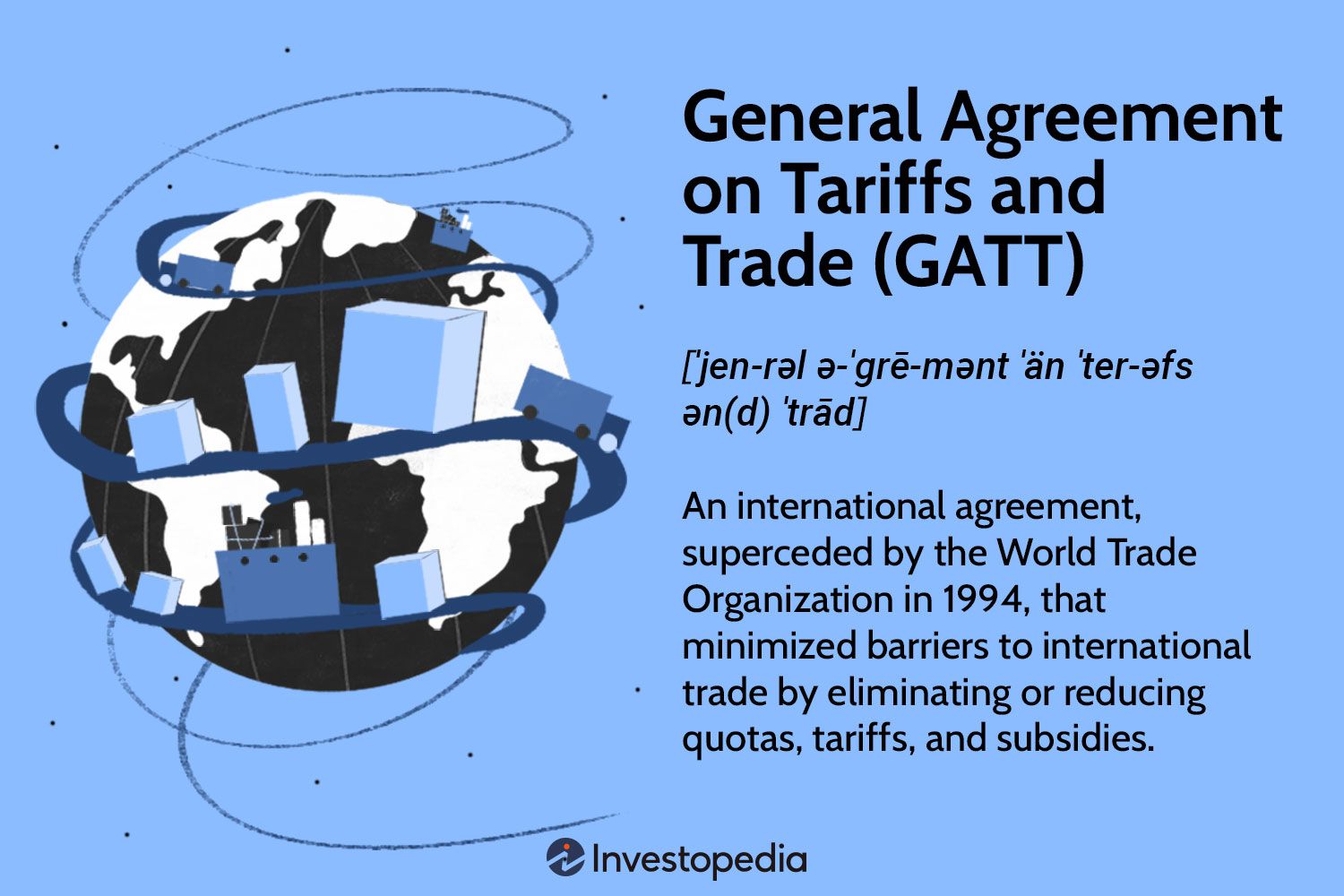
General Agreement on Tariffs and Trade
44
MENTIONS
18
EPISODES
15
PODCASTS
Search complete. 44 mentions across 18 episodes found for "General Agreement on Tariffs and Trade".
Oct 2, 2026

Benn SteilGUEST
So we had the so-called Bretton Woods institutions, the International Monetary Fund, and the World Bank.
Benn SteilGUEST
And on the trade side, we had the GATT, the General Agreements on Tariffs and Trade.
Benn SteilGUEST
And I argued in my Wire China interview that the GATT was highly successful, more successful than we had initially expected it to be, given that it was not nearly as elaborate as the initial vision, which was for an international trade organization.
Benn SteilGUEST
But I argued in that interview that because it had limited aims, We were able to maintain a systemic compatibility within the system that allowed liberalization to go forward at a robust but sustainable pace.
Benn SteilGUEST
After the end of the Cold War, when the GATT was transformed into the much more ambitious World Trade Organization, then I argue we began to get into difficulties.
John EllisHOST
So it was a modest aim to begin with and a much more grandiose vision in the second round with WTO.
Benn SteilGUEST
Well, in particular, in the second round, we fully intended it for it to be a universal system.
Benn SteilGUEST
Right.

speaker_1CORRESPONDENT
He's one of Canada's most experienced international trade lawyers.
speaker_1CORRESPONDENT
He served as a Canadian diplomat, including at the United Nations and the GATT, G-A-T-T, that's the predecessor of the World Trade Organization.
speaker_1CORRESPONDENT
And he has spent more than five decades working on international trade law and Canada-U.S. economic relations.
speaker_1CORRESPONDENT
He's now a senior fellow at the C.D. Howe Institute.

RobHOST
Stay tuned.
ArtieHOST
The trade tie-in for 93, on December 15th, 1993, the GATT's Uruguay Round finally wrapped up.
ArtieHOST
It's my favorite round.
RobHOST
That was a one hell of a round, it was
William CooperHOST
Under the authority of the Reciprocal Trade Agreements Act, the United States joined with twenty-two other major trading nations at Geneva in nineteen forty-seven in the greatest tariff bargaining meeting in history.
William CooperHOST
The result of that meeting was a general agreement on tariffs and trade, GATT.
William CooperHOST
Again, was a general agreement on tariffs and trade, GATT.
William CooperHOST
And you thought GATT was new.
William CooperHOST
GATT has been planned and has been in the workings and has been an actual fact for many years.
William CooperHOST
It was GATT that gave the foreign nations the edge in charging us higher tariffs while we lowered ours.
William CooperHOST
It has caused the destruction of the industrial base of the United States of America, and it's continuing with NAFTA.
William CooperHOST
The result of that meeting was a general agreement on tariffs and trade, GATT, which reduced tariff rates sharply, affected half the world's imports.

William CooperHOST
He backs all the Marxist causes.
William CooperHOST
He backed NAFTA, he backed GATT, and now he's backing this crap.
speaker_3AUDIENCE
And this is, this is...
speaker_3AUDIENCE
All it is, it's to, to see who is, who is going to wield power in the totalitarian one world socialistic government.
6 MINS LATER
William CooperHOST
So what's it directed at? It's directed at other nations.
speaker_4AUDIENCE
Correct.
William CooperHOST
And, uh, but, you know, other nations have to, to, to join the World Trade Organization and s-- and adopt their charter as a treaty, uh, join NAFTA or GATT, uh, before they're subject to it.
speaker_4AUDIENCE
Yeah.
Anthony J. HilderSOUNDBITE_SPEAKER
It is insane to support the communist regime that out-Hitlered Hitler at the height of his hysteria just because the president and these political pimps and prostitutes along the Potomac suggest that you do it.
Anthony J. HilderSOUNDBITE_SPEAKER
And the GATT treaty allows for them to import slave and child labor product.
Anthony J. HilderSOUNDBITE_SPEAKER
That's right.
Anthony J. HilderSOUNDBITE_SPEAKER
That's what GATT does.
Anthony J. HilderSOUNDBITE_SPEAKER
The GATT trap is just exactly that.
Anthony J. HilderSOUNDBITE_SPEAKER
It is treasonous, and it forces all children being born into this Uni- these United States to have a mark, an identification.
Anthony J. HilderSOUNDBITE_SPEAKER
And you talked about, uh, Lee Harvey Oswald, uh, uh, Lee Harvey McVeigh, uh, and his being implanted.
William CooperHOST
It means, fifth, developing a sensible system of trade so that all members of the community can expect that their work will contribute to a healthy and expanding economic life for themselves.
William CooperHOST
To this end, we have helped to write an international charter of fair trade practices and to create an international trade organization called GATT where the nations can settle their disputes across a conference table.
William CooperHOST
Through reciprocal trade and tariff agreements, we are gradually opening up the channels of world trade that have been clogged for a generation.
William CooperHOST
All this is only the bare outline of an international community.

Tom FitzgeraldCORRESPONDENT
Now, I talked a little bit yesterday about sort of the global macro.
Tom FitzgeraldCORRESPONDENT
Coming out of World War II, the US was instrumental in kind of laying out the institutions that have really driven global trade, the global economy, GATT, government trades and tariffs, Bretton Woods on
Elliot EisenbergGUEST
currencies.
Tom FitzgeraldCORRESPONDENT
Right.

Stephen LandeGUEST
Now, between negotiating with the Europeans, economic partnership agreements are the major tool the Europeans use.
Stephen LandeGUEST
Negotiating in the WTO, originally the GATT, General Agreement on Tariff and Trade and so on.
Stephen LandeGUEST
Given their own negotiations, the African Continental Free Trade Agreement, their regional economic communities, they're up there.
Stephen LandeGUEST
I mean, they now have a core of negotiators of economics.
8 more episodes mention General Agreement on Tariffs and Trade.
Create an account to see the whole feed, search across every transcript, and follow the entities you care about.