Gene
25
MENTIONS
12
EPISODES
11
PODCASTS
Search complete. 25 mentions across 12 episodes found for "Gene".
Nov 2, 2026

Josh TaylorHOST
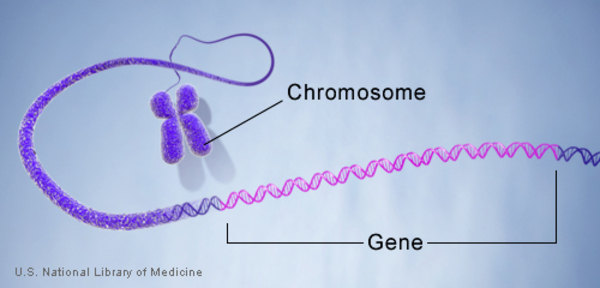
Now, some sections of DNA are called genes.
Josh TaylorHOST
Have you ever heard of that word, genes? Not like blue jeans, not like the jeans you wear, but jeans, G-E-N-E-S.
Josh TaylorHOST
We're talking about lots of letters today, aren't we? Let's talk about jeans now, G-E-N-E-S.
Josh TaylorHOST
See, many jeans give your cells instructions for making something called proteins.
Josh TaylorHOST
Proteins help build parts of your body and do all kinds of important jobs inside your cells.

Connor MacIvorHOST
You can watch that show.
Connor MacIvorHOST
Gene-edited, cloned working dogs.
Connor MacIvorHOST
Lovely.
Connor MacIvorHOST
A company from Colossal and Palmer Lucky.

Catalina López CorreaGUEST
En LinkedIn me pueden encontrar, en Facebook me pueden encontrar, en Instagram, también estoy en Blue Sky.
Catalina López CorreaGUEST
En Instagram tengo una cuenta que es la personal y tengo una cuenta que se llama Global Gene, como Global Gene, con una doble hélice verde.
Catalina López CorreaGUEST
Tenemos ahí ya casi veintidós mil seguidores.
Catalina López CorreaGUEST
Todo se hace en español y estos veintidós mil seguidores son gente de toda América Latina interesada en la genómica.
Catalina López CorreaGUEST
No son solamente, pues obviamente no son científicos, es gente como tú, como, bueno, que no está exactamente en el mundo de la ciencia o pacientes, muchos, o personas del público en general de nuestra sociedad que están interesadas, curiosas y quieren aprender.
Catalina López CorreaGUEST
Y hacemos videítos cortos sobre genómica en salud, en otras áreas.
Catalina López CorreaGUEST
Entonces, en Instagram, en Global Gene también me pueden encontrar, ver videos si están interesados en aprender más sobre la genómica.
Catalina López CorreaGUEST
Nos pueden seguir ahí en, en Global Gene.

MarkHOST
And that being the same kind of on or off...
MarkHOST
What am I thinking of? Gene.
MarkHOST
Gene.
MarkHOST
Yeah.
MarkHOST
In honor of gene, the same as like the cilantro tasting like soap.

Theral TimpsonHOST
Years ago, we had a philosopher of biology on the program who was questioning genes in the way you are, saying that this is a model that we have.
Theral TimpsonHOST
Gene is a model, right? Just like there's the Bohr model of the atom, the gene is a model.
Theral TimpsonHOST
But there are very specific genes that code for very specific proteins that we have discovered.
Theral TimpsonHOST
Absolutely.

Mandy ConnellHOST
You know? Judging by the content of their character, not the content of their genes.
Mandy ConnellHOST
And I don't mean G-E-N-E-S.
Mandy ConnellHOST
I mean J-E-A-N-S.
Mandy ConnellHOST
So it's just...

speaker_3UNKNOWN
[laughs]
Skip HeitzigHOST
And, and I mean G-E-N-E-S, the right genetic makeup.
Skip HeitzigHOST
You have to be of that tribe and of that lineage.
Skip HeitzigHOST
So you have to have Levitical genes.
Skip HeitzigHOST
We are all S-I-N positive.
Skip HeitzigHOST
We're born that way.
Skip HeitzigHOST
It's part of our genetic makeup.
Skip HeitzigHOST
We were born fallen because of what Adam has done.

MJ ReedHOST
"For God so loved the world that he gave his only begotten Son." The word begotten is the word monogenus or monogenus.
MJ ReedHOST
It's spelled like, phonetically, mono, M-O-N-O, monogenes, G-E-N-E-S, monogenes, but it's pronounced in Greek as monogenus.
MJ ReedHOST
So the monogene means the super gene or singular gene or unique gene or unlike any other gene.
MJ ReedHOST
"For God so loved the world that he gave his only unique gene." And he placed it inside of a woman, and it terminated.

Yuan ZhaoHOST
A new study brings much of this information together in a manually curated genetic and clinical resource.
Yuan ZhaoHOST
A research paper published in Volume eighteen of Aging titled "A Manually Curated Gene Phenotype Catalog for Progeroid Syndromes and Premature Aging," developed an integrated catalog linking genes, premature aging syndromes, syndrome subtypes, and major clinical features.
Yuan ZhaoHOST
The study was conducted by first author Nusa Likar and corresponding author Tanja Coné from the Biotechnical Faculty, University of Ljubljana, Slovenia.
Yuan ZhaoHOST
Why progeroid syndromes matter for aging research.
Yuan ZhaoHOST
The clinical categories covered a wide range of systems, including growth, cardiovascular, skeletal, neurological, endocrine, respiratory, genitourinary, metabolic, hematological, immune, and cancer-related features, as well as abnormalities affecting the skin, hair, muscles, head and neck, and other body regions.
Yuan ZhaoHOST
The catalog was not simply assembled automatically.
Yuan ZhaoHOST
The researchers manually standardized gene names according to Hugo Gene Nomenclature Committee, HGNC, guidelines while retaining older or alternative symbols to make earlier literature traceable.
Yuan ZhaoHOST
Syndrome and subtype classification was primarily based on OMIM.
2 more episodes mention Gene.
Create an account to see the whole feed, search across every transcript, and follow the entities you care about.