Gene therapy
Field of studyWikipedia
282
MENTIONS
39
EPISODES
34
PODCASTS
Search complete. 282 mentions across 39 episodes found for "Gene therapy".
Oct 8, 2026

speaker_0NARRATOR
TCG Axe's launch of a six hundred million dollars fund dedicated to Asian biotech firms underscores Asia's growing role as a hub for innovative drug discovery and development.
speaker_0NARRATOR
In gene therapy news, Atsena Therapeutics reported promising efficacy data for its eye disease gene therapy, hinting at future regulatory approvals by twenty twenty-eight.
speaker_0NARRATOR
This aligns with the broader trend towards personalized medicine, where gene therapies offer new hope for difficult-to-treat conditions.
speaker_0NARRATOR
The burgeoning field of psychedelic therapies presents both opportunities and uncertainties as research progresses toward potential FDA approvals for conditions like PTSD and treatment-resistant depression.

Gabrielle RushingGUEST
Um, that includes studies on things focused like sleep, speech and language, as well as motor symptoms.
Gabrielle RushingGUEST
And some areas of research we are supporting include drug repurposing, assessing, um, feasibility for our community to pursue gene therapy, as well as improving symptom management and care guidelines.
Eric FinnHOST
Hmm.
Eric FinnHOST
Oh, it's a, it's a lot of great things coming together at once, which is good.
Gabrielle RushingGUEST
Right.
Eric FinnHOST
Awesome.
Eric FinnHOST
Um, another thing that I know I've heard a lot about and kinda looked through and, um, you mentioned before about, uh, gene therapy.
Eric FinnHOST
Can you tell us more about what that is? Like the CRISPR, or is that a, uh-

Lori EllisHOST
And so it's two different truths that can both be, um, true, true at the same time.
Lori EllisHOST
So I wanted to start my first question of, if a cell and gene therapy company is coming to either one of you today, you know, looking for capital, what do they have to show you before the conversation goes anywhere at all? Which is-
David CreanGUEST
Go ahead
Lori EllisHOST
...
Phil VanekGUEST
Um, translation is important, and we really look at quality of asset, quality of platform, and quality of the team, and their ability to execute, and that's probably a good enough starting point for us.
David CreanGUEST
So let me, um, sort of pile on there, 'cause absolutely I think he's, um, he's spot on.
David CreanGUEST
Um, when I'm meeting with e- entrepreneurs, founders, CEOs who are looking to try and raise capital in the space of cell and gene therapy, um, I like to give them an, a- at least some guidance and put on some headlights.
David CreanGUEST
Um, look, it's not the, the platform story I don't think sells anymore.

Daniel WoodHOST
How do we improve our sleep, movement, sunlight, breathing, and taking care of your body every single day? But what's cool is how much further we're going to be going in the future.
Daniel WoodHOST
We'll be talking gene therapy, radical life extension, longevity escape velocity, AI, digital twins, and some of the emerging technologies that James believes could completely change the way we think about aging.
Daniel WoodHOST
It's not just about living longer.
Daniel WoodHOST
It's about what makes life worth living.
17 MINS LATER
Daniel WoodHOST
And so let's talk about the things that are happening going forward now, like the more kind of creative, you know, the things that aren't doing breathwork at home, but where you might go to a doctor or treatments or special supplements.
Daniel WoodHOST
What are you seeing as the cutting edge right now?
James StroleGUEST
Well, I'm looking forward to the gene therapy field right now because I think like Dr.
James StroleGUEST
Bill Andrews of Sierra Sciences has got a gene therapy, for example, that's been proven in the lab, all right? He's just waiting now for human trials.

Khaled MusallamGUEST
This is Professor Khaled Musallam.
Khaled MusallamGUEST
I'm the group chief research officer and chief of Cell and Gene Therapy and Haematology and deputy CEO at Burjeel Cancer Institute, Burjeel Medical City in Abu Dhabi, and adjunct professor also in Khalifa University Abu Dhabi and Weill Cornell in New York.
Daniela MarinHOST
Now, Fred, let's turn to you.
Fred PielGUEST
Yeah.
Khaled MusallamGUEST
We went to the whole, but then we said, "Is this whole reaching everybody?" So is it all these novel innovations, since we're talking and starting the series with the challenge in certain zones, are they benefiting from all of these innovations? So that's where we started looking at the future-proofing thalassemia care.
Khaled MusallamGUEST
When we go beyond these novel advances that might not be accessible to areas with the highest burden, whether we have something else to offer.
Khaled MusallamGUEST
Should we be looking at other alternatives to improving the, the outcomes of patients? And the last paper features only that, um, in terms of repurposing drugs that have been showing, uh, certain impact in, in certain regions, um, looking also at how can we democratize gene therapy.
Khaled MusallamGUEST
And obviously the talk of the year or even the last five years is AI and artificial intelligence, so we wanted to also touch on that in terms of how can that also be a successful tool in terms of enabling management and diagnosis at scale in areas where they're needed the most.

speaker_0HOST
And third, this is no longer confined to theoretical biology or animal testing.
speaker_0HOST
This fundamental science is translating directly into human therapies right now, most notably by successfully, albeit partially, restoring sight to the blind through a combination of gene therapy and optic hardware.
speaker_1HOST
It is the ultimate example of how basic curiosity-driven research can change the world in completely unpredictable ways.
speaker_0HOST
It brings us right back to that opening image.

Khaled MusallamGUEST
This is Professor Khaled Musallam.
Khaled MusallamGUEST
I'm the group chief research officer and chief of cell and gene therapy and haematology and deputy CEO at Burjeel Cancer Institute, Burjeel Medical City in Abu Dhabi, and adjunct professor also in Khalifa University Abu Dhabi and Weill Cornell in New York.
Daniela MarínHOST
Now, Fred, let's turn to you.
Fred PielGUEST
Yeah.
Khaled MusallamGUEST
But then we stepped back again, so we started with a challenge.
Khaled MusallamGUEST
We went to the whole, but then we said, "Is this whole reaching everybody?" So is it all these novel innovations since we're talking and starting the series with the challenge in certain zones, are they benefiting from all of these innovations? So that's where we started looking at the future-proofing thalassemia care.
Khaled MusallamGUEST
When we go beyond these novel advances that might not be accessible to areas with the highest burden, whether we have something else to offer, should we be looking at other alternatives to improving the, the outcomes of patients? And the last paper features only that, um, in terms of repurposing drugs that have been showing a certain impact in, in certain regions, um, looking also at how can we democratize gene therapy.
Khaled MusallamGUEST
And obviously the talk of the year or even the last five years is AI and artificial intelligence, so we wanted to also touch on that in terms of how can that also be a successful tool in terms of enabling management and diagnosis at scale in areas where they're needed the most.
speaker_1NARRATOR
Such alliances are pivotal for enhancing access to affordable biologics, thereby improving healthcare affordability and accessibility.
speaker_1NARRATOR
Sarepta Therapeutics has been identified as a potential turnaround story with promising results from its Duchenne Muscular Dystrophy Gene Therapy, Elevides.
speaker_1NARRATOR
The therapy has shown clinically meaningful benefits, particularly for older ambulatory patients, suggesting a significant potential shift in the treatment landscape for DMD.
speaker_1NARRATOR
This development highlights the growing importance of gene therapy in addressing unmet medical needs and reflects the broader trend towards personalized medicine.
speaker_1NARRATOR
innovation, as also surging in metabolic and reproductive health.
speaker_1NARRATOR
Calera Therapeutics and Hangrui Pharma's GLP-1, GIP dual agonist demonstrated positive outcomes in trials for women with polyendocrine metabolic ovarian syndrome.

Shambhavi NaikGUEST
But also these emerging technologies are just evolving so rapidly that I think new opportunities will keep on coming up.
Shambhavi NaikGUEST
We see this in the cell and gene therapy space as well, right? So We know that China has created some really nice pathways to accelerate the development of cell and gene therapy.
Shambhavi NaikGUEST
So these are all of these gene editing or CAR T therapies that are coming in, really curing diseases for which we had no other medications before.
Shambhavi NaikGUEST
So, yeah, this whole idea of personalized medicine is coming in now, which is really great.
Shambhavi NaikGUEST
And so a lot of things scientists have been able to do, which they probably wouldn't have been able to in other countries.
Shambhavi NaikGUEST
And so there's this tension, right? Do we do this really, really fast or do we slow down? But then what's the cost of slowing down as well?
Shobhankita ReddyHOST
Yeah, and since you brought up cell gene therapy, right? Again, we see similar things to what's happening in BCI today with CGT a few years ago.
Shobhankita ReddyHOST
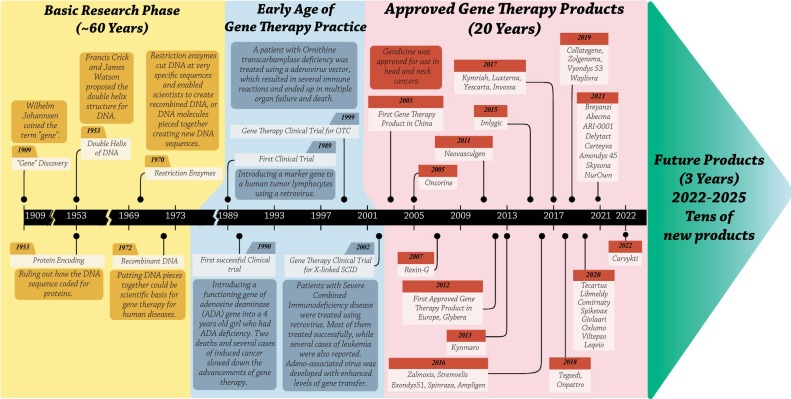
So 2003 was when China had its first commercial deployment approval.

David SinclairHOST
So visit join.whoop.com/lifespan, and you can use the code LIFESPAN to receive your free WHOOP and your first month of membership.
Matthew LaPlanteHOST
And then after that, potentially gene therapy?
David SinclairHOST
Yeah, let's talk about that because what we're going from is a world where you take a pill every day or once a week to a world where you can have an injection, and that's it, it for life.
David SinclairHOST
There is a drug in development for LDL, bad cholesterol, where one injection treats you so you don't get heart disease necessarily, not till many decades later.
David SinclairHOST
The same could be here.
David SinclairHOST
Imagine taking a pill or an injection using, say, a virus, and now you're protected against obesity and diabetes.
Matthew LaPlanteHOST
And at least one of these is entering human testing, a GLP gene therapy.
Matthew LaPlanteHOST
This is Fractal Health's, uh, RJ-VA-001, and it uses a delivery mechanism that you have explored for longevity.
29 more episodes mention Gene therapy.
Create an account to see the whole feed, search across every transcript, and follow the entities you care about.