Gelon
TyrantWikipedia
56
MENTIONS
4
EPISODES
4
PODCASTS
Search complete. 56 mentions across 4 episodes found for "Gelon".
Oct 1, 2026

Scott EmmonsHOST
They knew that Sparta would never agree to that.
Scott EmmonsHOST
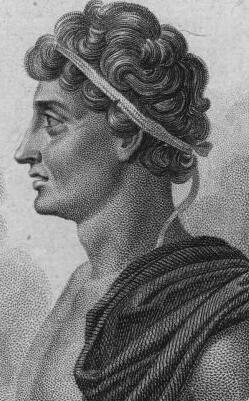
The allies may have had higher hopes when they approached the tyrant Gelon in the powerful Greek city of Syracuse over in Sicily.
Scott EmmonsHOST
But Gelon played it much the way Argos did.
Scott EmmonsHOST
He said he could send 200 triremes, 20,000 hoplites, cavalry, and other troops, but only if he would get command of all the Greek forces.
Scott EmmonsHOST
Again, neither Sparta nor Athens could accept that.
Scott EmmonsHOST
In reality, Gelon could probably never have spared all those troops because there was a conflict brewing with Carthage closer to home.
Scott EmmonsHOST
In the spring of 480 BCE, about the time Xerxes was marching his army across the Hellespont, the alliance met again at the Isthmus.
Scott EmmonsHOST
Some envoys had come from Thessaly, that big region up north.

Pamela NagamiNARRATOR
There is, however, no material difference between the policy of Pausanias after the battle of Plataea and the policy deliberately adopted and carried out by the Spartan state toward the close of its deadly struggle with Athens in the Peloponnesian War.
Pamela NagamiNARRATOR
End of Section 26 Section 27 of Lives of Greek Statesmen by George William Cox This LibriVox recording is in the public domain, read by Pamela Nagami Gelon The picture of the Greek world in the age of Xerxes is not complete without a reference to the western settlements, some of which attained a magnificence never reached by the parent cities, whether of continental or sporadic Hellas.
Pamela NagamiNARRATOR
Of these western colonies, Syracuse rose to greatness under Gelon, who, contemporaneously with the invasion of Xerxes, had to fight against an enemy not less formidable and who gained over that enemy a success as decisive as that which Sparta and Athens achieved at Salamis and Mycale.
Pamela NagamiNARRATOR
Gelon, moreover, was invited to take part in the resistance offered to Xerxes, and the offer and refusal alike throw light on the relations between the eastern Greeks and the younger colonies of the west.
Pamela NagamiNARRATOR
In its vices as well as in its better qualities, this newer world closely resembled the old.
Pamela NagamiNARRATOR
There were the same tribal jealousies and disunion, and there were the same feuds leading to frequent revolutions, the same transitions from oligarchical government to tyrannies.
Pamela NagamiNARRATOR
In the size of their cities and the grandeur of their temples, they were almost more than rivals of their eastern kinsfolk.
Pamela NagamiNARRATOR
But the marvelously rapid growth of these settlements was prodigiously aided by the advantages which they enjoyed in the soil, the climate, and the physical resources of the country.

Rocky RuggieroHOST
And the Corinthian Greeks who landed on Ortigia in the eighth century kicked them out and then essentially began this program of rapid expansion, conquering more and more territory around what today we identify as the city of Siracusa.
Rocky RuggieroHOST
And this rapid expansion of Siracusa under a whole series of rather well-known leaders, leaders with names like Gelon or Dionysius I or Hiero II.
Rocky RuggieroHOST
And if you are familiar with ancient Greek history, then these are names that you are most likely familiar with.
Rocky RuggieroHOST
Uh, and in fact, inevitably the expansion of Siracusa and its territory would come head-to-head with the other foreign presence on the island of Sicily, which was of course Phoenician, and specifically the Phoenicians of Carthage, North Africa, modern-day Tunisia.