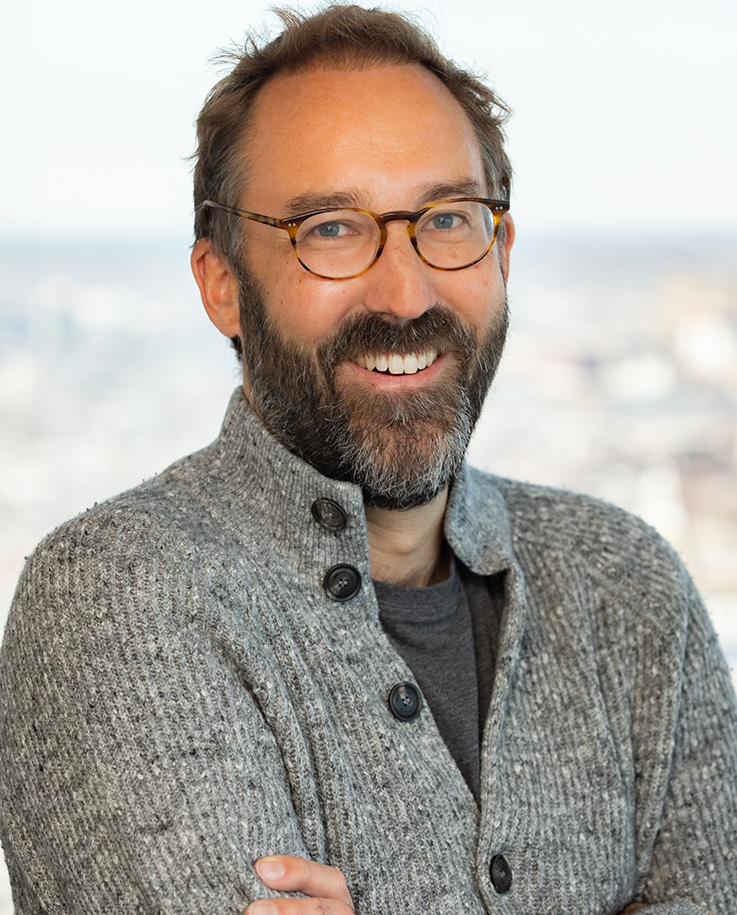
Gavin Baker
22
APPEARANCES
10
PODCASTS
Aug 31, 2026


Gavin BakerGUEST
My standard question is, "Can you tell me one quantitative data point in your business that's getting worse? Just one." That's my standard question, and it's at least in July and August, I haven't been able to find a single person.
Gavin BakerGUEST
Now, if we're being honest, you know, Anthropic is, you know, in a quiet period, so maybe they've slowed down a little bit.
32 MINS LATER


Jason CalacanisHOST
Gavin, uh, what do you think of this announcement vis-a-vis round tripping and the hand-wringing concerns we talked about on this very podcast a year or two ago?
Gavin BakerGUEST
Well, I do think what's important here is what is, what, what's essentially happened is, like, Blackstone, KKR, these firms, Goldman Sachs, they would not, would not have done this, they would have not have done that CNBC, um, episode with Jensen if they did not believe that NVIDIA GPU compute was a financiable asset.
Gavin BakerGUEST
And so what's really smart here is you're getting, you know, some of the smartest asset managers in the world, you know, who charge two and 20 for many products, to essentially validate this market.
Gavin BakerGUEST
And NVIDIA's being a matchmaker, and what they're basically saying is, "Hey, our compute, because it's so flexible, is going to have a long enough life that you can finance it at lower rates than other, um, kinds of compute." And I think, and I think that's, that, that's smart.
Gavin BakerGUEST
If you look at the underlying architectures of the three, what I call big Chinese open source models, and y- maybe even throw a few, or four, you know, if we have, um, Qwen, if we have Kimi, if we have DeepSeek, um, and then we have GLM, they're actually evolving in very different ways.
35 MINS LATER


Gavin BakerGUEST
All of the biggest spenders on GPUs, with the exception of, um, xAI, are public companies, and public companies report something called quarterly financials, and you can use those documents to calculate something called a return on invested capital.
Gavin BakerGUEST
And to date, the ROI on all of this spending has been strongly positive to be good.
Gavin BakerGUEST
Now we're at the trillion dollar question, and the ROI has actually still been good.
9 MINS LATER


Gavin BakerGUEST
I mean, however you cut it, whether you cut GPU availability, whether you cut GPU rental pricing, I mean, whether you cut, like, the spot price of DRAM this month, token growth, everything is actually accelerated.
Gavin BakerGUEST
And I do think a big part of the problem is, one, the market does not have visibility into Anthropic OpenAI, and then I would say these open source inference clouds that monetize inference here in America, Fireworks, Base ten, Modal together.
Gavin BakerGUEST
And the picture looks very different when you see that because open source has accelerated massively because of GLM five point two, Kibi K three, and then Nemotron continues to kind of chug along.
Gavin BakerGUEST
Anthropic continues to grow really strongly and is almost certainly pumping out significant amounts of free cash flow.
30 MINS LATER

Gavin BakerGUEST
Well, because it turns out that there is, and this has been very surprising to me over the last year, that there is an enormous return to being at the frontier of intelligence.
Gavin BakerGUEST
And I think the future is likely to be one in which maybe a majority of economic returns continue to accrue to these frontier tokens, but the majority of tokens processed are these very cheap open source tokens.
Gavin BakerGUEST
I had, depending on how you look at it, the privilege and the misfortune of being a tech investor during the year two thousand bubble, which was really a telecom bubble.
Gavin BakerGUEST
And I think it's really helpful to compare and contrast today to the year two thousand.
Gavin BakerGUEST
First, I think Cisco peaked at a hundred and fifty or a hundred and eighty times trailing earnings.
10 MINS LATER

AmirHOST
then
Gavin BakerGUEST
a really formative experience for me, the two stocks that I liked were both pretty small stocks.
Gavin BakerGUEST
And because, and I was the analyst, and integrated circuits was run by Hawk Tan, you know, who's now the CEO of Broadcom.
13 MINS LATER
AmirHOST
What does history tell us about living through this kind of transformation or transformation of this magnitude?
Jason CalacanisHOST
Your thoughts, Gavin, on Micron and the impact on the industry, and is this a temporary bottleneck, or does this mean everybody has to get into this business quickly?
Gavin BakerGUEST
You know, they'll, they'll do some work with Claude, find some esoteric Japanese company.
Gavin BakerGUEST
The bottleneck that matters is DRAM, and DRAM and HBM DRAM, this is the most important bottleneck simply because memory capacity and bandwidth are foundational to the performance of every AI model.
28 MINS LATER


Sam JonesHOST
But luckily, we do have technology that helps researchers keep track of larger debris pieces and helps us get a sense of what the space debris landscape looks like.
Gavin BakerGUEST
A lot of our detection or tracking is done on ground and in space, where we have, you know, on ground we have radars and optical telescopes, whereas in space we might have some surveillance networks or sensors, as well as analyzing spacecraft that return to Earth and analyzing the damage done to their bodies and using that to kind of back propagate and see what debris they went through and where it was more dense.
6:32
If you're looking at the smallest debris that's smaller than a centimeter, like paint flecks, a collision might create little craters or break through the surface.
Gavin BakerGUEST
So from here, if we have a 10 centimeter object traveling at LEO speeds, it's not uncommon for its collision energy to be similar to that of seven kilograms of TNT.
Gavin BakerGUEST
And so we start to look at some pretty serious fragmentation and some damage and possibly even lethal damage to our, uh, satellites or assets in space.


Gavin BakerGUEST
Right now, Facebook is, you know, Meta is telling investors there's, like, no chance that we're gonna, you know, you know, monetize GPUs externally.
Gavin BakerGUEST
Well, like, 10 days before they announced all those layoffs, um, which I think was at the end of '22.
Gavin BakerGUEST
It was short, shortly after Brad, maybe two months after Brad wrote that letter to Mark where he said, "You're the king.
Gavin BakerGUEST
You can do whatever you want, but this is what I might respectfully encourage you to do." Um, you know, they went from saying, we're, "We're not gonna do that, we're gonna keep investing," to, you know, super focused on OPEX in a couple of days, man.
Gavin BakerGUEST
So it's like people, they meet with Meta, and they hear, "Oh, you know, we're not, um, we're not gonna monetize our GPUs externally." Well, I don't know.
17 MINS LATER
JordanHOST
[laughs]
Gavin BakerGUEST
I'm pretty confident Mark Zuckerberg has proven to be a good entrepreneur over time and has been willing to pivot, you know, and it's just, it's so funny.
Gavin BakerGUEST
You know, right now Facebook is, you know, Meta is telling investors there's, like, no chance that we're gonna, you know, r- you know, monetize GPUs externally.
Gavin BakerGUEST
Well, like 10 days before they announced all those layoffs, um, which I think was at the end of '22, if not...
18 MINS LATER

Sara EisenHOST
What does Elon need to do? What does SpaceX need to do to get to this kind of valuation and profitable place from your perspective? Yeah.
Gavin BakerGUEST
The owners of landed power are heavily incented to give it to people who can energize it first.

Carl QuintanillaHOST
Gavin, it sounds like you're suggesting to the degree that there is scarcity in compute and the purveyors of compute sort of have to decide who gets what and when, that space over terrestrial, that space might command maybe incrementally more attention or preference?

Gavin BakerGUEST
But I ran that fund right after the human gene- genome had been sequenced, and there was an expectation that the sequencing of the genome was gonna lead to this explosion in therapies, personalized medicines, et cetera, et cetera.
Gavin BakerGUEST
And I don't think, broadly speaking, we've made as much progress over the last twenty-five years as maybe people thought in the early 2000s.
21 MINS LATER


Gavin BakerGUEST
Um, but my understanding is that Cursor and Anthropic have more tokens of proprietary coding data than anyone else, and they each have more tokens of proprietary coding data than exist on the public internet.
Gavin BakerGUEST
And so they fed, Cursor fed, um, used Kimi 8.25, used their own private data, did some RL, some supervised fine-tuning, and they got a really good model.
Gavin BakerGUEST
And then they spent three weeks in the Colossus-2 cluster, and they got a model that 12 days ago was Pareto dominant with C- Composer 2.5. Now, it's on their own benchmark, um, Cursor Bench, so maybe take it with a grain of salt, but I think this just suggests that the Cursor data is very valuable for coding, and when it is-Train, you know, Chinchilla optimal or beyond Chinchilla optimal with reinforcement learning, you know, I think it suggests that xAI and SpaceX AI has a shot of being a real player in coding.
13 MINS LATER
Gavin BakerGUEST
And in the same way that Elon was able to re-engineer a rocket from first principles and re- make it reusable, he engineered an electric car from first principles.
Gavin BakerGUEST
You know, everyone else was trying to, you know, make an electric car like an internal combustion engine car, and he thought about it differently.
Gavin BakerGUEST
You're like, you are as important to your board members, particularly if you're really successful.
Gavin BakerGUEST
You know, maybe as the board members' families or parents, you know, the board members think about you a lot.
Gavin BakerGUEST
Um, once you're public, you're one of thousands of companies, um, and that's its own dynamic.
Gavin BakerGUEST
But the consequence of this is, is that private investors are often selling to management teams.
Gavin BakerGUEST
And at some level, that can mean telling management teams what they need to hear, because you want to be able to keep participating in the rounds.
Gavin BakerGUEST
Once a company's public, you can buy or sell as you wish, and this means that investors feel freer to give companies management teams.
27 MINS LATER
Gavin BakerGUEST
Well, I think what's important about, um, Elon Web Services does, does make me laugh, but 15 billion, that means the AI business right there is going to quadruple.
Gavin BakerGUEST
I think what's important to- about that is there's a stat in it that for, I think, the f- their first data center, it was 122 days.
60:06
Say just, like, a little bit more about the kinds of people that are capitulating.
Gavin BakerGUEST
In other words, you have semi cap equipment companies trading at 40 times next quarter's annualized earnings and DRAM companies trading at mid-single digit.
5 MINS LATER

Gavin BakerGUEST
They give you the phone number of the IR, the email address of the IR, how much Fidelity owns in percentage and dollar terms of each name.
Gavin BakerGUEST
They give you three monitors, and they say, "Go." That's very different than anywhere else where you work for someone.
Ted SeidesHOST
As you were exposed to all this, what became the investment philosophy that matches your own disposition?
Gavin BakerGUEST
And similarly, RKGI-2, which is another benchmark, actually called the jagged frontier in AI, where things that are very easy for AIs, like maybe math...... are really hard for humans and vice versa.
Gavin BakerGUEST
And RKGI measures tasks that are relatively easy for humans, maybe, you could almost think of it as a, you know, there's a lot of, like, geometric puzzle-solving, but very hard for AIs.
Gavin BakerGUEST
Now in fairness and, you know, to be balanced and accurate, it is narrowly, very narrowly ahead in artificial analysis on, on the right.
Gavin BakerGUEST
But this is, this is the first time they have not released a model that wasn't decisively better.
6 MINS LATER
Jason CalacanisHOST
How do you calculate it, Gavin? Do you have a back of the envelope way to answer this question? And if we catch up, or do we n- even need to catch up? Is there enough capital in the world that they can be patient?
Gavin BakerGUEST
But it, the deficit never really mattered because interest rates kept going down, such that even as our debt grew, interest expense as kind of a percentage of the government's budget stayed relatively l- low.
Gavin BakerGUEST
Now that rates have gone up and don't seem like they're, you know, going down anytime soon, the deficit does matter, and it really matters.
Gavin BakerGUEST
And you, you can kind of run a, a couple of scenarios, but, like, pick your, pick your metric.
Gavin BakerGUEST
If the deficit kind of continues at current levels, and we were to refinance the debt at the prices that, uh, you know, David was talking about, you know, it's, it's only a few years before spending on interest is significantly larger than spending on Medicare and Medicaid or Social Security or the military.
Gavin BakerGUEST
So pick something you care about, but, you know, our current course and speed, it's, it's in the not too distant future where interest expense is the biggest line item for the government, and that is not healthy.
7 MINS LATER
Jason CalacanisHOST
What do you think about this company specifically, if anything, and are we getting to a point where we're gonna have the same ChatGPT 2.5 moment, but with agents? And then if we do have that, Gavin, w- what will that look like in terms of employment and how companies are run?
Gavin BakerGUEST
Look, I do think, uh, if agents materialize as a reality, and, you know, Manus is maybe a little bit of a ChatGPT moment for that, I would say OpenAI and Anthropic...
Gavin BakerGUEST
Anthropic developed something called the Model Contact Protocol that OpenAI just adopted.
Gavin BakerGUEST
I think it will become a standard, and it makes it really easy for an LLM, like Stripe can just integrate with MCP, and then any LLM that uses MCP can, you know, interact with Stripe.
Gavin BakerGUEST
And this is solving a big, big problem for agents, um, in terms of just making them, you know, much easier to use, much more standardized.
Gavin BakerGUEST
But if agents become a reality, one, the ROI on AI and Blackwell is gonna be very high.
59 MINS LATER
Gavin BakerGUEST
You know, we keep, we keep changing the goalposts for the Turing test and AGI, and I'm sure we're gonna change them again as we're gonna blow through this.
Gavin BakerGUEST
And I just think what has happened is we were scaling around, around one, uh, on one axis, which was pre-training, and then we started scaling around inference time compute, and it's very clear that we have now added a third axis of scaling performance, and that is reasoning.
Gavin BakerGUEST
The Internet is composed of answers, people giving answers, and what the models really benefit from is kind of the internal monologue of somebody getting to that answer.
12 MINS LATER