Gaullism
Political ideologyWikipedia
46
MENTIONS
29
EPISODES
27
PODCASTS
Search complete. 46 mentions across 29 episodes found for "Gaullism".
Oct 19, 2026

Tim StanleyHOST
He is very respected on the world stage.
Tim StanleyHOST
And he's carved out a kind of a Gaullist, non-American alliance on issues like Ukraine.
Tim StanleyHOST
So you're pulling a face.
Camilla TomineyHOST
I'm pulling a face because I think that Macron and indeed now the sort of French system since the disaster of calling that snap election and it's slapping him in the face in 2024.
Tim StanleyHOST
But I would remind you that Macron was elected as an alternative to everything you've described.
Tim StanleyHOST
Yes.
Tim StanleyHOST
They broke away from the traditional bloc voting of left and right, the Socialist Party or the Gaullists, and voted for Macron in order to cut through all of the structural problems of France.
Tim StanleyHOST
The idea being that you hand a mandate to, okay, a centrist, but a centrist populist who was going to do things like raise the age of retirement, grow the economy, shift away from welfare and back towards capitalism.

Andrew HusseyGUEST
But the président in the sense, I think that Philippe is implying, I hope so anyway, is that she refers to Paul Valéry, that she refers to la douce France.
Andrew HusseyGUEST
It's almost like Gaullist, her certain idée de la France, a certain idea of France, which may not correspond to the reality that we live in, but which a lot of French people want to live in.
Andrew HusseyGUEST
So I'm going back to my point earlier.
Andrew HusseyGUEST
about the Nouvelle France of Mélenchon and La Vieille France of Marine Le Pen.

Julian FeeldHOST
But you wrote a book on Zemmour, right?
Marlon EttingerGUEST
I did back during the election cycle, Zemmour and Gaullism.
Marlon EttingerGUEST
I don't know if you read any of it.
Marlon EttingerGUEST
The basic thesis is that Eric Zemmour, the sort of racist far-right candidate, is kind of a good representative of Gaullism.
Marlon EttingerGUEST
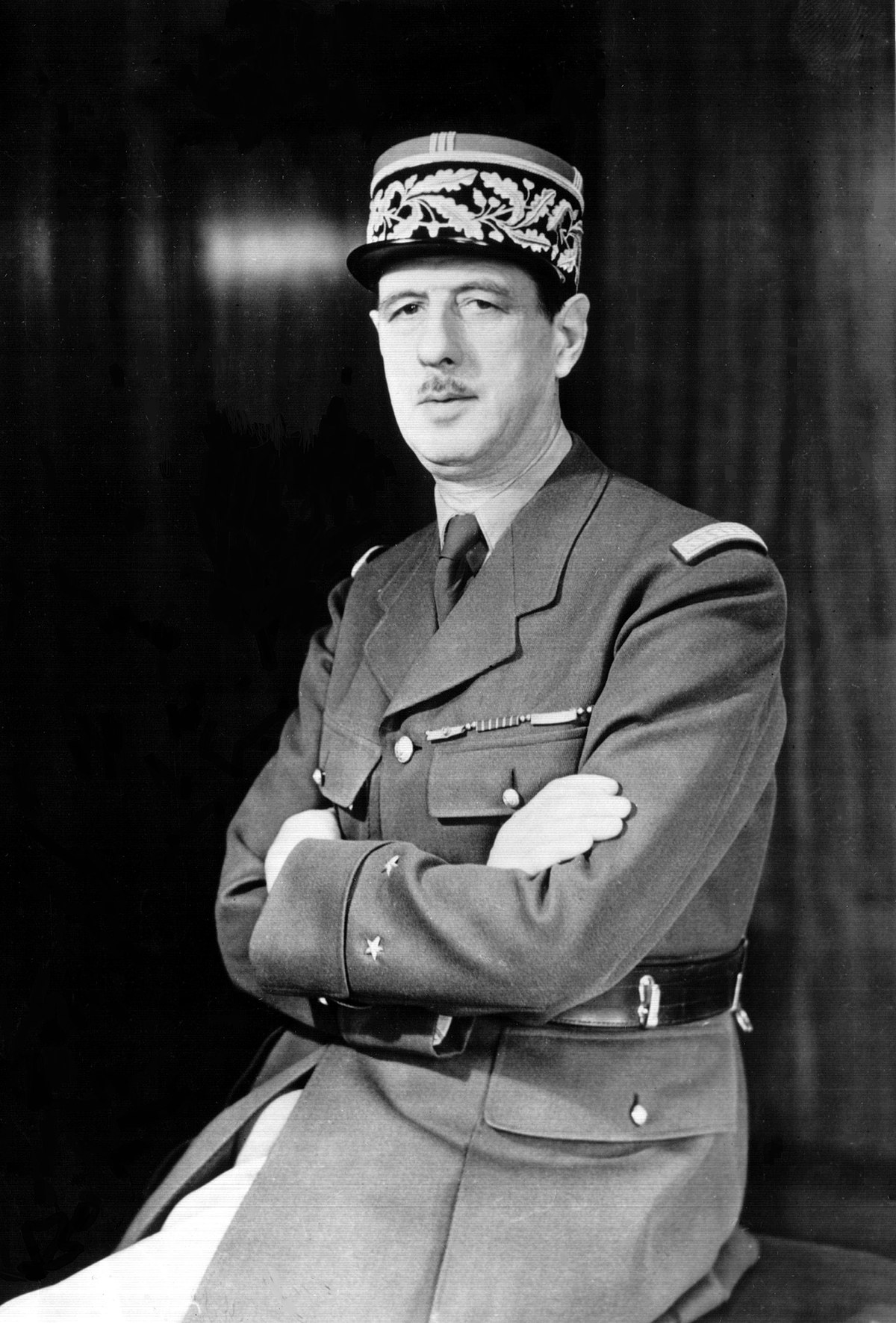
Gaulism being, well, I mean, it's more than just that, but the ideology of Charles de Gaulle in this case.
Julian FeeldHOST
That's so interesting because Zemmour, as someone who has been tuned into French TV and stuff for a long time, he had just been hanging around for so long waiting for his moment to emerge with his racist and great replacement garbage and anti-Islamo-leftist talking points.
Marlon EttingerGUEST
And he's, when you go through the standard genealogy of like the modern far right, obviously there's always been French conservatism, but the modern far right is kind of like often starts with him because he appealed to sort of this coalition of voters, which is often described as like working class Parisians, the work, the urban working class, because most of them were in Paris at the time and Catholic, like rural reactionaries and, monarchists even in France, because monarchism is like one angle of sort of French conservatism and far right, which has been alive for the longest.
Marlon EttingerGUEST
And Boulanger, they always say he could have been like the military dictator of France if he had just chosen to grab power, but he didn't for whatever reason, he didn't think that he could do it.

John MerrimanHOST
I mean, it was an impossible situation for students and, and, and for, uh, and for faculty.
John MerrimanHOST
And as now, as in the issues now- Ah, there wasn't light at the end of the tunnel because compounding the fact that there weren't jobs, unless you were in one of the grandes écoles, that is the big fancy schools, unless you were an ENARC or one of these people in the administration school that was gonna just slide into some party post in a Gaullist government, ah, you know, what was there at the end? And you also had this, this extraordinary ambiguity, ah, you know, in thinking about this or ambivalence, because if you were basically against the sort of technological super-powered society of, of, of, of fast cars, ah, and, uh, the Americanization of, of, uh, European culture, if you believe strongly against that, you know, what kind of job is there gonna be at the end of the tunnel for you? You can't be a professional militant, you know, your entire life.
John MerrimanHOST
What are you gonna do? And the people, by the way, who were, who invested their careers or lost their careers in this mobilization, uh, were toast because they refused to sit for their exams, ah, and they committed professional suicide right on stage because they did it.
John MerrimanHOST
And it all starts with a lot of them, Daniel, Daniel Cohn-Bendit, who was a militant when he was expelled from the University of, of Nanterre, ah, ah, because of, of, of his militancy.
John MerrimanHOST
This is what's called a class society, and it had not changed very much by 1968.
John MerrimanHOST
Um, and people blamed the state for the rigidity.
John MerrimanHOST
I have a friend, in fact, a Gaullist with whom I waited in line to get into Notre Dame for the, uh, uh, the Charles de Gaulle affair, uh, who, uh, was supposed to take, uh, he's a lawyer and he was taking an advanced degree and he, uh, st- he lived in the suburbs and he stayed in, uh, prosperous suburbs, fairly prosperous, but he, he stayed in Paris one night because the metro's closed and bus is closed.
John MerrimanHOST
You know, if you didn't make the 12:32, then, you know, you had a long walk, and I walked back to that suburb and hitchhiked back and all of that.

Dieter HelmHOST
They're defined as being hostile to net zero, and quite a lot of them, though not Le Pen, are really much more sympathetic to Putin and the Russians going forward.
Dieter HelmHOST
So if we have a Gaullist France, and that essentially relates to quite a lot of what Le Pen's policies look like, why are they gonna do anything different than de Gaulle did back when Macmillan applied to join the EU? Why are they not gonna say just non, no, we don't want you? Why would Le Pen want a centrist British government, particularly of the kind that Andy Burnham represents, as trying to stop her achieving the objectives she would like to achieve and stop a return to the Gaullist idea of French dominance of the European institutions? It's not obvious that it's going to be an acceptance at all.
Dieter HelmHOST
Why would they want us back? And then you have to think about the Europe which we might join, if we did rejoin, we might be part of.
Dieter HelmHOST
It's going to be much more divided on Russia with substantive pro-Russian groups within the European bloc, and it's not going to be amenable to the integration of European economies.
6 MINS LATER
Dieter HelmHOST
Who would like the Europe that's emerging in the elections in Europe now most? Mr Burnham or Kemi Bagnall or Nigel Farage? So Nigel Farage wouldn't like it because he's anti-European, full stop, but he has sensibilities towards the Russians, likes quite a lot of the agenda items that show up in the AFD, in Marie Le Pen's party and in Maloney's party, and has the odd position of saying we don't want to join a club which people like him might be actually the members of.
Dieter HelmHOST
So not clear where Farage ends up in all of this, except sort of claims of betrayal and all the rest of it.
Dieter HelmHOST
What about the Conservatives? Is a more nationalistic, Gaullist Europe, a Europe that's more hostile to grand targets like net zero, a Europe that actually wants to do something about the broader boundaries of Europe for immigration, and a Europe that wants to wheel in the powers of the European Commission and reduce its role against the nation states.
Dieter HelmHOST
Is that a world that Conservatives would find themselves unhappy with? Well, actually, it's quite like the Europe that Mrs Thatcher wanted quite a long time ago.

Jan-Werner MüllerGUEST
...
Jan-Werner MüllerGUEST
Valérie Pécresse, who was running for the French presidency, a Gaullist, as mainstream as it can possibly get in the French Republic, gets up there and in ever so many words suggests to people that the conspiracy theory of the great replacement might be sort of true.
Jan-Werner MüllerGUEST
Big scandal at the time, but once she had said it, once she had told all her voters who think of themselves as bourgeois, centrist, responsible, moderate, you name it, that actually the far right had been right all along, these people don't say, "I wanna, you know, embrace far right populism." I simply now embrace what the center is actually telling me is sort of, is sort of correct.
Jan-Werner MüllerGUEST
Now, you would have thought that some people on the center right should have understood this le- this lesson by now.

Pete QuiñonesHOST
Why did the coup fail? Perhaps the main reason was that the four generals had utterly neglected the political forces and had allowed the immediate power of the armed forces to obscure the somewhat less immediate but ultimately decisive role that they could play.
Pete QuiñonesHOST
In the Gaullist coup of May 1958, the action of the military and the population of Algiers had been supported by the Gaullist infiltration of the civil service and by the steady corrosion of the will of other political groups to oppose the dissolution of the Fourth Republic.
Pete QuiñonesHOST
This time, the generals had simply ignored the civilians.
Pete QuiñonesHOST
De Gaulle went on television and asked for help from the population at large.
Pete QuiñonesHOST
« Francais, Francais, aidez-moi! » Debert, who followed him on the screen, was more specific.
Pete QuiñonesHOST
Go to the airports, convince the soldiers who are misled.
Pete QuiñonesHOST
He also started to arm a militia drawn from the Gaullist party.
Pete QuiñonesHOST
More important, the trade union organizations, the Communists, CGT, the Christian Democrats, CFTC, and the Force Ouvrière, all rallied around the government while most political parties did the same.

Pete QuiñonesHOST
Why did the coup fail? Perhaps the main reason was that the four generals had utterly neglected the political forces and had allowed the immediate power of the armed forces to obscure the somewhat less immediate but ultimately decisive role that they could play.
Pete QuiñonesHOST
In the Gaullist coup of May nineteen fifty-eight, the action of the military and the population of Algiers had been supported by the Gaullist infiltration of the civil service and by the steady corrosion of the will of other political groups to oppose the dissolution of the Fourth Republic.
Pete QuiñonesHOST
This time, the generals had simply ignored the civilians.
Pete QuiñonesHOST
De Gaulle went on television and asked for help from the population at large.
Pete QuiñonesHOST
"Français, Français, aidez-moi." Deborah, who followed-- Debré, who followed him on the screen, was more specific: "Go to the airports, convince the soldiers who are misled." He also started to arm a militia drawn from the Gaullist Party.
Pete QuiñonesHOST
More important, the trade union organizations, the Communists, CGT, the Christian Democrats, CFTC, and the Force Ouvrière all rallied around the government, while most political parties did the same.
Pete QuiñonesHOST
The left-wing Catholic movement started to organize sit-down strikes among the national servicemen in Algeria.
Christopher SandbatchGUEST
In this style of scholarship, this is a, a really, it does, it goes all the way back to Machiavelli, actually.

Malcolm TurnbullGUEST
I mean, the, the his- the reason for this is after the Cold War ended, the British took this enormous peace dividend and stopped spending on their defense capabilities, in particular their nuclear deterrent.
Malcolm TurnbullGUEST
And the French, I guess, still infected with the, you know, Gaullism and-
Bob CarrGUEST
Force de frappe
Malcolm TurnbullGUEST
...

Wes CecilHOST
What we did is we overthrew a lot of old systems of values and truths and equality and fraternal organizations.
Wes CecilHOST
We got rid of that, like the old Gaullist conservative structures.
Wes CecilHOST
And the only thing we found to replace it with, or what rapidly filled that vacuum, was individual consumerism.
Wes CecilHOST
It isolated and divided us.
19 more episodes mention Gaullism.
Create an account to see the whole feed, search across every transcript, and follow the entities you care about.