Gaul
RegionWikipedia
1.9k
MENTIONS
280
EPISODES
205
PODCASTS
Search complete. 1936 mentions across 280 episodes found for "Gaul".
Sep 17, 2026

Arif HodzicNARRATOR
The people absorbed into the empire adopted Roman traditions alongside their own.
Arif HodzicNARRATOR
In Gaul, local leaders dressed in togas.
Arif HodzicNARRATOR
In Britain, the wealthy decorated their homes with mosaics.
Arif HodzicNARRATOR
Across the empire, people bathed in Roman bathhouses and watched gladiatorial games in local amphitheaters.

Robert HarrisGUEST
Whereas – and he was sent to this school for the children of the elite, sons of the elite.
Robert HarrisGUEST
And there he met the great nephew of Julius Caesar who was then governor of Gaul.
Robert HarrisGUEST
Why this was is one of the – why he was sent there and why Julius Caesar then took this teenager under his wing – are mysteries that I try to suggest an answer for in the novel.
Oliver CallanHOST
You do.

David HanksGUEST
It looks modern in a way when you find it.
David HanksGUEST
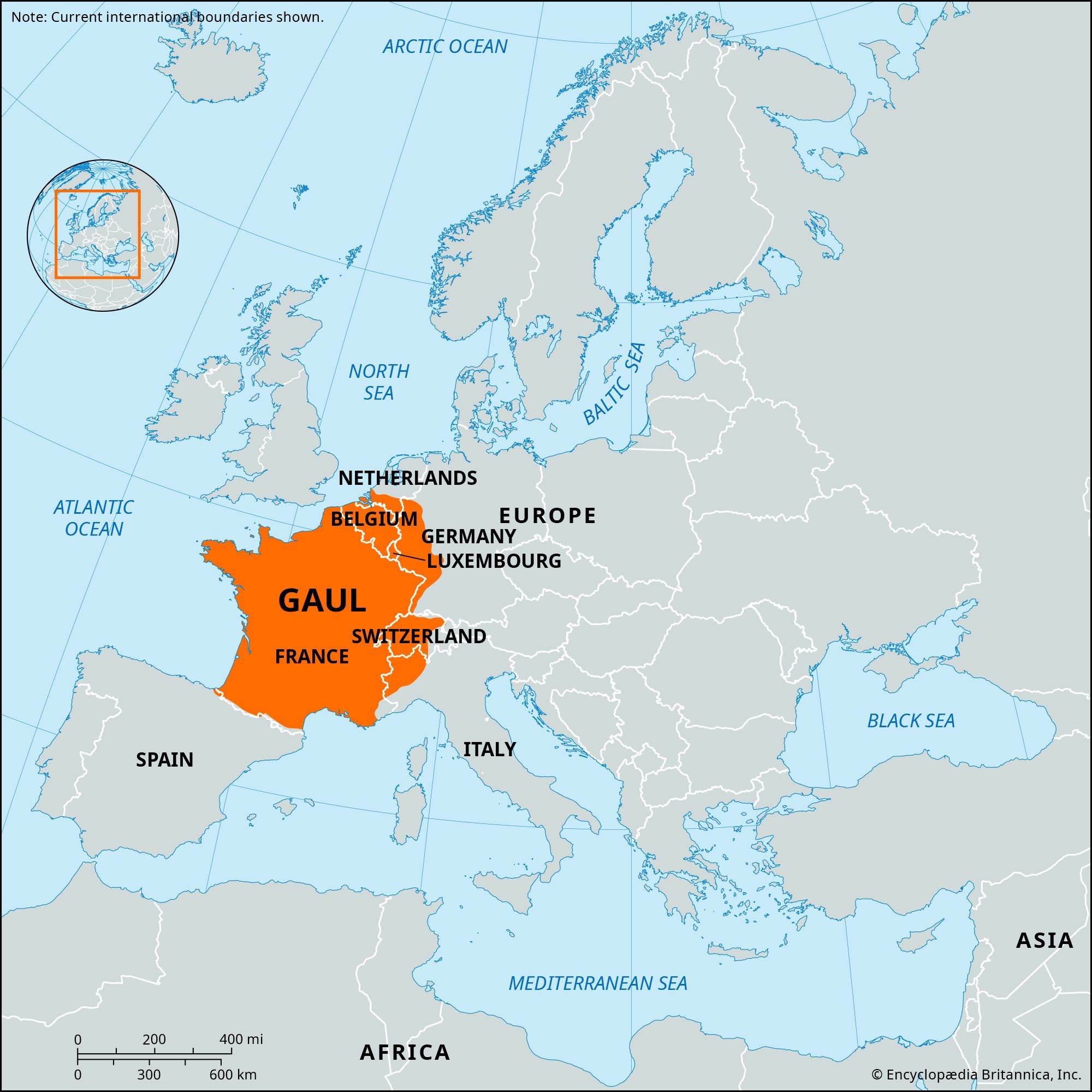
But they're produced in vast quantities across what was Gaul, which is modern-day France and a little bit of modern-day Eastern Germany as well, which is actually where this vessel's from.
David HanksGUEST
It's from one of the kiln sites at Rheinserburn in Eastern Germany.
David HanksGUEST
It's actually stamped by the potter itself, Giamellus IV.

Pamela NagamiNARRATOR
The ambition of their greatest leaders, of men like Alaric or Theodoric, was not to destroy but to rebuild the Roman world of ordered rule and equal justice.
Pamela NagamiNARRATOR
In Gaul and in Italy, the language and ideas of Rome turned the Frank and Lombard conquerors into Frenchmen and Italians.
Pamela NagamiNARRATOR
Meanwhile, imperial Rome became papal Rome.
Pamela NagamiNARRATOR
When the long centuries of contest between the Church and the Empire closed with the accession of Constantine, the result was not only that the Empire became Christian but also that the Church became imperial.
14 MINS LATER
Pamela NagamiNARRATOR
In the year 376, the Visigoths of Dacia were attacked by a vast horde of Huns from Central Asia, and after vainly trying to withstand them, they petitioned the emperor for leave to cross the Danube and settle in the empire.
Pamela NagamiNARRATOR
Valens allowed them to do so, but his impolitic treatment of them led to hostilities and to his defeat and death at the Battle of Adrianople in 378.
Pamela NagamiNARRATOR
His successor, Theodosius, made peace with them, but after his death they began to ravage the empire, and finally under their great king Alaric they poured into Italy, besieged and sacked Rome, and then, after the death of Alaric, settled in southern Gaul, where a body of Ostrogoths joined them in 473.
Pamela NagamiNARRATOR
They gradually extended their conquests in this bane, whence they drove out another Teutonic tribe, the Vandals.

Mark HarringtonNARRATOR
The object for which the democrats had unwillingly fought was practically attained, and the end was beginning slowly to come into sight.
Mark HarringtonNARRATOR
By the immense powers conferred upon him, Pompey was placed in a position to enact on his return from Asia Minor the part which Caesar subsequently played on his return from Gaul, and nothing but his own sluggishness and timidity of disposition stood between him and the perpetual dictatorship of Rome.
Mark HarringtonNARRATOR
By these two laws, a new power was created in the state, a power which, though in the hands of Caesar it became essentially democratic, in the hands of Pompey, as the popular leaders clearly saw, might become a fatal agent of reaction.
Mark HarringtonNARRATOR
With the rise of this force, the power of the Senate was definitely crushed, and, as a consequence, the old democratic battle cries lost all their meaning.
Mark HarringtonNARRATOR
Nor was it only the leaders of the democratic party who found here their fitting and final caricature.
Mark HarringtonNARRATOR
Catiline was a Sergius, a member of one of the noblest families in Rome, and in his selfishness, his incapacity, and his unclean life, he only exaggerated the vices which had been prevalent among the aristocracy for the preceding century.
Mark HarringtonNARRATOR
Alike in the character of its prime mover, in the blindness and feebleness of aim which it indicates in the democratic party, and in the impotence which the Senate displayed in their measures for its suppression, the conspiracy of B.C. 63 forms a fitting prelude to the new epoch which dates from Caesar's departure to gain himself an army in Gaul.
Mark HarringtonNARRATOR
On his return in B.C. 66 from the government of Africa, Catiline, according to Professor Beasley, assumed the leadership of the democratic party at Rome.

Alan Davis DrakeNARRATOR
THEIR COUNTRY though somewhat various in appearance, yet generally either bristles with forests or reeks with swamps.
Alan Davis DrakeNARRATOR
It is more rainy on the side of Gaul, bleaker on that of Noricum and Pannonia.
Alan Davis DrakeNARRATOR
It is productive of grain, but unfavourable to fruit-bearing trees.
Alan Davis DrakeNARRATOR
It is rich in flocks and herds, but these are for the most part undersized.

Kenny KatayamaHOST
You know, I went down a Wikipedia rabbit hole.
Kenny KatayamaHOST
I understand why so many men think about the Holy Roman Empire every day now, because like there was a lot of really fascinating stuff about like early Celtic and Gaul you know, division of the land and taking over different portions and the, you know, the fighting between the United Kingdom and France and, you know, its, its predecessors.
Kenny KatayamaHOST
Like that was cool stuff to learn.
Kenny KatayamaHOST
I already forgot all of it, but,

Jennifer MatarizHOST
Justinian... was intent on like bringing back into the fold of the Byzantine Empire, which was the eastern part of the Roman Empire, all of the lands and, you know, the countries and areas that had been lost when that particular part of the Roman Empire fell apart.
Jennifer MatarizHOST
So he wanted to get back Italy, Spain, Gaul, North Africa.
Jennifer MatarizHOST
Like there's so much land that he wanted to get back and that requires wars.
Jennifer MatarizHOST
So he needed money.
26 MINS LATER
Jennifer MatarizHOST
In fact, they're still used to guide legal thought to this day.
Jennifer MatarizHOST
The emperor made it his mission to try and reclaim as much of the former Roman Empire as possible.
Jennifer MatarizHOST
Italy itself was not under his purview when he took the throne, nor was North Africa, Spain, or Gaul.
Jennifer MatarizHOST
So the year following the Nica riots, Justinian sent an exhibitionary force to remove the Vandals from power over North Africa and take it into the Byzantine fold.

CrowHOST
They didn't go in any direction of any religion or spiritual movement at all.
Jason LindgrenHOST
It is interesting to note that the spirits he was supposed to be communicating with, particularly one who identified himself as Zephyro, said to have been a familiar spirit, told Reveil that in a previous incarnation, he had lived as a druid in ancient Gaul or Armorica and had borne the name of Alan Kardec.
Jason LindgrenHOST
they instructed him to resume that name for the work of codifying the new doctrine on Spiritism.
Jason LindgrenHOST
From that point forward, Reveil published exclusively under the pseudonym Alan Kardec, deliberately separating his established educational reputation from the Spiritist writings.

Gary MannersHOST
The route identified as the most important intermediary land corridor did not pass through Rome.
Gary MannersHOST
Tom Brumens, a scholar from Aarhus University, noted that the route traversed the North African and Levant coastal regions, skirted Antioch, and then headed towards Ankara before moving into Europe across Constantinople and onward through the Po Valley and Milan to Gaul.
Gary MannersHOST
Rome is centrally located for Mediterranean shipping but is not particularly central in the Roman road system, stated Brumens according to a Reuters article.
Gary MannersHOST
Straight only when the land allowed it.
270 more episodes mention Gaul.
Create an account to see the whole feed, search across every transcript, and follow the entities you care about.