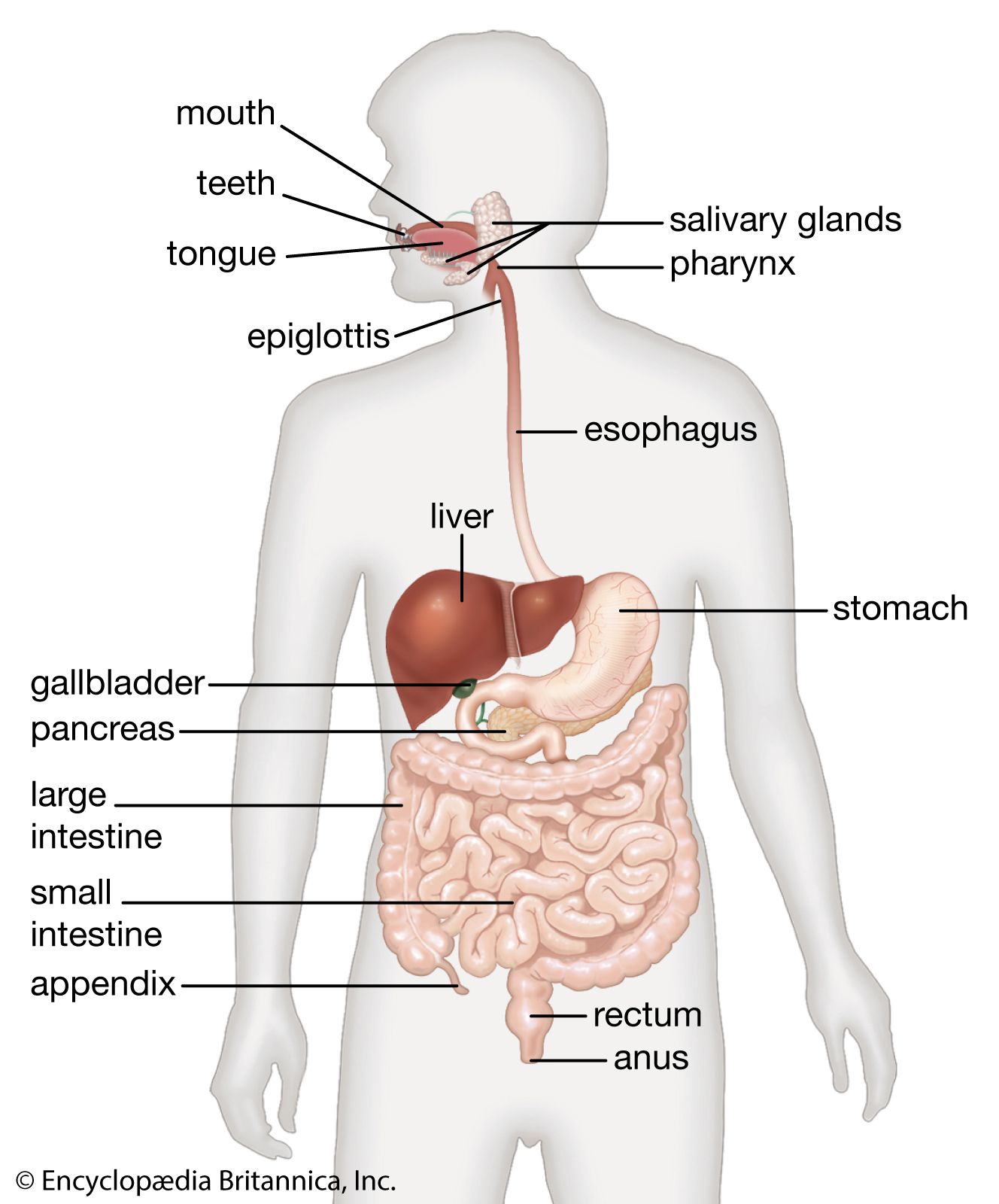
Gastrointestinal tract
612
MENTIONS
96
EPISODES
87
PODCASTS
Search complete. 612 mentions across 96 episodes found for "Gastrointestinal tract".
Nov 5, 2026

Sara BorgGUEST
So I always ask my client, tell me exactly like how your day unfolds.
Sara BorgGUEST
So what are meal times like? So if I have a client who works in like a corporate firm or they're just super busy, okay, and they've gone from a very intense meeting and then they're going to grab the lunchbox from the fridge at work and then they're putting it on their desk, they're answering emails and they're eating, their brain hasn't had time to communicate to the God that now it's time to eat.
Sara BorgGUEST
So you sit thinking about the intense meeting, you're looking at your emails, and your brain hasn't communicated to the God that now it's time to eat.
Sara BorgGUEST
So what happens? So if you're stuck in sympathetic drive, which is the fight or flight response, where your body's releasing stress hormones and you're eating in that state, it's going to be a bit harder for your body to break down the food.
Sara BorgGUEST
So what we want is we want to be in a calm state when we're eating.

Scott ScherrGUEST
I do also see people sometimes with detox reactions.
Scott ScherrGUEST
Some people, especially that go up too high on a dose too quickly, they'll get GI distress.
Scott ScherrGUEST
They'll get nausea.
Scott ScherrGUEST
They'll get diarrhea.
Scott ScherrGUEST
They'll get headaches from the detox reactions.
Scott ScherrGUEST
But those are pretty easy to mitigate if you go super slow with the dosing in more sensitive patients.
Scott ScherrGUEST
I also, when you talk about GI irritability, I don't see a lot of that, honestly, with the trochies that we use, especially at the low doses.
Scott ScherrGUEST
I have seen it higher doses of methylene blue, where over about a milligram per kilogram or over about 50 milligrams, really.

Jason DranoveGUEST
And interestingly, some research studies even have a hard time differentiating between functional constipation and irritable bowel constipation because they can be very similar.
Jessica PhanHOST
How do these conditions affect a child's day-to-day life beyond GI symptoms? What impact do these disorders have on families and caregivers?
Jason DranoveGUEST
That's a very important question.
Jason DranoveGUEST
And as in any kind of chronic pediatric condition or disease, it doesn't just affect the child.
Jessica PhanHOST
What does the current treatment journey typically look like for pediatric patients with IBSC and or functional constipation?
Jason DranoveGUEST
So for functional constipation, that's probably a little bit more common, or it's actually probably a good bit more common, probably at least twice as common.
Jason DranoveGUEST
And, you know, there are evidence-based guidelines that exist from the North American society of pediatric GI, the European society of pediatric GI.
Jason DranoveGUEST
And they kind of recently worked together on a guideline.

Courtney StewartHOST
Mm-hmm.
Courtney StewartHOST
For your third panel, that's your GI panel.
Courtney StewartHOST
Earlier, I asked you, is it mostly just focusing on absorption or gluten sensitivity? But you said you're really looking at more inflammation and autophagy.
Courtney StewartHOST
And I want to ask you why.
Courtney StewartHOST
We've talked about that in really big depth.
Courtney StewartHOST
And so if you haven't watched that episode yet, they should go back and watch it.
Courtney StewartHOST
But why are you looking more at inflammation and autophagy with the GI tract?
Kendal StewartGUEST
In this type of panel, so you're either programmed toward being more aggressive toward inflammation or not shutting inflammation off as well.

Cynthia ThurlowHOST
We discussed hypermobility and Ehlers-Danlos syndrome as 13 subtypes.
Cynthia ThurlowHOST
with the hypermobility one being closely connected to inflammation, MCAS, and immune system dysregulation, some of the commonly missed GI complications in hypermobile patients, how POTS, MCAS frequently overlap with GI dysmotility, the role of MALs.
Cynthia ThurlowHOST
how stress influences symptoms as well as nutrition, how he views constipation, and last but not least, his emphasis on staying curious.
Cynthia ThurlowHOST
This is a fascinating conversation about complex medical conditions and how they intersect with the gut.
Zachary SpiritosGUEST
Congestive heart failure, getting some like, like give us some like COPD, chronic obstructive pulmonary disease, open the lungs up.
Zachary SpiritosGUEST
IBS is like, well, and you know, there's also this disorder of the brain gut interaction, which is a step closer, but it's still doesn't really tell us what we need to do.
Zachary SpiritosGUEST
And so, um, And I guess through listening to people and looking at studies that looked at biopsy tissue of those with IBS, they had these kind of immune dysfunction seemingly present in the mucosa, in the lining of the GI tract.
Zachary SpiritosGUEST
And in this space, we don't have a lot of great data points.

James HuntGUEST
And we can explore that a little more if we need to.
James HuntGUEST
And then the last of the five is the GI stuff.
James HuntGUEST
Reflux, never mind whether they've had to have surgery on their stomach or intestines or esophagus as babies.
James HuntGUEST
We know that our loved ones with Down syndrome are more likely to be born with disconnected esophagus or stomach or disconnected stomach and intestines or disconnected intestines and intestines.
James HuntGUEST
The larger we are, the more pressure we have from our abdomen onto our stomach when we go to sleep, the more likely is that our abdomen just kind of squeezes those stomach contents
DanielleNARRATOR
up.
James HuntGUEST
And the anesthesia provider will plan for anesthesia accordingly, but that's the GI stuff associated.
Marla FoldenHOST
Can I ask you a clarification question around a lantoaxial instability specifically? So you had noted that between 10 and 30% of people will show AAI on x-ray, but not necessarily be symptomatic and only a small percentage will.

Emily AppeldornHOST
That's amazing.
Emily AppeldornHOST
I know on one of those episodes you talked about like a GI map.
Emily AppeldornHOST
Did I write that down right? Is that something you can do like an at-home thing? I couldn't tell by the way.
Emily AppeldornHOST
I wanted to ask you more about that.
Rita JohnsonGUEST
Yes, it is an at-home test.
Rita JohnsonGUEST
I believe you need to have a practitioner order it for you.
Rita JohnsonGUEST
Um, but a GI stool map is a really great way to see like, how am I breaking down and absorbing my food? What's going on with the microbiome? Um, that is where the, when I was talking about the estrogen metabolism piece, it's happening in the, um, it's called the estrobilone, which is like a, I think, think of it as like a borough of a city, like a subsection of a city.
Rita JohnsonGUEST
If your microbiome is all of the city of the gut bacteria, um, then that specific region where we're breaking down estrogen and transferring it out of the body is the estrobilone.

Karan RajanGUEST
So that came from a personal passion, but also professional.
Karan RajanGUEST
So professionally, as a general surgeon, the bulk of my work was operating and removing colon cancers, working on digestive diseases, inflammatory bowel disease, seeing chronic GI issues in clinic.
Karan RajanGUEST
So I was seeing a lot of this day to day.
Karan RajanGUEST
And it was interesting to me, how can we reduce the burden of this? How can we improve people's lives? And, you know, diving into microbiome science that we didn't really talk about to patients as doctors.
Karan RajanGUEST
So when we talk about gut health, I think most people, the lay person, probably means microbiome, fiber problem, constipation is probably what they mean, but it's far more diverse than that.
Karan RajanGUEST
And it basically encompasses all of it.
Karan RajanGUEST
The entire GI tract, which is dozens of organs.
Ben CarpenterHOST
I feel like when people online talk about gut health, it's often boiled down to things like bloating and gas, which are very diverse problems for a lot of people.

Mary PardeeGUEST
The direction is actually more towards how thyroid affects the gut than how the gut affects the thyroid.
Mary PardeeGUEST
And... how that works is that we actually have receptors on our GI tract for motility for the thyroid.
Mary PardeeGUEST
And so thyroid is a part of gut motility, but it's not as big of a part as other things.
Mary PardeeGUEST
So the autonomic nervous system, you know, the vagus nerve, those are going to be your big drivers for motility along with certain hormones like motillin, serotonin.
Zoe KelseyHOST
yeah definitely i also want to talk about like ibs too since i know it's like one of the main things that you talk about and um so people often get this diagnosis and often like it's misunderstood of what it actually is so what would what do you actually say ibs is and then there's also ibd too and It can be so confusing when somebody gets sent home with just this label.
Zoe KelseyHOST
But what does this actually mean? And I know you talk about the snake oil solutions versus the real solutions for it.
Mary PardeeGUEST
Yeah, so chronic GI issues is one part of the reason I got into medicine is I had chronic GI issues growing up.
Mary PardeeGUEST
So I had constipation and bloating, diagnosis SIBO.

ZabinHOST
Absolutely.
ZabinHOST
And so, you know, I think a lot of people, I don't know about you, but, you know, most patients when they come in, one of the first things when they say, oh, you know, I've had some GI issues for a while and, you know, I started trying to get some probiotics and maybe some prebiotics and I feel like I'm almost worse.
ZabinHOST
And that happens all the time.
ZabinHOST
And I kind of smile and perk up when that happens because I kind of get an idea of maybe what's going on.
Arland HillGUEST
Really, you think about the mouth, the large intestine.
Arland HillGUEST
That's where the majority of these organisms should be at.
Arland HillGUEST
The middle area through the GI tract, we shouldn't have an accumulation of organisms in there.
Arland HillGUEST
Yes, there's going to be some.
86 more episodes mention Gastrointestinal tract.
Create an account to see the whole feed, search across every transcript, and follow the entities you care about.