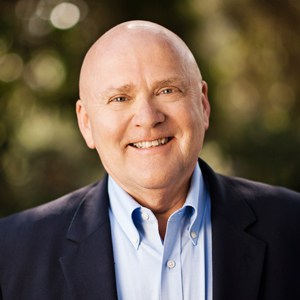
Garry O. Ridge
Executive and former CEO of WD-40 Company
8
APPEARANCES
8
PODCASTS
Oct 7, 2026


Garry RidgeGUEST
So, uh, I'd been traveling around the world to our different operations, and I got back to my office one day and, uh, and someone ran in really quickly and said, "I need to talk to you." And I thought, "Oh, wow, you must have missed me." [laughs] And they, they...
Garry RidgeGUEST
They, they were there to make me aware of a fact that there was something that happened that they didn't know about and they should've known about it.
Garry RidgeGUEST
And I thought to myself, "Wow, you know, how, how do we, how do we get rid of what I would call the na-na-ni-na-na disease in an organization, the finger-pointing disease, right?" And I said- Well, we have to, we have to give people permission to be able to do what they need to do.
33 MINS LATER


Garry RidgeGUEST
So those six years operating at a distance from what you would call headquarters really taught me a lot.
Garry RidgeGUEST
A- and given our goal eventually was to take the blue and yellow can with a little red top to the world, I knew the barriers that happened to be at distance, and one of them was how do you make decisions when you're, you know, 8,000 miles away? So that was, that was really a big learning for me, and, uh, I, I think I ben- benefited from that.
Garry RidgeGUEST
Uh, I'd done a lot of work in Asia Pacific, and, uh, it was exciting, and one of my kind of reflection learning moments in life is great things happen when you disrupt yourself, and there's probably nothing more disruptive, or there's some...
Garry RidgeGUEST
I guess there is, of moving a family 8,000 miles across the ocean to a country where people drive on the other side of the road.
20 MINS LATER


Gary RidgeGUEST
I was given the privilege to lead the company in 1997, and I knew with the help of the people around us and my experiences how to actually market the product.
Gary RidgeGUEST
What was always on my mind was how do you build cultures where now that the sun was truly never going to set on the organization, where people are empowered and they felt like they belonged and they mattered.
Gary RidgeGUEST
Having worked for a period of time away from the center of the company, which was San Diego, I kind of knew what it was like to be out there.
12 MINS LATER

Graeme CowanHOST
So when you do go into an organization, do you just work with the CEO or do you work with the whole executive team or how do you approach an assignment where they want to have a better culture?


Brian BuffiniHOST
how did you end up running the Aussie branch, if you will, and how did you end up moving up the ladder and becoming the CEO?
Garry RidgeGUEST
Well, I was having a phone conversation with the then president one day, and I said, is there anything else you'd like me to do? And he said, funny you should ask, would you like to move to the U.S.? And I said, to do what? He said, why don't you come over here and head up our global expansion program I'd done a lot of work in Asia based out of Australia, and I really did have a love for global culture.
Garry RidgeGUEST
And there wasn't anyone else really in the company that was as enthusiastic, I guess, as I was about taking the brand globally.
Garry RidgeGUEST
And for some reason, the board of directors of a US public company thought that this dumbass from Australia might be okay.
13 MINS LATER

Garry RidgeGUEST
Yeah, you know, the whole tribal concept is not to reflect or to reflect on any Indigenous behaviour at all.
Garry RidgeGUEST
It goes back to the beginning of mankind, you know, when Ugg the caveman was a member of a tribe.
Garry RidgeGUEST
And the whole basis is tribes create one of the situations that are so important to people, and that's belonging.
Garry RidgeGUEST
You know, one of the two things that people want in organizations are, do I feel and am I treated like I belong? And do I feel and am I treated like I matter? So if you think about a tribal organization, it has a just cause, a group of people that come together to protect and feed each other.
Garry RidgeGUEST
The one that I think is very powerful looks to the leader and the number one responsibility of the tribal leader is to be a learner and a teacher.
27 MINS LATER

Rita McGrathHOST
are automotive customers, right? They're people that work in, like, car shops and

OmaidHOST
I'll take it.
Garry RidgeGUEST
Well, because the details, you know, but this person worked in the supply chain at WD 40 company and they had the ability to make decisions around some of the, um, ingredients that would go into our products.
Garry RidgeGUEST
And one day, salesman X from company fill in the blank came along and said, hey, I've done some work on your formulation and there's an ingredient that you're using and we have an alternative to that.
23 MINS LATER
OmaidHOST
I'd love to hear that story.

Garry RidgeGUEST
So when I was in high school in Australia, my science teacher came in one day and said, we're going to grow culture in a Petri dish.
Garry RidgeGUEST
So what do you need to know? You need to know what ingredients to put in the Petri dish to grow the desired culture you want.
28 MINS LATER

Adam PacificoHOST
What advice have you got? What thoughts have you got for leaders in relation to their ability to be deeply curious about the customer so that the customer loves what you do?