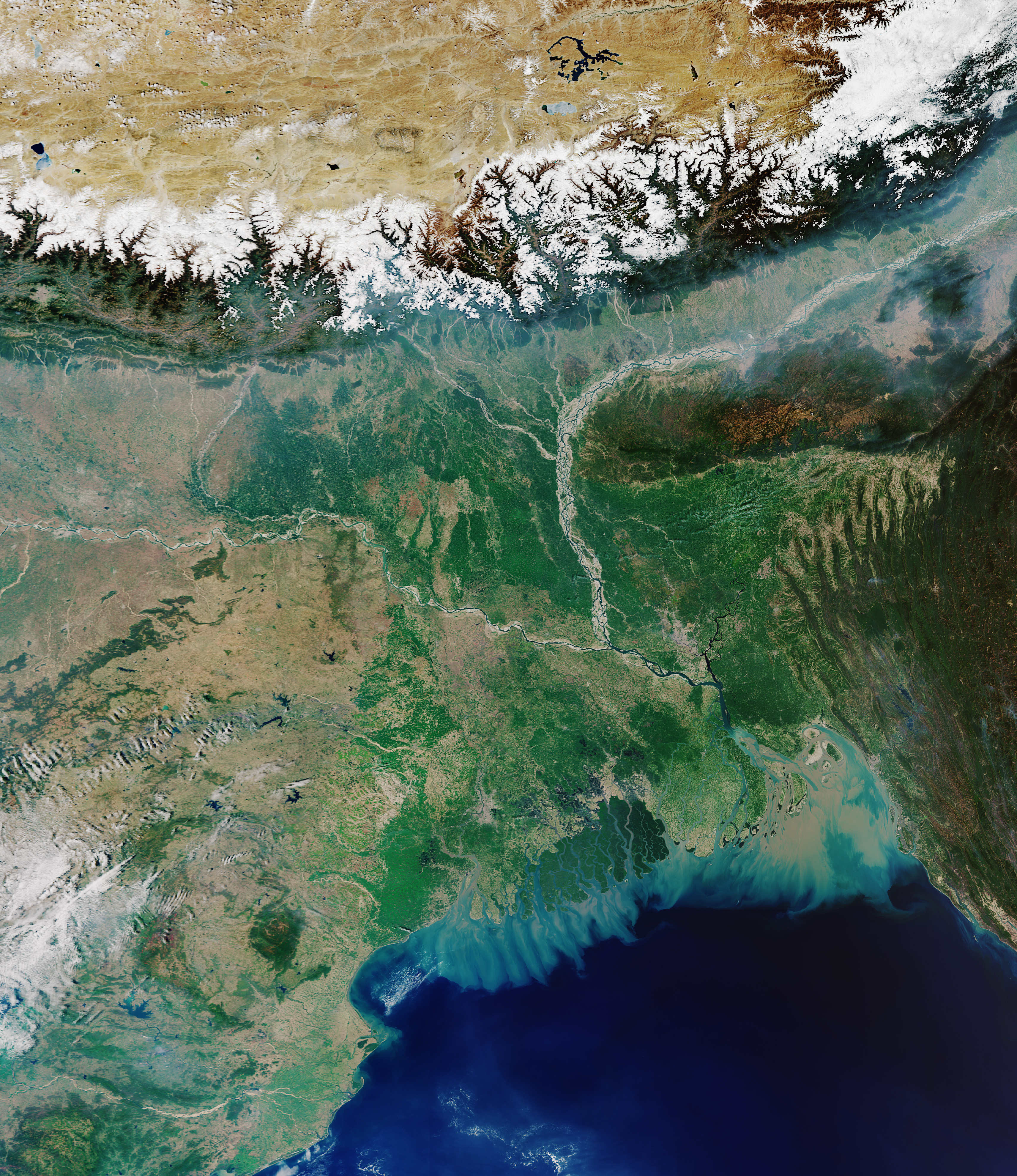
Ganges Delta
River deltaWikipedia
10
MENTIONS
7
EPISODES
7
PODCASTS
Search complete. 10 mentions across 7 episodes found for "Ganges Delta".
Oct 1, 2026

Patrick JoryHOST
Was that your intention in writing the book, or it sort of just came out of the evidence?
Iftekhar IqbalGUEST
When I finished my first monograph, Bengal Delta, I was already thinking because I realized that what we call delta is, is a result of all the silts and, you know, for millennia of the silts creating these lands.
Iftekhar IqbalGUEST
And so I thought that actually this can be replicable to all the, uh, rivers in some way if you take a longer trajectory.
Iftekhar IqbalGUEST
So I was already thinking that this, this would in a way conceptually dismantle this area studies.
Iftekhar IqbalGUEST
It's rather a more strategic choice by the ethnic groups.
Iftekhar IqbalGUEST
Because probably if you are in the upland, it's probably they have better strategic value.
Iftekhar IqbalGUEST
And if that upland is a place where lot of mobility of products and cultural practices and ideas and commodities, everything is about to move across from one end to another, from Bengal Delta to, to North China Sea, from Gulf of Tonkin to the Mekong Delta.
Iftekhar IqbalGUEST
So if you position yourself in that crossroads, probably you will not need prompting, you will not need suppression to go there.

Patrick JoryHOST
Was that your intention in writing the book, or it sort of just came out of the evidence?
Iftekhar IqbalGUEST
When I finished my first monograph, Bengal Delta, I was already thinking because I realized that what we call delta is, is a result of all the silts and, you know, for millennia, all the silts creating these lands.
Iftekhar IqbalGUEST
And so I thought that actually this can be replicable to all the, uh, rivers in some way if you take a longer trajectory.
Iftekhar IqbalGUEST
So I was already thinking that this, this would in a way conceptually dismantle this area studies.
Iftekhar IqbalGUEST
It's not a fleeing from the plain land.
Iftekhar IqbalGUEST
It's rather a more strategic choice by the ethnic groups, because probably if you are in the upland, it's probably they have better strategic value.
Iftekhar IqbalGUEST
And if that upland is a place where lot of mobility of products and cultural practices and ideas and commodities, everything is about to move across from one end to another, from Bengal Delta to, to North China Sea, from Gulf of Tonkin to the Mekong Delta.
Iftekhar IqbalGUEST
So if you position yourself in that crossroads, probably you will not need prompting, you will not need suppression to go there.

Patrick JoryHOST
Was that your intention in writing the book, or it sort of just came out of the evidence?
Iftekhar IqbalGUEST
When I finished my first monograph, Bengal Delta, I was already thinking because I realized that what we call delta is, is a result of all the silts and, you know, for millennia all the silts creating these lands.
Iftekhar IqbalGUEST
And so I thought that a- actually this can be replicable to all the, uh, rivers in some way if you take a longer trajectory.
Iftekhar IqbalGUEST
So I was already thinking that this, this would in a way conceptually dismantle this area studies.
Iftekhar IqbalGUEST
It's rather a more strategic choice by the ethnic groups.
Iftekhar IqbalGUEST
Because probably if you are in the upland, it's probably they have better strategic value.
Iftekhar IqbalGUEST
And if that upland is a place where lot of mobility of products and cultural practices and ideas and commodities, everything is about to move across from one end to another, from Bengal Delta to, to North China Sea, from Gulf of Tonkin to the Mekong Delta.
Iftekhar IqbalGUEST
So if you position yourself in that crossroads, probably you will not need prompting, you will not need suppression to go there.

Nidhi Dugar KundaliaGUEST
Now, the three reasons that, you know, Sundarbans is made of basically a very fragile combination of sweet and salt water.
Nidhi Dugar KundaliaGUEST
So this, you know, the sweet water, which is basically all the rivers which are emptying into the, you know, the Ganges Delta and ending in the Sundarbans, which provide the sweet water.
Nidhi Dugar KundaliaGUEST
And then, of course, the salt water comes in from the sea, the Bay of Bengal.
Nidhi Dugar KundaliaGUEST
So this combination is what makes the region a biodiversity hotspot because it is, you know, this is where all these mangroves survive.

Pardis SabetiHOST
Instead, the incidence might drop to a lower, steady rate.
Pardis SabetiHOST
Often that's similar to what the incidence was before the outbreak, like the short-lived outbreak of cholera we looked at in the Ganges Delta in episode 1.
Pardis SabetiHOST
The rate of new cases started off small, then jumped up during the outbreak, and finally gradually fell back down to the original level.
Pardis SabetiHOST
But sometimes the disease might become endemic when it wasn't before.

JeremyHOST
If anybody knows, let me know.
JeremyHOST
During the 19th century, people around the Ganges Delta in what is now Bangladesh reportedly reported mysterious cannon-like explosions.
JeremyHOST
They became known as the Barisal guns.
JeremyHOST
The descriptions are wonderfully eerie.

Manisha Lath GuptaHOST
And these are the same floodwaters that would irrigate the rice crop.
Manisha Lath GuptaHOST
Then West Bengal and the Gangetic Delta, where there is a lot of monsoon rainfall, there are floodplains, there's low-lying land, there's poor drainage, there are natural wet landscapes.
Manisha Lath GuptaHOST
These are the places where paddy would be grown.
Manisha Lath GuptaHOST
Orissa is also a good state which has a lot of diversity of rice ecologies.