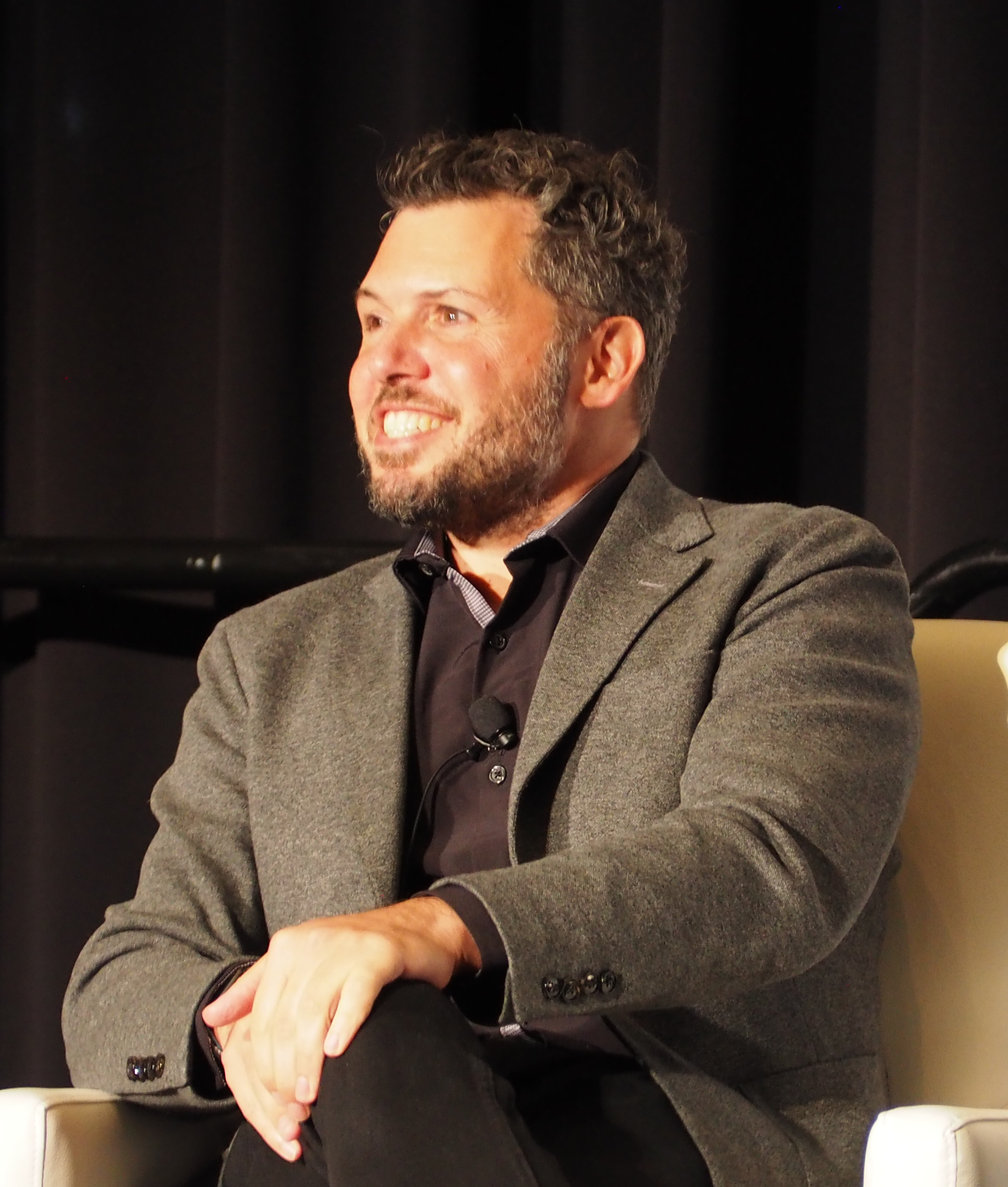
Gal Beckerman
WriterWikipedia
8
MENTIONS
3
EPISODES
2
PODCASTS
Search complete. 8 mentions across 3 episodes found for "Gal Beckerman".
Oct 3, 2026

Andrew KeenHOST
So it's a kind of linguistic guide in a sense.
Andrew KeenHOST
We did a show a few months ago with the American writer Gal Beckerman about how to be a dissident.
Andrew KeenHOST
Again, a very interesting book.
Andrew KeenHOST
You're probably familiar with Gal and the work.
6 MINS LATER
Dan StoryevGUEST
There is always this sort of Aesopian speech.
Dan StoryevGUEST
Yeah, so
Andrew KeenHOST
it's probably not surprising, certainly in Gal Beckerman's book, How to Be a Distant, perhaps, His most attractive model is Vaclav Havel, the Czech dissident playwright, of course, a man of words, as well as other Czechs like Kundera writers.
Andrew KeenHOST
And of course, again, don't need me to tell you this, Dan, this is manifested not just in works, but not just in words, but in all kinds of artistic expressions.
Andrew KeenHOST
[singing] Hello, everyone.
Andrew KeenHOST
Back in April of this year, we did a show with the cultural political historian Gal Beckerman, works for The New York Times, about becoming a dissident.
Andrew KeenHOST
He had a new book out back then, it's done rather well, How to Be a Dissident.
Andrew KeenHOST
He included 10 features in dissidents, including pessimism, humor, recklessness, and immortality.
9 MINS LATER
Keri Leigh MerrittGUEST
Uh, for sure.
Keri Leigh MerrittGUEST
I mean, race science was a, a huge deal at the time, and obviously something she never bought into, and I think that kind of plays into why she really started studying the psychology and then the, the psychoanalys- a- uh, analysis of, of, of white supremacy, um, to examine how it affect, how it affected white people, how the shame and guilt and humiliation of their, you know, decades if not centuries of oppression and, and rape and murder of Black people really hurt white people in a profound way that we still don't even talk about in, in a very frank way today.
Andrew KeenHOST
So what kind of dissident was she? As I, as I noted in the introduction, uh, Gal Beckerman has an excellent book, How to Be a Dissident, that talks about the qualities, if that's the right word, of, of dissidents, including humor, pessimism, immo- uh, immortality.
Andrew KeenHOST
I mean, not every dissident of course conforms to his ten rules.

speaker_0NARRATOR
Dragging a 3,000-year-old poem into the present requires a choice.
speaker_0NARRATOR
Gal Beckerman watches a modern translator sweat over the exact rhythm of ancient Greek syllables, trying to make Homer sound just as urgent today as he did around a campfire.
speaker_0NARRATOR
Then there is a much more rebellious approach.
speaker_0NARRATOR
Iskander Raymond looks at a seventeenth-century French archbishop who simply stole Homer's characters and dropped them into a subversive political thriller meant to secretly critique his king.
speaker_0NARRATOR
When college students complain that the Odyssey is boring, translator Emily Wilson doesn't blame the ancient Greek story.
speaker_0NARRATOR
She blames English versions that drag on for twice as many lines.
speaker_0NARRATOR
In an interview published last week, Gal Beckerman catches Wilson explaining why she forces her own translations to match Homer's exact pacing.
speaker_0NARRATOR
Notice how she treats meter and length not as academic rules but as a direct cure for a bored reader.