Gadsden Purchase
RegionWikipedia
10
MENTIONS
7
EPISODES
7
PODCASTS
Search complete. 10 mentions across 7 episodes found for "Gadsden Purchase".
Oct 22, 2026

Russ McSpaddenCORRESPONDENT
It's really hard to judge the age of a cottonwood, but they're really large trees.
Russ McSpaddenCORRESPONDENT
You know, at 250 years old, it'd be about as old as the Gadsden Purchase, meaning about as old as the border itself here.
Russ McSpaddenCORRESPONDENT
Yeah, so people have taken up calling them the grandmother trees.
Kate ScottGUEST
So they're grandmothers.

InmnHOST
And the reservation has also historically extended into Sonora, Mexico.
InmnHOST
And it was during the Gadsden Purchase in 1853 or 1854, I never remember which, that sort of cut the Tohono O'odham Nation in half.
BrookeHOST
But until now, there hasn't really been
InmnHOST
like a big physical border wall.

Joshua SpellmanHOST
However, there were ambiguities in the Treaty of Guadalupe Hidalgo, so while the settlers in the Mesilla colony believed themselves to be firmly Mexican, the United States still considered their area to be part of US territory.
Joshua SpellmanHOST
And this led to a lot of confusion and diplomatic disputes, making Mesilla a no man's land until the matter was officially settled in 1853 with the Gadsden Purchase, also known as the Venta de la Mesilla, or the Mesilla Sale.
Joshua SpellmanHOST
The purchase officially made Mesilla part of the United States, with the agreement being ratified in 1854.
Joshua SpellmanHOST
After the signing of this agreement, the town of Mesilla quickly became a cultural hub in the region, as it was perfectly situated to facilitate trade along the El Camino Real and the Santa Fe Trails.

speaker_0NARRATOR
Not because it is hidden necessarily, but because the medium in which it might be hidden is a three-dimensional maze of volcanic rock that actively resists systematic exploration.
speaker_0NARRATOR
The first American military surveys of the region, conducted in the 1850s and 1860s after the Gadsden Purchase brought the land under United States sovereignty, described the Superstition range in terms that combined geographical precision with a kind of bewildered frustration.
speaker_0NARRATOR
The surveyors were professionals.
speaker_0NARRATOR
They had mapped the Great Basin, the Colorado Plateau, the Sierra Nevada.
38 MINS LATER
speaker_0NARRATOR
Beneath Waltz's story, beneath the deathbed directions and the maps and the gold ore samples lies an older narrative or what claims to be an older narrative.
speaker_0NARRATOR
The Peralta legend is the foundation myth of the Lost Dutchman story, the backstory that gives the mine a history before Waltz and a provenance that extends into the colonial period.
speaker_0NARRATOR
According to this legend, a wealthy Mexican mining family named Peralta operated rich gold mines in the Superstition Mountains during the first half of the nineteenth century before the Gadsden Purchase of 1853 transferred the region from Mexico to the United States.
speaker_0NARRATOR
The Peralta story goes like this.

speaker_3VOICE_ACTOR
During his administration, the Kansas-Nebraska bill, leaving slavery to popular vote, was passed.
speaker_3VOICE_ACTOR
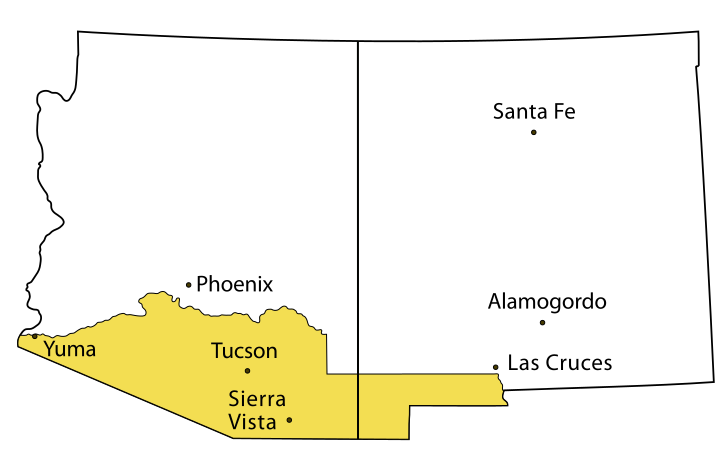
The Gadsden Purchase from Mexico added some 45,000 square miles of territory in what is now Arizona and New Mexico.
speaker_3VOICE_ACTOR
And Japan opened its doors for the first time to trade with the United States.
speaker_3VOICE_ACTOR
If you don't have his name by now, here's one more important clue.

Wayne CookNARRATOR
Or, as another historian states it, territory equal in area to Germany, France, and Spain added together.
Wayne CookNARRATOR
the gadsden purchase and the battalion route commenting on the battalion's march and the map he made of it colonel cook says a new administration this was the pierce administration eighteen fifty three eighteen fifty seven in which the southern interests prevailed with a great problem of the practicability and best location of a pacific railroad under investigation had the map of this wagon route before them with its continuance to the west and perceived that it gave exactly the solution of its unknown element that a southern route would both avoid the rocky mountains and sierra nevadas with their snows and would meet no obstacle in this great interval The new Gadsden Treaty was the result.
Wayne CookNARRATOR
It was signed December 30, 1853.
Wayne CookNARRATOR
This purchase added to the territory of the United States 45,535 square miles, for which was paid $10 million.
Wayne CookNARRATOR
The purchase was made by James Gadsden of South Carolina, Minister to Mexico, hence the name Gadsden Purchase.
Wayne CookNARRATOR
in addition to the wagon road opened westward through southern new mexico arizona and california we have seen that it was a detachment of twenty-five discharged members of the battalion which brought the first wagon through from the coast by a cajon pass to salt lake valley following what is now the general course of the san pedro los angeles and salt lake railroad and which became known in the early utah california times as the southern california route to the coast also as we have seen the battalion members returning from the gold fields of the american river region cut a new wagon road much of the way for there's seventeen wagons and two cannons from the western side of the sierra across the summit of that lofty range thence down to the eastern sloping deserts of nevada and so to salt lake valley The conquest of northern Mexico, including, of course, California and Utah, as well as New Mexico, and, bracket, transcriber's note, text is missing in the original, end bracket, lengths of their conduct, not only on the march to the Pacific Fleet of the American Navy and the Army of the West, the main division of which was under the command of General Stephen W. Kearney, the battalion's part in the conquest is detailed in the foregoing narrative and also is acknowledged in the military order by colonel cook referred to several times and given in full in a preceding page of this book in addition to all this the battalion reflected great credit upon the community of utah pioneers of whom it never ceased to be a part by reason of the excellence of their conduct not only on the march to the pacific coast but also when doing garrison duty in southern california the efforts to secure the reenlistment of the battalion and failing that the effort to secure the enlistment of a second mormon battalion were the conscious confessions of both california and federal officials since both participated in such efforts to the worth of these united states soldiers They religiously respected their rights and feelings of the conquered people of California.
Wayne CookNARRATOR
Not a syllable of complaint of a single insult offered or any outrage done by a Mormon volunteer is the record of the battalion and the re-enlisted volunteers according to the report of them by Governor Mason.