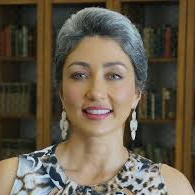
Gabriella Rosa
Harvard-trained fertility specialist, founder and CEO of the Rosa Institute, and author of The Fertility Book.
5
APPEARANCES
5
PODCASTS
Sep 18, 2026


Gabriella RosaGUEST
There's a lot to unpack here, but I'm going to try and make this as really easy to understand as possible.
Gabriella RosaGUEST
Right now within your body, you and your partner are carrying 50% of the little baby you want to create, which means that the principle I approach this with at this point is act pregnant now to get pregnant later.
Gabriella RosaGUEST
So all of the things that you would absolutely do or stop doing if you were pregnant right now are all of the things that you will start or stop doing if you are wanting to prepare your body to be in the best possible place for a healthy pregnancy.
Gabriella RosaGUEST
And we both know, you know, if you've been pregnant before, you will, the second, and I see this so clearly, like I've had, I've treated thousands and thousands of patients over 25 years.
18 MINS LATER

WoodHOST
One last thing is just like the, there's something profound for me that is the awareness that I'm willing to do that in the idea of conception and But why don't I bring my awareness to how I show up for myself in the ways that I'm consuming and my patterns and all of this to take care of me?
Gabriella RosaGUEST
And you know what's interesting about that? And I think that this is such a great point that you bring up.
Gabriella RosaGUEST
We've all heard of people who have never smoked a day in their life and died of lung cancer.
Gabriella RosaGUEST
And we've all heard of people who are chain smokers and never developed lung cancer at all.
Gabriella RosaGUEST
And so to that, you have to ask, but why, right? Because we all know smoking causes cancer and predominantly lung cancer.
28 MINS LATER
WoodHOST
I got to get it together right now and get on my regimen.

KirstenHOST
And I'm curious, you know, today to just a little bit of a different slice of this fertility piece, and you're kind of already mentioning it, but when a man is, is struggling with fertility, what does that start to do with how he shows up sexually and emotionally with his partner?
Gabriella RosaGUEST
It's a great question, and I think that, you know, to, to talk about that, we need to kind of take a step back and talk about what happens when a couple is experiencing infertility because often, even in society, the conversation really revolves around the fact that fertility is a woman's issue, right? And so for the longest time, it's, there is this avoidance to really look at the male factor in a very effective way, in a very objective and clear way.
Gabriella RosaGUEST
So if you think about what happens when a woman goes to a-- Like, you know, when a couple is trying to conceive, and months start to go by, and nothing's happening, and then they finally, you know, she may make an appointment to see a doctor, and the doctor finally says, "Okay, look, let's go and do some tests, and we'll figure out what's wrong or what's happening," right? And usually, the basic tests will be done.
Gabriella RosaGUEST
Some doctors will then basically say, "Look, your partner also needs t- needs to have a semen analysis," and sometimes nothing is said at all.
Gabriella RosaGUEST
When something is said, then usually, because that consultation hasn't happened from the perspective of two people who are trying together going to see a doctor, it becomes a- Kind of in passing recommendation from the doctor saying, "Oh, look, you know, your partner should go and, and do this thing." When she gets home and she mentions that to her partner, what is the reaction or response that that woman gets? And that will be very dependent on the man, right? So some men will be comfortable enough to hear that request or that suggestion and say, "Okay, yeah, that's, that's something that I could do in the context of us trying to conceive together." But most of the time, that, that comment gets rebuffed and it's like, "Oh, no, there's nothing wrong with me.
20 MINS LATER
KirstenHOST
And I was so excited knowing I was gonna get to talk to you tonight about, about what are some of the things that might be affecting a man's fertility and also h- might be affecting his hormones and just his sexual health overall that we might not always consider or look out for.

SapphireHOST
Hmm.
Gabriella RosaGUEST
Now, that does not mean that they've arrived at the end of their reproductive life, their fertile life, or their ability to carry pregnancies to term.
Gabriella RosaGUEST
But that has made it into what gets cited in today's reproductive medicine world.
Gabriella RosaGUEST
It's convenient data for the purposes of reproductive medicine, which is to sell IVF cycles.
Gabriella RosaGUEST
If you think about the standard therapy route for infertility and infertile couples or couples who struggle to have a baby, you are trying for six months.
8 MINS LATER
SapphireHOST
Yeah.

Gabriella RosaGUEST
So you see, the agreements that we make is that we work, like, the, the clinic hours are 7:00 to 7:00 AM Sydney Standard Time.
Gabriella RosaGUEST
So that means that when you're employed in my clinic, I don't care where you are and I don't care where you go to work from.
Gabriella RosaGUEST
Like, literally you can be in Vietnam today and tomorrow in China or whatever, I don't care.
Gabriella RosaGUEST
As long as, one, you deliver the outcome that you are employed to deliver, and the second thing is that you understand very clearly that you work within Australian business standard hours, which is 9:00 to 5:00.
Gabriella RosaGUEST
Like, there are people who basically say to me, "I don't want to start at 6:00 AM my local time.