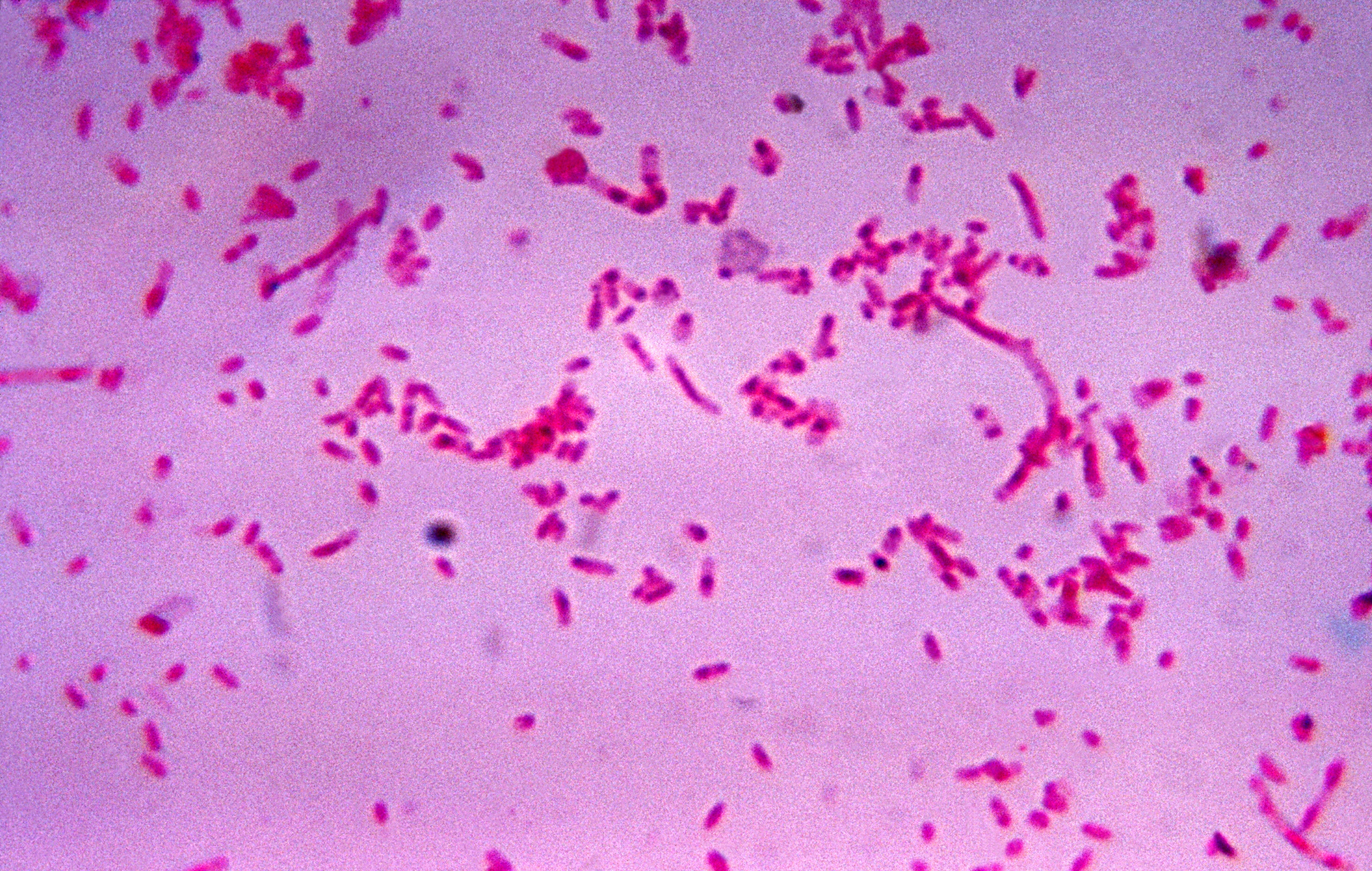
Fusobacterium
BacteriaWikipedia
10
MENTIONS
7
EPISODES
7
PODCASTS
Search complete. 10 mentions across 7 episodes found for "Fusobacterium".
Sep 17, 2026

Luis PlazaHOST
Um, and, you know, you mentioned fusobacterium and, and since a throat culture doesn't know have a gram stain with it because i know like a lot of texts you know when you get other sources right they see it on the gram stain and then they put notes hey you know i think we have fused bacteria so we're kind of looking for it and um but for that one yeah it's just it's it's you know you don't have anaerobic plates and and you're looking at aerobic plates so there's no gram stain so yeah that's one that um you know in our kind of bacterium yeah we don't see it as much and it's kind of cool when you do see it i mean of course from the nerdy micro side you know seeing those very tiny, you know, beta grant positive rod searches.
Christopher DoernGUEST
Well, you know, I've wondered if we're not missing it because we're not holding our plates long enough.
Christopher DoernGUEST
Um, is a it's a cool bug and so my you know maybe we're shooting ourselves in the foot with with our culture practices but i bet you if we held our culture for 72 hours most most labs are going to hold their throat cultures for either 24 maybe 48 hours but i bet you if you held them for 72 hours we'd pick up a lot of arcano bacterium and the few that we've seen they're they're pretty tiny at 24 hours um i i guess you might pick some up that way um but also like another and you and i can maybe patent this right here and we can become millionaires because this is a great idea Um, it may not be, but, um, I would be really interested in some sort of an anaerobic selective media for Fusobacterium macrophorum.
Christopher DoernGUEST
Um, I, I just, it's something that we, we miss a fair amount and probably it doesn't matter.
Christopher DoernGUEST
Probably those all get better on their own anyway, but it's a huge chunk of pharyngitis that this thing causes.
Christopher DoernGUEST
And to my point, like obviously the mouth is riddled with anaerobes, so you'd have to have some sort of a selective media.
Christopher DoernGUEST
Um, But Fusobacterium necrophorum especially, you'd want your media to look for that especially and somehow differentiate from the other Fusobacterium that are normal flora.
Christopher DoernGUEST
I'm of the mind that necrophorum is not.

Julien ScanziGUEST
Et je vais prendre l'exemple du cancer colorectal.
Julien ScanziGUEST
On sait qu'il y a une grande partie des gens qui ont un cancer du colorectal, un cancer colorectal, euh, qui ont dans leur microbiote une bactérie, d'un certain sous-type d'une bactérie qui s'appelle Fusobacterium nucleatum, qui est une bactérie à la base de la bouche, euh, qui peut favoriser le développement du cancer colorectal.
Julien ScanziGUEST
Et donc, ça, pour le coup, c'est une bactérie qui n'est pas considérée comme pathogène puisqu'on sait simplement qu'elle peut favoriser le développement d'une maladie, mais elle n'entraîne pas une infection.
Julien ScanziGUEST
Donc cette bactérie-là, elle n'est pas recherchée à l'heure actuelle chez les donneurs et peut-être qu'on la transfère sans s'en rendre compte à des gens qui souffrent d'une pathologie bénigne, qui, dix, vingt, trente ans plus tard, vont peut-être faire un cancer du côlon ou une autre maladie chronique qu'ils n'auraient pas forcément fait avec leur microbiote initial.
Julien ScanziGUEST
Et donc ça, pour le coup, ça doit conduire à de la prudence parce qu'on ne maîtrise pas ça.
Julien ScanziGUEST
Et là, j'ai pris un exemple avec le Fusobacterium dans le cancer colorical, mais probablement que dans les prochaines années, on va découvrir encore d'autres signatures microbiennes, d'autres consortiums de bactéries qui, euh, une seule n'entraînera pas de souci, mais une avec d'autres pourra potentiellement favoriser le développement de mauvaises, de, de pathologies.
speaker_0HOST
Oui, parce que même si, par exemple, ils ont un manque crucial peut-être de certaines bonnes bactéries qui chez lui ne développent rien, euh, mais chez l'autre peut potentiellement être dangereux.
speaker_0HOST
Donc ça, par exemple, vous identifiez pas, enfin ça fait pas partie du protocole de regarder s'il y a ce Fusobacterium.

Jane LevesqueHOST
They're in the green, but they're not below detection limit.
Jane LevesqueHOST
Some of the autoimmune trigger markers, uh, whether that's Klebsiella or Proteus or Fusobacterium species like this person has, I want it at ze- like I do not want any in the system.
Jane LevesqueHOST
They're very highly associated with developing autoimmune disease.
Jane LevesqueHOST
Um, I don't wanna see any, uh, Candida, and he doesn't have any, and definitely no bacterial pathogens or H. pylori, and again, those things are all clear, which is great.

Sarah GreenfieldGUEST
And with strain level identification, you can start to see more clearly what is happening in the microbiome.
Sarah GreenfieldGUEST
So we identified something, some form of Fusobacteria.
Sarah GreenfieldGUEST
I'm going to say it wrong.
Sarah GreenfieldGUEST
It does have a mouthful of a name.

Chris WarkHOST
That's huge.
Chris WarkHOST
And 'cause we know there's some very pathogenic oral microbes that can get into the gut, like Fusobacterium, which is linked to colon cancer and, and v- it's very problematic.
Chris WarkHOST
You know, again, it's one of the ones that are considered a bad bacteria, that it has d- almost no benefit to-
Martha CarlinGUEST
No

Anna Hielm-BjörkmanGUEST
Whereas when they are on a raw food diet, it looks a bit more like kind of a, what in your index you have as a healthy kind of gut index.
Anna Hielm-BjörkmanGUEST
So there's going to be differences in the firmicutes in the, Fusobacteria in the bacteroides.
Anna Hielm-BjörkmanGUEST
And you're going to also, which is, I mean, it's totally logical if you have very, very little carbohydrates.
Anna Hielm-BjörkmanGUEST
There's nothing for those bacteria that like to eat carbohydrates.

James GoolnikGUEST
But there are more, more and more testing where you can actually take, if there is a pocket in there, so you can actually take a pocket, you can send it off for an oral microbiome swab of that pocket.
James GoolnikGUEST
So you can put a paper point in the pocket of that tooth and see, is there Fusobacterium in there? Is there something else going on there? You can open up the root canal and flush it out, and then see what is actually in there as well.
James GoolnikGUEST
You can numb the area up and see does the patient's symptoms change when you, when you, when you make the body realize it's not in there.
James GoolnikGUEST
But I personally, if the, if I've got no proof that that tooth is, is a problem, I will not take it out.