Functional near-infrared spectroscopy
7
MENTIONS
6
EPISODES
6
PODCASTS
Search complete. 7 mentions across 6 episodes found for "Functional near-infrared spectroscopy".
Sep 24, 2026

Nishaat MukadamGUEST
And another project that we've worked on together, and hopefully we'll be sending in for publication soon, is looking at the neural correlates of subjective cognitive decline.
Nishaat MukadamGUEST
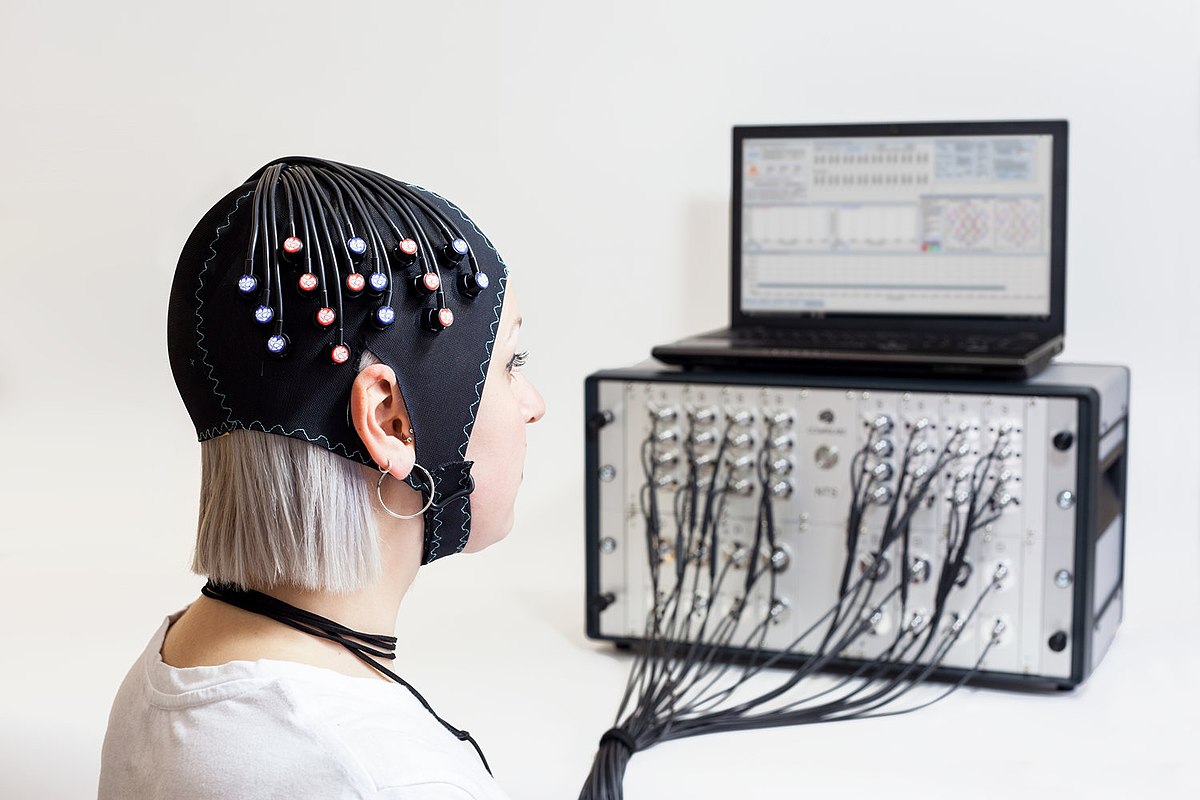
So we used functional near-infrared spectroscopy, or FNIRS, to look at what regions of the brain are associated with subjective cognitive decline in people with Parkinson's disease.
Nishaat MukadamGUEST
And that's kind of, again, looking at this, that would contrast with some of this work where we could look at actual changes in the brain that are occurring versus more depression and anxiety that could be contributing towards the subjective cognitive decline, again, helping to distinguish between what is actual subjective cognitive decline versus what is caused by these neuropsychiatric factors.
Alice Cronin-GolombGUEST
Yeah, and just in case people don't know, FNIRS is an imaging technique that is portable, so it contrasts with fMRI, where you're lying in the scanner, and because Parkinson's is, by definition, a motor disorder, although it has lots of other things going on, as we were just discussing, everything interacts with their motor function, and that's, you know, walking is such a big part of independence in people with PD, and not falling, and So you need imaging that can capture that.
Alice Cronin-GolombGUEST
So it has to be something they can walk while they're doing it.
Alice Cronin-GolombGUEST
And that's what's so innovative about Nishat's work.

Michael GawrysiakGUEST
It's not meditation, but where we're using a wristwatch to measure things like your heart rate, where it can measure things like sleep, like how much sleep are you getting? Like how many steps are you taking? How active are you? And I'd love to kind of explore that further, like some of the wearables that you can do.
Michael GawrysiakGUEST
And then also, this would be like not a continuous measurement, but there's a person that I'm working with that's using something called FNIRS or functional neuro, I'm not going to get it right.
Michael GawrysiakGUEST
But so basically what it is, is you wear like kind of like a headband and it wraps around your head.
Michael GawrysiakGUEST
And it's not anywhere nearly as evasive as EEG, but it uses light sensors to kind of assess lots of things going on in the brain.

Roger SeheultHOST
So basically what we're seeing here is that when you apply this type of light to the mitochondria, increased mitochondrial activity and CCO oxidation, that's complex IV at the end, increases neuronal energy demand and neurovascular signaling.
Roger SeheultHOST
Increased total cerebral blood flow and blood volume leads to more oxygenated blood in the prefrontal cortex, which leads to more oxyhemoglobin and oxyhemoglobin T on F on FNIRS.
Roger SeheultHOST
And again, you can see that here in this graph.
Roger SeheultHOST
So when we do active TPM, active TPM, we're seeing higher amounts of oxygenated hemoglobin and total hemoglobin.

Kai DickensHOST
So Adam, what were you seeing in the EEG and the other recordings?
Adam HanleyGUEST
We had tentative conclusions on the fNIRS data.
Adam HanleyGUEST
The folks in the Reiki condition experienced significant increases in brain activity kind of in this lateral prefrontal region.
Adam HanleyGUEST
Reiki folks seem to be kind of focusing in, kind of attending in a different way than the fakey folks.

Melissa HogenboomNARRATOR
Learning words that describe different characteristics seems to impact the development of executive function in young children.
Melissa HogenboomNARRATOR
In one small study, 20 children aged two and a half matched objects by color or shape and were asked questions that test label understanding like, can you touch the purple one? Or, can you tell me what shape this is? While the children were performing the tasks, their brain activity was measured with infrared light using a technique called functional near-infrared spectroscopy, FNIRS.
Melissa HogenboomNARRATOR
Two years later, at age four and a half, the children were given cards to sort, each with a different shape and colour, for example a blue circle or red star.
Melissa HogenboomNARRATOR
They were asked to sort them by rules that change over time, red at first perhaps, then circles and so on.

Mark JohnsonGUEST
This is control stimuli, non-social control stimuli, and other experiments with human vocal sounds versus non-vocal sounds.
Mark JohnsonGUEST
And roughly speaking, well, yes, we used technologies such as fMRI, functional MRI, fNIRS, or optical imaging.
Mark JohnsonGUEST
and EEG or ERP.
Mark JohnsonGUEST
And using all those different methods and looking at all of these different aspects of social brain function, we did in fact find that early atypicalities, some of those early atypicalities in the social brain sort of extended to the whole group of infant sibling babies.