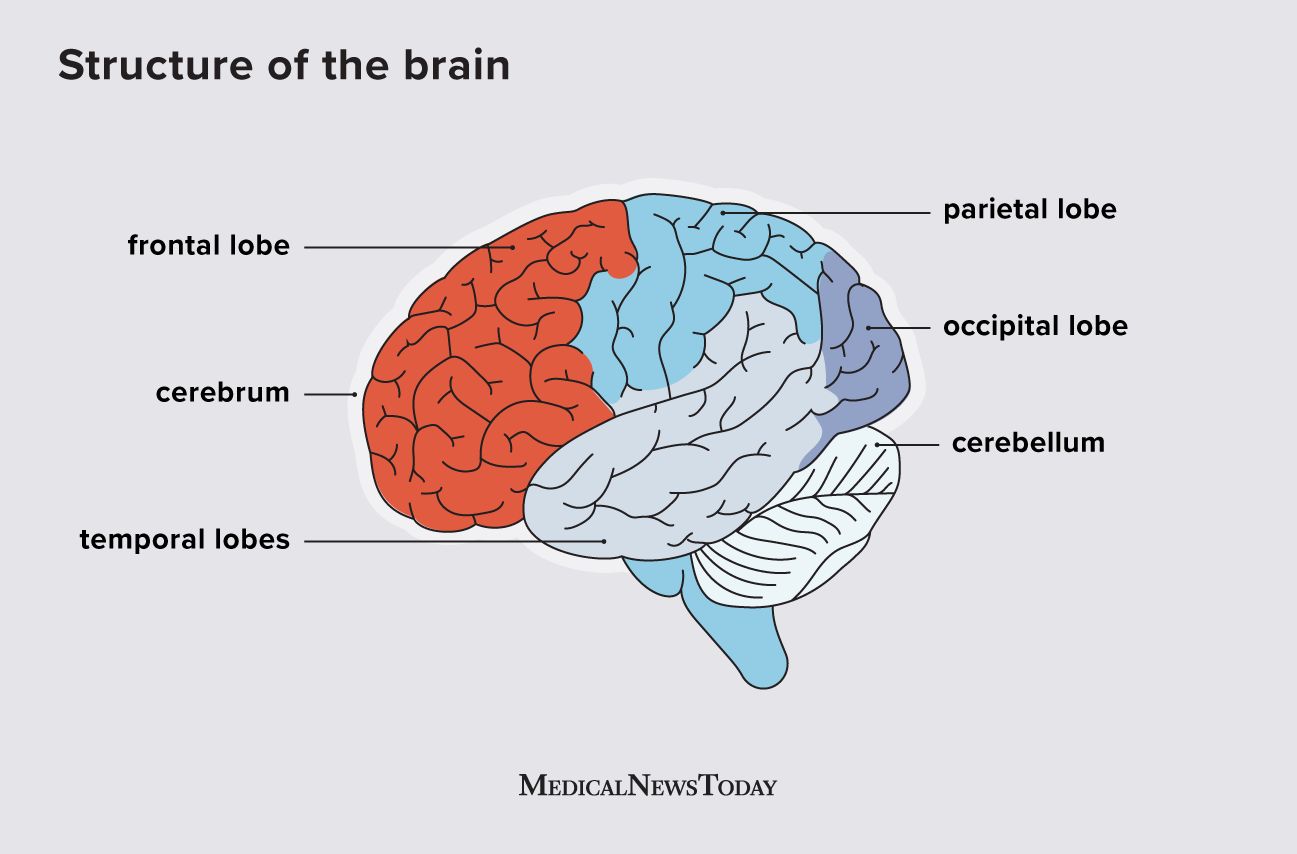
frontal lobe
Brain structureWikipedia
32
MENTIONS
6
EPISODES
6
PODCASTS
Search complete. 32 mentions across 6 episodes found for "frontal lobe".
Sep 22, 2026

Larry JohnsonGUEST
And I think that was another factor behind Trump's decision not to attack because the economic consequences of that are potentially so great that they just decided, you know what, it's not worth it.
Brandon WeichertHOST
Well, I've taken to calling him President Frontal Lobe.
Brandon WeichertHOST
Do you think that he might have a moment of lucidity and build off of this experience to de-escalate and negotiate with Iran? Or do you think that the best we're going to get is this sort of frozen, semi-frozen conflict?
Larry JohnsonGUEST
I think frozen conflict is probably the best we're going to get, unfortunately.

Curtis PetersonHOST
One is the Wernicke's area and the other is the Broca's area.
Curtis PetersonHOST
The Broca's area is coordinated right here and you will see its relationship with the frontal lobe and Wernicke's area is right here, dealing with how our experience is combined and how we're hearing things.
Curtis PetersonHOST
Okay.
Curtis PetersonHOST
So Broca's area, a person is really, when there's damage to this area, they're able to hear information correctly.
8 MINS LATER
Curtis PetersonHOST
We see this with savant musicians who don't look at a music sheet and see the logic timing and whatnot.
Curtis PetersonHOST
They see it coming together spatially.
Curtis PetersonHOST
what sits between the frontal lobe and the peritio lobe in this area right here.
Curtis PetersonHOST
Let me do a different color.

Joe DispenzaSOUNDBITE_SPEAKER
The moment those monks close their eyes and they begin to focus, there is an amazing shift in the brain.
Joe DispenzaSOUNDBITE_SPEAKER
And part of the brain called the frontal lobe turns on like they've never recorded in human history.
Joe DispenzaSOUNDBITE_SPEAKER
Now the frontal lobe is the executive of the brain.
Joe DispenzaSOUNDBITE_SPEAKER
It is the part of the brain that separates us from every other species on the planet.
Joe DispenzaSOUNDBITE_SPEAKER
It makes up 40% of your entire brain.
Joe DispenzaSOUNDBITE_SPEAKER
So now, check this out.
Joe DispenzaSOUNDBITE_SPEAKER
He tells these guys to focus on one thought.
Joe DispenzaSOUNDBITE_SPEAKER
And the frontal lobe turns on.

Sten EkbergHOST
No, it's constantly monitoring, monitoring billions of pieces of information and then it creates stability by turning things off.
Sten EkbergHOST
by turning off things that you're not supposed to pay attention to that are not important to you in this moment so one of the most important things it turns off is stress stress is not a bad thing but we have to understand the difference between a stressor and a stress response a stressor is something in your environment it's an event it's something that happens that gets your attention and the stress response is your brain paying attention it is absolutely necessary because otherwise you're a sitting duck but the key here is to understand that the stress happens you have a response to it and then your frontal lobe turns off the stress by being 80 to 90 percent inhibitory that's what the brain does it turns things off at the appropriate time next thing it turns off is distractions so if you're paying attention right now and somebody snaps their fingers and you look over there then you lost your attention you had attention deficit in order for you to keep paying attention to what you want your brain has to turn that distraction off it has to inhibit that distraction that improves your focus and if you don't have that focus now you have ADD every little thing gets your attention and for our purposes why this is important is because it also turns off unwanted thoughts because unwanted thoughts are a form of distraction it is something that the frontal lobe needs to monitor and of course a huge part of this are negative thoughts and distractive thoughts or any kind of thoughts that we just can't turn off generally makes us feel stressed and anxious and depressed so now let's define depression now we know what the frontal lobe does now think of the frontal lobe as a light bulb if we have a 100 watt light bulb it has plenty of power plenty of energy to turn off these things appropriately but what if this light bulb dims what if it goes down to 80 watts and it doesn't shine so brightly now we just lost 20 percent of the ability to turn these unwanted things off and if it dims further now we have less and less and less ability for the frontal lobe to monitor and create stability and peace in our lives and once you understand that now a lot of these signs and symptoms make a lot of sense if you have fatigue well the frontal lobe and motivation is what's going to give you a lot of energy if you lose that motivation you also don't have a lot of energy Poor focus and memory.
Sten EkbergHOST
Again, distractive thoughts not being turned off.
Sten EkbergHOST
If you're sleeping more, it's probably because you don't have any energy.

ItalianBachHOST
Ooh.
Arthur FrederickHOST
So today we're speaking about frontal lobes.
ItalianBachHOST
My lo- my frontal lobe is well and truly rotten.
ItalianBachHOST
My belly just rumbled as I said that.

speaker_2HOST
The function is how they communicate and what they do.
speaker_2HOST
So we'll be looking at the frontal lobe, which you know already controls planning, inhibition, decision-making.
speaker_2HOST
Damage here also disrupts executive function like managing, expecting things, anticipatory function.
speaker_2HOST
So how do you anticipate things? The parietal lobe processes spatial awareness and sensory integration and more.
speaker_2HOST
It really tests you how to connect structure to function and function to behavior.
speaker_2HOST
So hopefully we'll be able to get that point across as we cover today's lecture.
speaker_2HOST
You'll need to know what happens to speech when Broca's area is damaged, which is in the frontal lobe, or how damage to the prefrontal cortex can quietly dismantle a person's personality long before it touches memory or even movement.
speaker_2HOST
Prefrontal cortex, again, associated with a lot of things such as emotional dysregulation, inhibition, controlling compulsiveness, empathy.