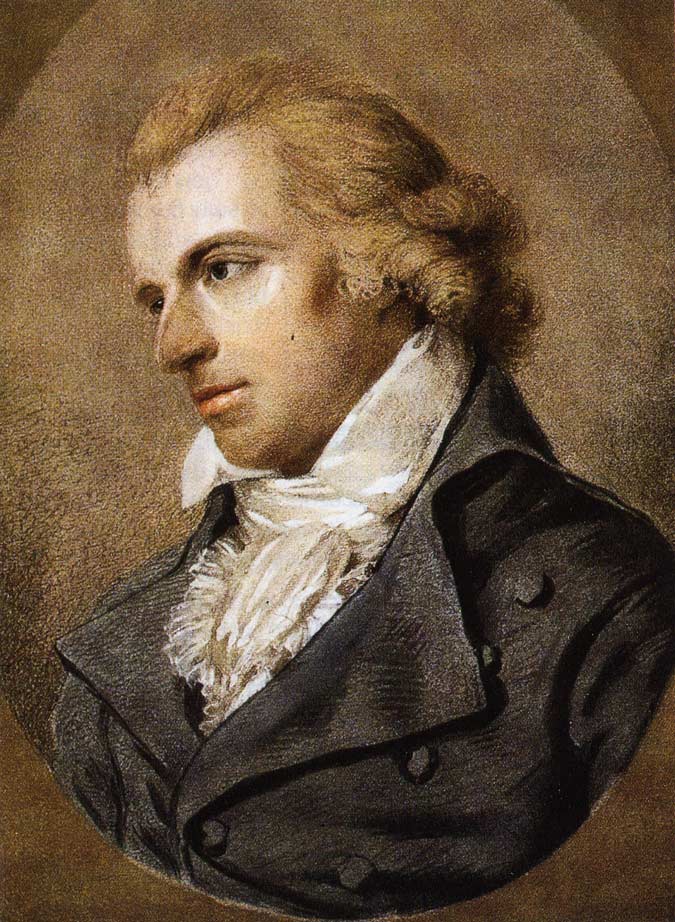
Friedrich Schiller

Friedrich Schiller

German playwright and poetWikipedia

Search complete. 60 mentions across 17 episodes found for "Friedrich Schiller".

Oct 1, 2026

Ben ThomasGUEST
32:20
And I think that he was interested in this particular drawing because it's about the importance of play in mediating between feeling and, and sensibility and intellect.
Ben ThomasGUEST
32:34
Um, he might even have been thinking of Friedrich Schiller's Letters On The Aesthetic, which say that man is, i- in the sexist language of the time, man is at his most human when at play.
Ben ThomasGUEST
32:50
So I think that what an art historian can contribute to these debates about a Europe where everyone feels at home is the importance of the a- imagination, the importance of play.
Ben ThomasGUEST
33:01
And what Schiller was arguing, um, in the context of was the failure of the political project of the French Revolution.
speaker_2NARRATOR
4:18
No man doubts that.
speaker_2NARRATOR
4:19
And indeed, most people understand as much about poetry as an old inkstand." "You have had very little experience," replied the inkstand.
speaker_2NARRATOR
4:28
"You have hardly been in service a week, and you are already half worn out.
speaker_2NARRATOR
4:32
Do you imagine you are a poet? You are only a servant, and before you came, I had many like you, some of the Goose family and others of English manufacture.

4 HRS 41 MINS LATER

MurielNARRATOR
285:43
They called looking at all these a pleasure.
MurielNARRATOR
285:47
It certainly was the right place to visit.
MurielNARRATOR
285:50
Byron's poetry had made it celebrated in the world.
MurielNARRATOR
285:55
Rudy could only feel that it was a place of execution.
JoshHOST
26:50
As a result, the second Mabuse film, The Testament of Dr. Mabuse, was released in 1933. written by Thea von Harbaugh.
JoshHOST
26:59
Jacques wrote the screenplays to two of his novels, Man Against Man in 1924 and Friedrich Schiller, The Triumph of a Genius in 1940.
JoshHOST
27:07
He also translated the works of Maurice Renard and Rudyard Kipling.
JoshHOST
27:12
But what is really fascinating is how Jacques was rather a walking contradiction.

Unknown podcast

Poems of American History, The Colonial Era-Various

Sep 22 · 1 Mention

Esther Ben SimonidesNARRATOR
48:39
Time had not tried his soul enough with whips And scorns, for so this rigid master deems He makes his servant fit.
Esther Ben SimonidesNARRATOR
48:48
For the hard toils which knit The perfect garment firm and without seams The word shall wear at last his hurt brain teems With indignation and he turns away Undaunted and he girds him for the fray Once more but first he hears the words of his good friend Marcanha strong with trust in the fresh shining end His wanderings reached at last the lonely door Of calm Labrabida there the silence came Grateful upon his grief's consuming flame The simple cloisters gave him peace once more And the live ocean rolled up to the shore And ceaseless voice of promise through the pines The sun looked down benignant and the roar Of the far world of rivalries declines Into an inward murmur with each day growing firmer Who senses conquest at the last as last as shines A lamp across a rocky pass confines Making the outlet clear Juan Perez' faith Who heard him and conceived his words no wraith Of fevered fancy but the very truth was light To bring the queen to know his purpose is right O noble priest and friend you reached the court And turned the queen from conquest mid-career To hearken other triumphs glittered clear Before her and again from hell of his court The seeker came he saw Granada's fort Open its gates reluctant and the king El Zogoibi bewail his bitter sort And the loss which made the rich te diems ring When on Lavella's tower the cross bloomed like a flower Of heaven's no growing but the sudden spring Loud with birds silent long that strove to sing After the winter's weary voiceless reign Was overcast the storms of cold disdain Haughtily forth he fared and reached Granada's gates When the clouds lifted and the persecuting fates Relented from their fury for the queen Listens unto the urgings manifold Of Santangle and counsel wise and bold Of the far-seeing Marcaness whose keen Divinings pierced the misty ocean's screen And felt the deed must surely come to pass So they recalled him and his life's changed scene Grew bright with blooms and smile of thickening grass O royal woman then your hand received again The keys of a great realm in the clear glass Of action yet to be whose fires amass Infinite stores of impulse toward the good Your image permanent lies forth from the wood Of beasts malicious and the unrelenting dread You showed the way but sought not from the gloom to tread The wind was fair the ships lay in the bay And the blue sky looked down upon the earth Prophetic time laughed toward the nearing birth Of the strong child with whom should come a day That doleful earlier hours forth on the way With holy blessing stead and bellied sails And mounting joy that knows not let her stay Lo the undaunted purpose never fails O patient master seer for whom the far is near The vision true and the mere present pales Its luster what mild seas and blossomed vales Awaited you haply a paradise But not though it strew your spurless eyes Could you have known what lands were there beyond the main You surely would have turned from gladsomeness to pain Louis James Bloch End of section 3 Section 4 of Poems of American History The Colonial Era This is a LibriVox recording All LibriVox recordings are in the public domain For more information or to volunteer Please visit LibriVox.org Recorded by Adelphi Nuroles Poems of American History The Colonial Era Chapter 1 The Discovery of America Part 4 With the greatest difficulty Columbus managed to secure three little vessels The Santa Maria, the Pinta, and the Nina And to enlist about a hundred and twenty men for the enterprise Early in the morning of Friday August 3rd, 1492 This tiny fleet sailed out from Palos And turned their pros to the west Steer bold mariner on August 3rd, 1492 Steer bold mariner on Albeit witlings deride thee And the steersman dropped videly his hand at the helm Ever and ever to westward There must the coast be discovered If it but lie distinct Luminous lie in thy mind Trust to the God that leads thee And follow the sea that is silent Did it not yet exist Now would it rise from the flood Nature with genius stands united In league everlasting What is promised by one Surely the other performs Friedrich von Schiller The fleet reached the Canaries without misadventure But when the shores of Pharaoh sank from sight The sailors gave themselves up for lost Their terror increased day by day The compass behaved strangely The boats became entangled in vast meadows of floating seaweed And finally the trade winds wafted them so steadily westward That they became convinced they could never return By October 4th there were ominous signs of mutiny And finally on the 11th affairs reached a crisis The triumph From Psalm of the West Dawn, October 12th, 1492 Santa Maria well thou tremblest down the wave Thy Pinta far above thy Nina nigh astern Columbus stands in the night alone And passing grave Yearns o'er the sea as tones o'er under silence yearn Hardens his heart as friend befriends his friendless brave Makes burn the faiths that cool and cools the doubts that burn Twixt this and dawn three hours my soul will smite With prickly seconds or less tolerably With dull blade minutes flatwise slapping me Wait heart time moves thou lithe young western knight Just crowned king slow riding to thy right
speaker_5NARRATOR
54:50
rightWould God that I might strap the mutiny Calm as doth Siddis yon on never-menaced sea! Balk's with his balking, fly's with his flight, Give stopple to his rearings and his falls, Nor drops one coronal star above thy brow While ever dayward thou art steadfast drawn.
speaker_5NARRATOR
55:10
Yea, would I rode these mad contentious brawls, No damage taking from their if and how, Nor no result save galloping to my dawn.
Daniel GundlachHOST
20:01
Such is life in the big city.
Daniel GundlachHOST
20:04
Next up is an excerpt from Giovanna d'Arco, which is actually based on Die Jungfrau von Orleans of Friedrich Schiller, another early Verdi effort.
Daniel GundlachHOST
20:17
It was presented in concert in New York in October 1985, and who sang the title role but yet another counter melody favorite, Margaret Price.
Daniel GundlachHOST
20:31
This was a superb role for her and she did an amazing job.

Unknown podcast

Some German Women and Their Salons-Mary Hargrave

Sep 18 · 19 Mentions

Alyse SteinNARRATOR
61:26
He and Max stayed a week with us, and oh, what a delightful time it was! You have no idea, for you always have good folk about you, but as for us, I am always afraid of growing rusty." And to Lavater in 1779 in the same strain, "What suits me least in this workaday world is that people can be so little to each other.
Alyse SteinNARRATOR
61:52
God's plans ordained that one should be in the east, the other in the west, to be the salt of the world and preserve it from going putrid." She greatly admired Schiller and was delighted at his friendship with her son.
Alyse SteinNARRATOR
62:08
The works of both will be immortal, she says, and especially commends both poets for never replying to stupid criticisms of their works.
Alyse SteinNARRATOR
62:18
Many visitors came to enjoy Frau Rat's hospitality, and her fame was noised abroad.

56 MINS LATER

Alyse SteinNARRATOR
118:23
No other affinity could ever come between them.
Alyse SteinNARRATOR
118:27
Schleiermacher to Henriette Hertz.
Alyse SteinNARRATOR
118:30
"You know Schiller's little moral arithmetical maxim about beautiful souls and numbers? But you even doubt your own capabilities, and there you are very wrong.
Alyse SteinNARRATOR
118:46
Have you not as much individuality as other people? Have you not formed your own very individual style of life? Are not many qualities united in you in a peculiar measure which one sees in others only separate, or at least in a very modified form? Shall I enumerate all these? Your sense of duty, your love, your receptiveness, your social gifts, and so on.

Unknown podcast

Poems of American History, The Colonial Era-Various

Sep 18 · 1 Mention

Esther VinsimonidesNARRATOR
49:39
Time had not tried his soul enough with whips And scorns, for so this rigid master deems He makes his servant fit.
Esther VinsimonidesNARRATOR
49:49
For the hard toils which knit The perfect garment firm and without seams The words shall wear at last his hurt brain teems With indignation and he turns away Undaunted and he girds him for the fray Once more but first he hears the words of his good friend Marcanus strong with trust in the fresh shining end His wanderings reached at last the lonely door Of calm Labrabita there the silence came Grateful upon his grief's consuming flame The simple cloisters gave him peace once more And the live ocean rolled up to the shore And ceaseless voice of promise through the pines The sun looked down benignant and the roar Of the far world of rivalries declines Into an inward murmur with each day growing firmer Who senses conquest at the last as blast as shines A lamp across a rocky pass confines Making the outlet clear Juan Perez' faith Who heard him and conceived his words no wraith Of fevered fancy but the very truth was light To bring the queen to know his purposes aright O noble priest and friend you reached the court And turned the queen from conquest mid-career To hearken other triumphs glittered clear Before her and again from hell of his court The seeker came he saw Granada's fort Open its gates reluctant and the king El Zogoibi bewail his bitter sort And the loss which made the rich te diems ring When on La Valla's tower the cross bloomed like a flower Of heaven's ill-growing but the sudden spring Loud with birds silent long but strove to sing After the winter's weary voiceless reign Was overcast the storms of cold disdain Haughtily forth he fared and reached Granada's gates When the clouds lifted and the persecuting fates Relented from their fury for the queen Listens unto the urgings manifold Of Santangle and counsel wise and bold Of the far-seeing Marcanus whose keen Divinings pierced the misty ocean's screen And felt the deed must surely come to pass So they recalled him and his life's changed scene Grew bright with blooms and smile of thickening grass O royal woman then your hand received again The keys of a great realm in the clear glass Of action yet to be whose fires amass Infinite stores of impulse toward the good Your image permanent lies forth from the wood Of beasts malicious and the unrelenting dread You showed the way but sought not from the gloom to tread The wind was fair the ships lay in the bay And the blue sky looked down upon the earth Prophetic time laughed toward the nearing birth Of the strong child with whom should come a day That dulled all earlier hours forth on the way With holy blessing stead and bellied sails And mounting joy that knows not letter of stay Lo the undaunted purpose never fails O patient master seer for whom the far is near The vision true and the mere present pales Its luster what mild seas and blossomed vales Awaited you happily a paradise But not the one which strewed your swerveless eyes Could you have known what lands were there beyond the main You surely would have turned from gladsomeness to pain Louis James Bloch End of section 3 Section 4 of Poems of American History The Colonial Era This is a LibriVox recording All LibriVox recordings are in the public domain For more information or to volunteer Please visit LibriVox.org Recorded by Adelphi Neroles Poems of American History The Colonial Era Chapter 1 The Discovery of America Part 4 With the greatest difficulty Columbus managed to secure three little vessels The Santa Maria The Pinta And the Nina And to enlist about a hundred and twenty men for the enterprise Early in the morning of Friday August 3rd 1492 This tiny fleet sailed out from Palos And turned their prows to the west Steer bold mariner on August 3rd 1492 Steer bold mariner on Albeit witlings deride thee And the steersman drop fiddly his hand at the helm Ever and ever to westward There must the coast be discovered If it but lie distinct Luminous lie in thy mind Trust to the God that leads thee And follow the sea that is silent Did it not yet exist Now would it rise from the flood Nature with genius stands united In league everlasting What is promised by one Surely the other performs Friedrich von Schiller The fleet reached the Canaries without misadventure But when the shores of Pharaoh sank from sight The sailors gave themselves up for lost Their terror increased day by day The compass behaved strangely The boats became entangled in vast meadows of floating seaweed And finally the trade winds wafted them so steadily westward That they became convinced they could never return By October 4th there were ominous signs of mutiny And finally on the 11th affairs reached a crisis
DalipignolesNARRATOR
55:03
crisisThe Triumph from Psalm of the West.
DalipignolesNARRATOR
55:09
Dawn, October 12th, 1492.
Keegan BillingsHOST
22:10
All right, now that's it for the news today.
Keegan BillingsHOST
22:12
But before I leave, I would like to share a quote from Friedrich Schiller's play, William Tell.
Keegan BillingsHOST
22:17
It goes, who reflects too much will accomplish little.
Keegan BillingsHOST
22:22
All right, I want to thank you for listening to the Epic Times Morning Brief.
Harley SchlangerGUEST
20:21
And what the reset would have been was for Russia, Germany, France, to be able to work together as nations that live next to each other.
Harley SchlangerGUEST
20:32
And as Reiner pointed out, I'll point out this from Friedrich Schiller, there's no distinction between being a proud nationalist and a citizen of the world.
Harley SchlangerGUEST
20:43
And that's the whole idea that was under attack.
Harley SchlangerGUEST
20:46
So what these institutions did was destroy the ability to have a discussion.
Anna HandlerGUEST
3:32
So I really hope that, you know, that I mean, I kind of like this idea will bring a lot of joy to people.
Anna HandlerGUEST
3:39
I'm always so moved when I know or when I hear that Beethoven is at this text by Friedrich Schiller since he was 18 years old.
Anna HandlerGUEST
3:48
And it took him a lot of years to actually set it to music.
Anna HandlerGUEST
3:52
But it meant so much to him.

7 more episodes mention Friedrich Schiller.

Create an account to see the whole feed, search across every transcript, and follow the entities you care about.

We value your privacy

We use cookies to understand how you use our platform and to improve your experience. Click “Accept All” to consent, or “Decline non-essential” to opt out of non-essential cookies. Read our Privacy Policy.