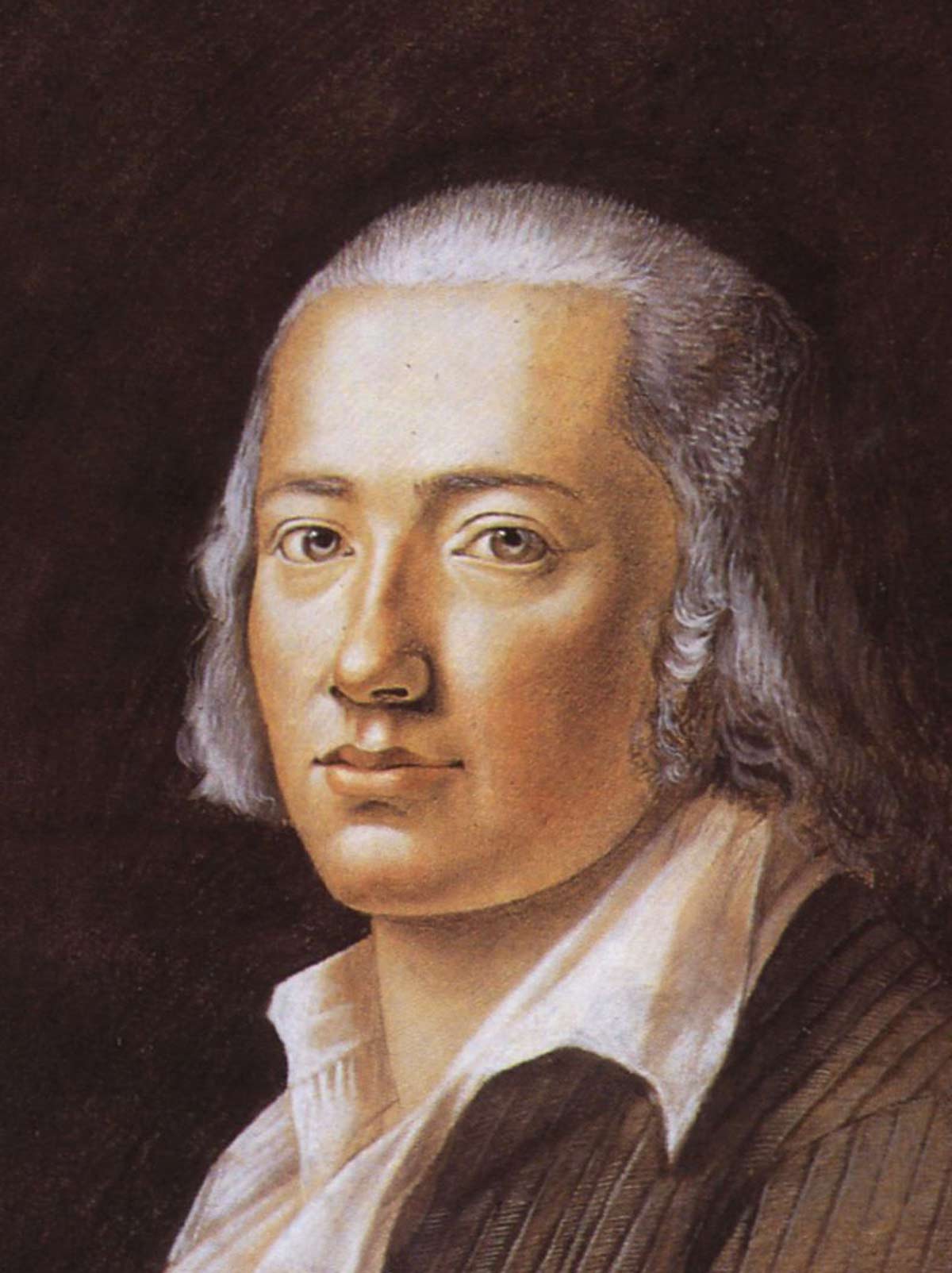
Friedrich Hölderlin
German poet and philosopherWikipedia
14
MENTIONS
11
EPISODES
11
PODCASTS
Search complete. 14 mentions across 11 episodes found for "Friedrich Hölderlin".
Oct 13, 2026

Gil RothHOST
But it put me in mind that the names...
Gil RothHOST
Um, where she has Holderlin and, and, uh, Scardinelli, I think is the, put me in mind of, uh, one of the great reading experiences I've had in recent years.
Gil RothHOST
Pessoa's, uh, uh, book of disquiet, which is my introduction to him.
Gil RothHOST
And that's going into the deep end.

Nick BarrHOST
So Naranjo continues, "The unsociable or autistic characteristics of his schizoid, um, is something that could be understood either in relation to hypersensitivity or to insensitivity toward, towards others, as in the case of those sensitive natures that seek as far as possible to avoid and deaden all stimulation from the outside.
Nick BarrHOST
They close the shutters of their houses in order to lead a dream life fantastic, poor in deeds and rich in thought," that's Holderlin, "in the soft, muffled gloom of the interior.
Nick BarrHOST
They seek loneliness," as Strindberg so beautifully said of himself, "in order to spin themselves into the silk of their own souls." Kretschmer's view on schizothymia or thymia was further elaborated by Sheldon, who endorsed Kretschmer's threefold conception of human constitution.
Nick BarrHOST
Okay, well, here we get into the really wild, you know, asthenic body build, ectomorphia, cerebertonia.

Vincent WoodsHOST
Welcome back to Arts Tonight.
Vincent WoodsHOST
the permeable and impermeable borders between languages, and the words and work of people as diverse as Homer, Joan of Arc, Hölderlin and Francis Bacon.
Vincent WoodsHOST
Carson is one of the most singular voices in modern poetry and a hugely gifted translator from ancient Greek and Latin.
Vincent WoodsHOST
A professor of classics, she was the first woman to win the T.S. Eliot Prize for her collection The Beauty of the Husband, a fictional essay in 29 tangos.

Jack PetrankerGUEST
And I remember the last day of the program, I put up on the door of the Institute a quote from Martin Heidegger.
Jack PetrankerGUEST
Actually, it was a quote from a poet, Hölderlin, whom Heidegger quotes.
Jack PetrankerGUEST
And it said, reluctantly, that which dwells near its origin departs.
Jack PetrankerGUEST
And that was how I felt.

Simon CritchleyGUEST
Yeah, it is that.
Simon CritchleyGUEST
It's that we begin with that and we, um, how can we think in the face of that? You know, and this goes back to a famous line of the great Tust German poet, Hölderlin, and the line is, you know, "What are poets for in a time of dearth?"
Spencer BaileyHOST
Mm.
Simon CritchleyGUEST
"Wozu Dichter in dürftiger Zeit?" So that, you know, poets are, in a sense, whenever poetry is written, and I take this all the way back to Homer, it's always a time of dearth.

Henry Somers-HallGUEST
We see the only way something can be characterized is in terms of predication.
Henry Somers-HallGUEST
And the alternative to that w- is either the, the grounds for predicative structures are either repetitive like we find in Kant, or they're abyssal like we find in say Holderlin or Schelling's like identity philosophy, because there's no other form of determination.
Henry Somers-HallGUEST
So there's a transcendental illusion whereby thinking takes itself to have a predicative structure, and then once it does that, the ground is gonna be either the same thing in the eternal realm of forms or it's gonna be some kind of abyss.
Henry Somers-HallGUEST
And that's, that kind of transcendental illusion, it's only by breaking that, by introducing another model of what it is for something to be determined that we're able to really think this nomadic structure.

Andrea HiottHOST
Anyway, I think there's even more to that story than that, but it just comes to mind because, for one thing, if you're watching the video, I'm up here on the Philosopher's Weg, the Philosopher's Way in Heidelberg, which is, you know, I'm at the university here, and so many people walked here, uh, on this path.
Andrea HiottHOST
Hölderlin, if you know the poet, was up here, and Hegel, who I talk about a lot.
Andrea HiottHOST
But also Karl Jaspers, uh, Hannah Arendt was his, uh, student and it was one of the reasons I came to this town.
Andrea HiottHOST
Both of them are so important.

KeeganHOST
When shall I come face to face with Gods?" End quote.
KeeganHOST
You know, it was thousands of years later that the same feeling was expressed by the poet Holderlin.
KeeganHOST
This excerpt from Bread and Wine, which I have read before on the podcast, has usually been cited as an example of the romantic spirit of the times in which Holderlin wrote.
KeeganHOST
But when I read these words now, thinking about those lines from Ecclesiastes, I can't help but wonder if the longing caused by the disappearance of the bicameral gods is something with which many of us are still afflicted thousands of years later.
KeeganHOST
Quote, "The gods, it is true, are living, yet far above ourselves, away in a different world.

Srijan UzirGUEST
That is, the Eucharistic ritual, hoc est inim corpus meum, this is my body.
Srijan UzirGUEST
Nancy states that this ritual is also the repetition of a certain obstinate paganism or the sublimation of Hölderlin's Gods of Wine and Bread, the Bodies of Other Gods.
Srijan UzirGUEST
I invite you to hear the Heideggerian resonance of these words.
Srijan UzirGUEST
What makes this book, Derrida's book, so interesting is that Derrida is pursuing a deconstruction of Nancy's deconstruction of Christianity.

Espen HammerGUEST
Yeah, I mean, you have the young Hegel, who is quite nostalgic, who seems to mourn the loss of religion, and he seems to express this mournfulness in a kind of nostalgia for Greek classical religion to a large extent.
Espen HammerGUEST
Of course, he was a Christian, but many of these Christian friends of his, people like Hölderlin, for example, and Schelling and so on, even though they were Christian, they were also interested in the Greek pantheon.
Espen HammerGUEST
And Hegel particularly was interested in this, and he felt that this was a much more social form of religion that we had lost in modernity.
Espen HammerGUEST
That this glue that religion was for the classical ancient Greeks, this element of social solidarity had been lost.
1 more episode mentions Friedrich Hölderlin.
Create an account to see the whole feed, search across every transcript, and follow the entities you care about.