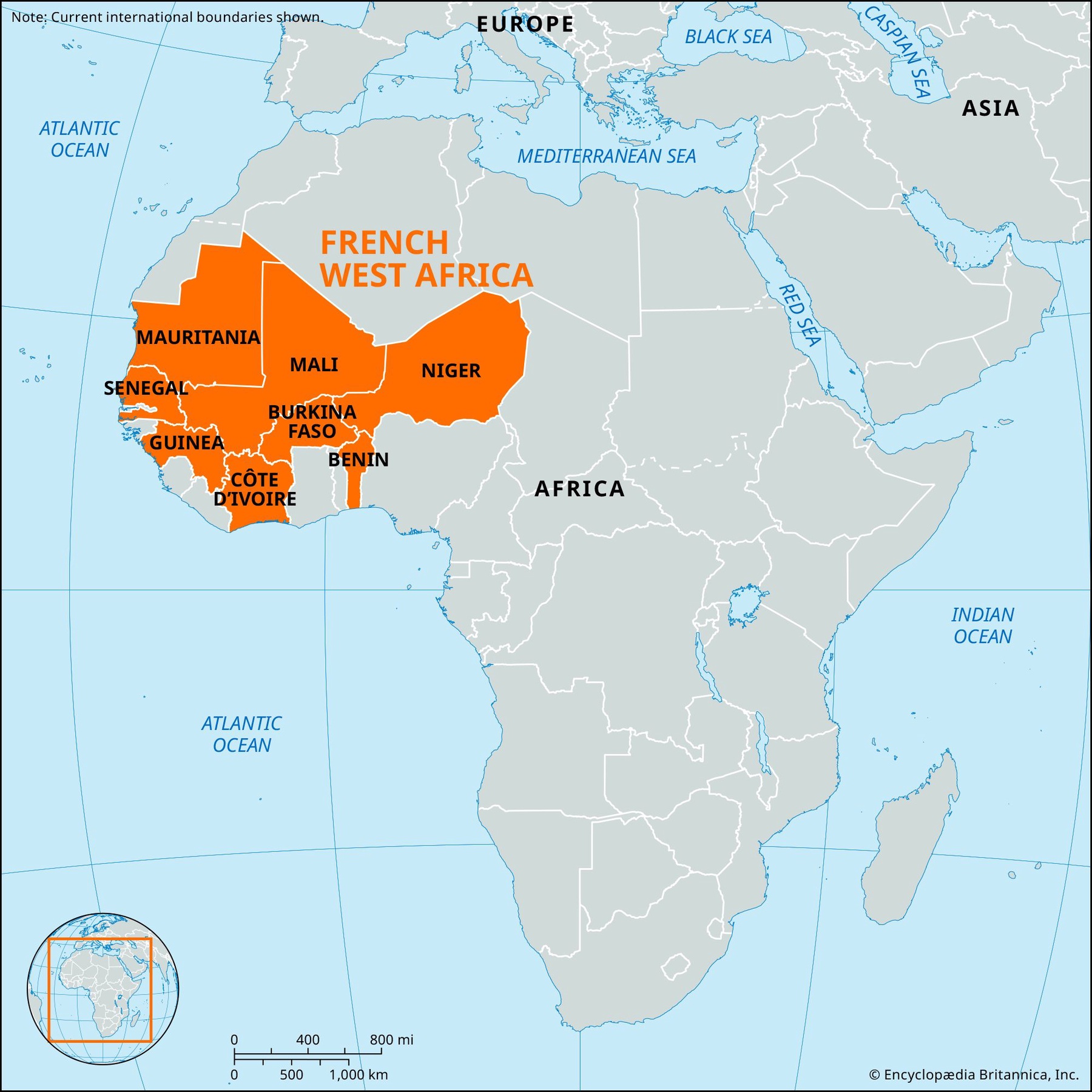
French West Africa
34
MENTIONS
15
EPISODES
13
PODCASTS
Search complete. 34 mentions across 15 episodes found for "French West Africa".
Oct 19, 2026

Onora AbuaGUEST
So what ended up happening is you ended up having various situations.
Onora AbuaGUEST
You had this, uh, so-called French West Africa, so-called British West Africa, in particular places like Nigeria, Ghana, Gambia, and so on.
Onora AbuaGUEST
All these troops were coming back having fought for the Allies, France, uh, Britain-
Kolawole FaloduHOST
Mm

Will NuttingGUEST
I call it the rise of the oppressed and the revenge of the colonized.
Will NuttingGUEST
And it was a pretty prescient piece to write because what you were seeing in French West Africa with nuclear assets and government coups and everything else, what you're now seeing in the West You've got this economic situation whereby the West is full of old people, huge entitlement in society, consequently huge levels of debt.
Will NuttingGUEST
And in certain cases, it seems dependent on wanting to go to war with people to try and ensure that it's got adequate supplies of energy in the building blocks of things.
Will NuttingGUEST
I would argue that in this environment of revenge of the colonized and rise of the oppressed, Bitcoin is about the best investment you can possibly have as true kind of hard money.

Samuel D. AndersonGUEST
None of these documents were in X.
Samuel D. AndersonGUEST
None of these documents were in the archives in Senegal, the National Archives of Senegal, which have a lot of documents related to all of French West Africa.
Samuel D. AndersonGUEST
This research process, which had me following a bunch of different rabbit holes, ended up giving me an insight into the way that these schools were drawing these sorts of connections, that people were drawing these sorts of connections across the French Empire in North and West Africa in ways that you don't hear about if you just look at the history of Islamic education in Mauritania or just the history of colonial education in Algeria, right? So, yeah, that's the way that this sort of multi-local research worked out for me was that I ended up getting an insight into something that I think no one else could without going through that multi-sited research itinerary.
Samuel D. AndersonGUEST
I would also add to sort of wrap up this conversation about my research that I don't know how possible it is to do this kind of research anymore as a graduate student.

Samuel D. AndersonGUEST
None of these documents were in Aix.
Samuel D. AndersonGUEST
Um, none of these documents were in the, the archives in Senegal, right? The National Archives of Senegal, which have a lot of documents related to all of French West Africa.
Samuel D. AndersonGUEST
Um, so this research process, which, uh, had me following a bunch of different [chuckles], different rabbit holes, ended up giving me, um, an insight into the way that these schools were drawing these sorts of connections, that people were drawing these sorts of connections, um, across the, the French Empire in North and West Africa in ways that you don't hear about if you just look at the history of Islamic education in Mauritania or just the history of colonial education in Algeria, right? Um, so yeah, that's the, the way that this sort of multi-local research worked out for me was that I ended up getting a, an insight into something that I think no one else could without going through that multi-sited, uh, research itinerary.
Samuel D. AndersonGUEST
I would also add to sort of wrap up this, um, conversation about my, my research that I don't know how possible it is to do this kind of research anymore as a graduate student.

Samuel D. AndersonGUEST
None of these documents were in Aix.
Samuel D. AndersonGUEST
Um, none of these documents were in the, the archives in Senegal, right? The National Archives of Senegal, which have a lot of documents related to all of French West Africa.
Samuel D. AndersonGUEST
Um, so this research process, which, uh, had me following a bunch of different [chuckles], different rabbit holes, ended up giving me, um, an insight into the way that these schools were drawing these sorts of connections, that people were drawing these sorts of connections, um, across the, the French Empire in North and West Africa in ways that you don't hear about if you just look at the history of Islamic education in Mauritania or just the history of colonial education in Algeria, right? Um, so yeah, that's the, the way that this sort of multi-local research worked out for me was that I ended up getting a, an insight into something that I think no one else could without going through that multi-sited, uh, research itinerary.
Samuel D. AndersonGUEST
I would also add to sort of wrap up this, um, conversation about my, my research that I don't know how possible it is to do this kind of research anymore as a graduate student.

Elisa ProsperettiGUEST
But also it really emerges when you start reading, uh, James Africanus Horton's Vindication of the African Race, when you start reading Edward Blyden and what he's saying about education.
Elisa ProsperettiGUEST
But when you also are starting to read the, the, let's say, colonial, uh, pedagogues, so the Georges Harggy in the Francophone, uh, French West Africa case, or Gustave Le Bon, who was kind of a sociologist who dabbled a little bit in colonial education, uh, the Phelps Stokes reports, you see that these ideas are, um, really free-flowing and moving across, uh, the Atlantic and the Black Atlantic.
Elisa ProsperettiGUEST
And so it was something-- It was an approach that opened up the possibility of understanding the deeper roots of why education mattered so much to so many people in West Africa.
Elisa ProsperettiGUEST
Um, because while I, I said earlier, you know, it was about a rejection of this colonial economic understanding that the value of African people was a bodily value and, and not an intellectual one, that came out of a much deeper history, and that's the history of the transatlantic trade in African people.
41 MINS LATER
Elisa ProsperettiGUEST
I really want to know how people experienced colonial ideas about race, how people created their own ideas about race, and how, and in, in, in schooling context in particular, and how those experiences, those ideas then produced a new set of kind of intellectuals, um, of Europhone African intellectuals.
Elisa ProsperettiGUEST
So that's, that's one project that I'm, I'm pursuing right now.
Elisa ProsperettiGUEST
And then in terms of, um, let's say a, let's say a potential second book project in the offing, uh, I became very fascinated by, um, this politician of the, um, of, of French West Africa, of the RDA, uh, Ouezzin Coulibaly, and he's someone who died quite young and just at the eve of independence, so he hasn't been focused on as much as kind of a, you know, a Senghor or these kinds of people.
Elisa ProsperettiGUEST
But he was really an incredibly erudite intellectual and activist, and he wrote a lot before he passed.
Elisa ProsperettiGUEST
And I'm thinking of, uh, the Gold Coast African press, which, which many people, uh, know of the late 19th century, the early 20th century, but also it really emerges when you start reading, uh, James Africanus Horton's Vindication of the African Race, when you start reading Edward Blyden and what he's saying about education.
Elisa ProsperettiGUEST
But when you also are starting to read the, the, let's say, colonial, uh, pedagogues, so the Georges Haguy in the Francophone, uh, French West Africa case, or Gustave Le Bon, who was kind of a sociologist who dabbled a little bit in colonial education, uh, the Phelps Stokes reports, you see that these ideas are, um, really free-flowing and moving across, uh, the Atlantic and the Black Atlantic.
Elisa ProsperettiGUEST
And so it was something, it was an approach that opened up the possibility of understanding the deeper roots of why education mattered so much to so many people in West Africa.
Elisa ProsperettiGUEST
Um, because while I, I said earlier, you know, it was about a rejection of this colonial economic understanding that the value of African people was a bodily value and, and not an intellectual one, that came out of a much deeper history, and that's the history of the transatlantic trade in African people.
41 MINS LATER
Elisa ProsperettiGUEST
Uh, this is a, an, uh, something I really wanted to think about as I, a- as I finished the book, and so I want to bring together work that thinks through, okay, we have maybe these colonial categories of race and ideas, but that's less interesting to me.
Elisa ProsperettiGUEST
I really want to know how people experienced colonial ideas about race, how people created their own ideas about race, and how, and in, in, in schooling contexts in particular, and how those experiences, those ideas then produced a new set of kind of intellectuals, um, of Europhone African intellectuals.
Elisa ProsperettiGUEST
So that's, that's one project that I'm, I'm pursuing right now, and then in terms of, um, let's say, let's say a potential second book project in the offing, uh, I became very fascinated by, um, this politician of the, um, of, of French West Africa, of the RDA, uh, Ouezzin Coulibaly, and he's someone who died quite young and just at the eve of independence, so he hasn't been focused on as much as kind of a, you know, a Senghor or these kinds of people, but he was really an incredibly erudite intellectual and activist, and he wrote a lot before he passed.
Elisa ProsperettiGUEST
And so I'd really like to spend time thinking through, uh, what he wrote and understand what a kind of Francophone African intellectual history looks like if we move beyond an emphasis on négritude, because while that's extremely important, that's really something that's happening much more in Paris than it is, uh, happening in, in French West Africa at the time, and so what does an intellectual history of French West Africa look like from French West Africa and not from Paris? I think that's a question I'm really, I'm really interested in pursuing.

Elisa ProsperettiGUEST
But also it really emerges when you start reading James Africanus Horton's Vindication of the African Race, when you start reading Edward Blyden and what he's saying about education.
Elisa ProsperettiGUEST
But when you also are starting to read the, let's say, colonial pedagogues, so the Georges Hargis in the Francophone French West Africa case, or Gustave Le Bon, who was kind of a sociologist who dabbled a little bit in colonial education, the Phelps-Stokes reports, you see that these ideas are really free-flowing and moving across the Atlantic and the Black Atlantic.
Elisa ProsperettiGUEST
And so It was an approach that opened up the possibility of understanding the deeper roots of why education mattered so much to so many people in West Africa.
Elisa ProsperettiGUEST
Because while I said earlier it was about a rejection of this colonial economic understanding that the value of African people was a bodily value, and not an intellectual one, that came out of a much deeper history.
45 MINS LATER
Elisa ProsperettiGUEST
I really want to know how people experienced colonial ideas about race, how people created their own ideas about race and how in schooling context in particular, and how those experiences, those ideas then produced a new set of kind of intellectuals, of Europhone African intellectuals.
Elisa ProsperettiGUEST
So that's one project that I'm pursuing right now.
Elisa ProsperettiGUEST
And then in terms of, let's say, a potential second book project in the offing, I became very fascinated by this politician of French West Africa, of the RDA, Ousane Koulibaly.
Elisa ProsperettiGUEST
And he's someone who died quite young and just at the eve of independence.
Elisa ProsperettiGUEST
But also it really emerges when you start reading, uh, James Africanus Horton's Vindication of the African Race, when you start reading Edward Blyden and what he's saying about education.
Elisa ProsperettiGUEST
But when you also are starting to read the, the, let's say colonial, uh, pedagogues, so the George Haggee in the Francophone, uh, French West Africa case, or Gustave Le Bon who was kind of a sociologist who dabbled a little bit in colonial education, uh, the Phelps Stokes reports, you see that these ideas are, um, really free-flowing and moving across, uh, the Atlantic and the Black Atlantic.
Elisa ProsperettiGUEST
And so it was something, it was an approach that opened up the possibility of understanding the deeper roots of why education mattered so much to so many people in West Africa.
Elisa ProsperettiGUEST
Um, because while I, I said earlier, you know, it was about a rejection of this w- colonial economic understanding that the value of African people was a bodily value and, and not an intellectual one, that came out of a much deeper history, and that's the history of the transatlantic trade in African people.
42 MINS LATER
Elisa ProsperettiGUEST
I really want to know how people experienced colonial ideas about race, how people created their own ideas about race, and how, and in, in, in schooling context in particular, and how those experiences, those ideas then produced a new set of kind of intellectuals, um, of Europhone African intellectuals.
Elisa ProsperettiGUEST
So that's, that's one project that I'm, I'm pursuing right now.
Elisa ProsperettiGUEST
And then in terms of, um, let's say, let's say a potential second book project in the offing, uh, I became very fascinated by, um, this politician of the, um, of, of French West Africa, of the RDA, uh, Ouezzin Coulibaly, and he's someone who died quite young and just at the eve of independence, so he hasn't been focused on as much as kind of a, you know, a Senghor or these kinds of people.
Elisa ProsperettiGUEST
But he was really an incredibly erudite intellectual and activist, and he wrote a lot before he passed.

AlistairNARRATOR
But at any rate, no rival European power had possession.
AlistairNARRATOR
And France had at least a foothold in the east, on the Gulf of Aden, from which possibly French empire builders might penetrate Abyssinia and join hands across the Nile with their co-workers from French West Africa.
AlistairNARRATOR
This foothold, it may as well be explained now, was French Somaliland.
AlistairNARRATOR
Here, a whole town, Obock, had been purchased for the surprisingly small sum of 50,000 francs from a local sultan many years before, in 1862, and forgotten until 1883, when, the English having closed Aden to French ships during the Tonkin War, the French decided to establish a naval base of their own here and voted a subsidy of 450 francs a year for the development of the place.
14 MINS LATER
AlistairNARRATOR
French imperialists, to their chagrin and amazement, could see the British plan working itself out before their eyes, and its success meant that the French dream of an ocean-to-ocean empire was shattered.
AlistairNARRATOR
The disappointment was all the more maddening because the Bar-el-Ghazal district leased to King Leopold had been regarded by the French as the next addition to their own dominions in Equatorial Africa.
AlistairNARRATOR
They had just extended French Congo inland into the Central Sudan, connecting it with French West Africa, and were now ready to push their undefined eastern frontier into the Nile Valley.
AlistairNARRATOR
In May 1893, President Carnot had told Colonel Montay that Fashoda had been selected as the proper outlet on the Nile for French Upper Ubangi.
5 more episodes mention French West Africa.
Create an account to see the whole feed, search across every transcript, and follow the entities you care about.