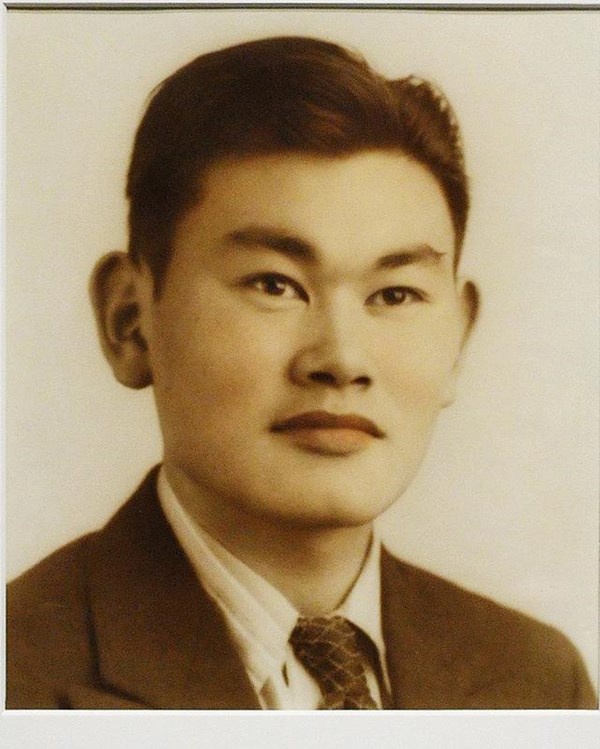
Fred Korematsu
American civil rights activistWikipedia
13
MENTIONS
6
EPISODES
6
PODCASTS
Search complete. 13 mentions across 6 episodes found for "Fred Korematsu".
Oct 1, 2026

Amanda TylerSOUNDBITE_SPEAKER
I said, 'Well, can't you have someone else do it first?' It was awfully hard for me, but I agreed to do it at the moment because they said it's for the good of everybody, and so I said, 'Well, if that's it, I'll go ahead and do it.'"
Andrea PitzerHOST
The court wanted badly to claim that they would never justify racism under law, and in the Fred Korematsu case, they pretended not to be rubber-stamping prejudice.
Amanda TylerSOUNDBITE_SPEAKER
And after, uh, a large and heated conversation among Justice Department lawyers in the parallel Korematsu case, the lawyers relied on General DeWitt's so-called final report that had claimed, uh, many falsehoods about Japanese Americans signaling and doing other things to support the Japanese military from the West Coast.
Andrea PitzerHOST
But when it came to Endo, there was literally no excuse that could be made.
speaker_19SOUNDBITE_SPEAKER
Mitsuye's was the only successful challenge to the incarceration.
speaker_19SOUNDBITE_SPEAKER
One day before the court's decision, the government proclaimed that loyal Japanese Americans could return to the West Coast.
Andrea PitzerHOST
Her victory didn't happen because every justice who had denied Fred Korematsu's rights suddenly pivoted and saw his error.
Andrea PitzerHOST
Instead, the justices faced with Endo could not conjure the imaginary threat that a majority of them had managed to conjure with the contemporaneous and more famous cases of Korematsu and others.

John LeakeGUEST
That's a true story.
John LeakeGUEST
And there was a guy named Fred Korematsu who stayed.
John LeakeGUEST
He said, I own my home.
John LeakeGUEST
Like, I'm an American citizen.

CaseyHOST
But governments already distinguish between this was legal and this was later recognized as a wrong that required repair.
CaseyHOST
In 1944, the US Supreme Court upheld Japanese American internment in a case brought by Fred Korematsu, a welder in California who refused to go to the camps.
CaseyHOST
It was legal.
CaseyHOST
In 1988, Congress apologized and paid surviving internees $20,000.
CaseyHOST
And in 2018, the Chief Justice said, Korematsu was gravely wrong the day it was decided.
CaseyHOST
Canada also provided redress to Japanese Canadians interned under the War Measures Act.
CaseyHOST
An apology, $21,000 each.

John GreenHOST
Seventy percent of Japanese Americans lived in California, and as a result of this order, more than 110,000 people, almost two-thirds of whom were American citizens, were sent to internment camps, where they lived in makeshift barracks under the eyes and searchlights of guards.
John GreenHOST
A man named Fred Korematsu appealed his conviction for failing to show up for internment all the way to the Supreme Court, where he lost in yet another horrendous Supreme Court decision.
John GreenHOST
Okay, let's go to the Thought Bubble.
John GreenHOST
The group that experienced the greatest change during World War II was probably African Americans.

speaker_2HOST
It's an incredibly elegant, pragmatic framework, but the courts are not always so willing to check the president, especially when the president claims absolute military necessity during wartime.
speaker_2HOST
This brings us to one of the most solemn and dark chapters in American constitutional history, Korematsu v.
speaker_2HOST
US in nineteen forty-four.
speaker_3HOST
Korematsu is a critical case for understanding how structural limits can buckle under the pressure of war.
speaker_3HOST
Following the attack on Pearl Harbor, President Franklin Roosevelt issued Executive Order nine zero six six.
speaker_3HOST
This order authorized the military to designate military areas from which any or all persons could be excluded.
speaker_3HOST
Based on this order, the military mandated the forced relocation and internment of over one hundred thousand Americans of Japanese ancestry into desolate detention camps.
speaker_2HOST
Fred Korematsu, an American citizen born in California, refused to leave his home and was arrested.

Lorraine BannaiSOUNDBITE_SPEAKER
United States, the Supreme Court upheld those orders, deferring to the military judgment that they were necessary.
Lorraine BannaiSOUNDBITE_SPEAKER
Forty years later, Fred Korematsu and Gordon Hirabayashi were exonerated, on proof that the government had withheld from the court material evidence bearing on the issue of military necessity.
Lorraine BannaiSOUNDBITE_SPEAKER
In essence, even as the military orders lacked factual basis, Japanese Americans languished in camps, many for over three years.
Jennifer BrineyHOST
And so in the aftermath of World War II and the acknowledgement that our government denied Americans our most basic rights in the name of fighting that war, steps were taken in the 1970s by Congress in an attempt to stop it from happening again.