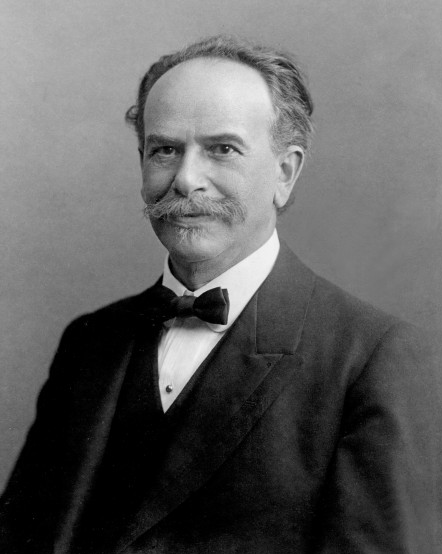
Franz Boas
German-American anthropologistWikipedia
27
MENTIONS
20
EPISODES
17
PODCASTS
Search complete. 27 mentions across 20 episodes found for "Franz Boas".
Sep 26, 2026

Morgan CallwoodNARRATOR
Du Bois.
Morgan CallwoodNARRATOR
The Real Race Problem by Franz Boas, Professor of Anthropology, Columbia University.
Morgan CallwoodNARRATOR
Professor Franz Boas, who writes the leading article this month, is a member of the Department of Anthropology in Columbia University.
Morgan CallwoodNARRATOR
The editor of science reports that the leading scientists of America regard this Department of Columbia as the strongest in the country.
Morgan CallwoodNARRATOR
This gives a peculiar weight to Dr. Boas' words, which were first delivered at the Second National Negro Conference in May 1910. the essential problem before us is founded on the presence of two entirely distinct human types in the same community and relates to the best possible correlation of the activities of these two types on the whole the answer to this problem has been based on the assumption of the superiority of the one type and the inferiority of the other the first question to be answered by scientific investigation is in how far the negro type may be considered the inferior the white type as the superior the negro not inferior the anthropologist recognizes that the negro and the white represent the two most divergent types of mankind the differences in color form of hair form of face are known to all of us other differences better known to anthropologists are those in the proportions of the limbs and of the trunk of the

Noah EfronHOST
They were, he wrote, of their place and of their place alone.
Noah EfronHOST
As we learn from the wonderful Encyclopedia Iranica, the name Etrog seems to have been derived from the Arabic word Otroj, which itself seems to have been derived from the Persian Otro Anj or Toro Anj, which, according to Berthold Laufer, the great German-Jewish anthropologist and acolyte of Franz Boas, who had fluent command of Malay, Persian, Pali, Sanskrit, Mongolian, Manchu, Japanese...
Noah EfronHOST
Tibetan, Chinese, German, English, French, Latin, and Ancient Greek, the Persian otro-anj or toro-anj was itself derived from the Sanskrit matula-a-i-unga, which is Sanskrit for citron or etrog.
Noah EfronHOST
The etrog reliably appeared in generation after generation of Persian and Arab medical and scientific texts, as when Ali ibn Sal Tabari wrote in the 9th century that the fruit, quote, burns the phlegm and kills intestinal worms, or when the vizier Rashid al-Din Faizal Ala, who took a great interest in horticulture, boasted already in the 8th century that of grafting with success etrog branches not only onto the branch stock of other citrus fruits like lemons and oranges, but also onto the branch stock of apple, azerol, pear, and quince trees, and onto pomegranate rootstock.

Clint SmithHOST
Later, she went on to become one of the first Black American women to attend Barnard College, where she obtained her Bachelor's of Arts in Anthropology on a full scholarship.
Clint SmithHOST
Hurston then went on to pursue two years of graduate school at Columbia University, where she studied under the renowned anthropologist Franz Boas.
Clint SmithHOST
Boas' work helped shift the debate on race from a biologically essentialist framework to one framed around cultural relativism, the idea that cultures must be judged on their own merits and not on how they compare to other cultures.
Clint SmithHOST
Many of Boas' ideas informed Hurston's future travels as she explored the social and cultural frameworks of Black life in America.
Clint SmithHOST
Later, she went on to become one of the first Black American women to attend Barnard College, where she obtained her Bachelor's of Arts in Anthropology on a full scholarship.
Clint SmithHOST
Hurston then went on to pursue two years of graduate school at Columbia University, where she studied under the renowned anthropologist Franz Boas.
Clint SmithHOST
Boas' work helped shift the debate on race from a biologically essentialist framework to one framed around cultural relativism, the idea that cultures must be judged on their own merits and not on how they compare to other cultures.
Clint SmithHOST
Many of Boas' ideas informed Hurston's future travels as she explored the social and cultural frameworks of Black life in America.

Mark SmithNARRATOR
Mental characteristics.
Mark SmithNARRATOR
In answer to the contention that certain racial groups are mentally superior to others, Franz Boas, an outstanding scientist, says, No one has ever proved that a human being, through his descent from a group of people, must of necessity have certain mental characteristics.
Mark SmithNARRATOR
If we were to select the most intelligent, imaginative, energetic, and emotionally stable third of mankind, all races would be represented.
Mark SmithNARRATOR
Hooton, another scientist, is even more emphatic.
21 MINS LATER
Mark SmithNARRATOR
Many inspired to study natural sciences by Louis Agassiz, French.
Mark SmithNARRATOR
Henry D. Thoreau, Huguenot, was great naturalist and writer.
Mark SmithNARRATOR
Famous anthropologists are Franz Boas and Edward Sapir, German Jews, and Alice Hridlicka, Czech.
Mark SmithNARRATOR
International authority on zoology and botany is Leonhard Steineger, Norwegian.
Mark SmithNARRATOR
Mental characteristics.
Mark SmithNARRATOR
In answer to the contention that certain racial groups are mentally superior to others, Franz Boas, an outstanding scientist, says, "No one has ever proved that a human being, through his descent from a group of people, must of necessity have certain mental characteristics.
Mark SmithNARRATOR
If we were to select the most intelligent, imaginative, energetic, and emotionally stable third of mankind, all races would be represented." Hooton, another scientist, is even more emphatic.
Mark SmithNARRATOR
He declares that, "Each racial type runs the gamut from idiots and criminals to geniuses and statesmen.
25 MINS LATER
Mark SmithNARRATOR
Many inspired to study natural sciences by Louis Agassiz, French.
Mark SmithNARRATOR
Henry D. Thoreau, Huguenot, was great naturalist and writer.
Mark SmithNARRATOR
Famous anthropologists are Franz Boas and Edward Sapir, German Jews, and Alice Hridlicka, Czech.
Mark SmithNARRATOR
International authority on zoology and botany is Leonhard Steinegger, Norwegian.

Gad SaadGUEST
So depending on which parasitic idea we're talking about, it's from about 50 years ago to 100 years ago.
Gad SaadGUEST
So for example, cultural relativism was, regrettably, since we're both Jewish, developed by a Jewish anthropologist at Columbia named Franz Boas.
Gad SaadGUEST
Postmodernism is a product of, say, the late 50s, 60s, usually it's French philosophers, Jacques Derrida, Jacques Lacan, Michel Foucault.
Gad SaadGUEST
So depending on the bad idea, we're talking about 50 to 100 years, but they were simmering in academia and then really came to fruition in the past 15, 20 years.

Peter SuttonGUEST
I, I did discuss it in, um, The Politics of Suffering book.
Peter SuttonGUEST
It wasn't really a strong anthropological push until Franz Boas, B-O-A-S, argued in favor of cultural relativism in the early part of the 20th century, and then it became a kind of, um, biblical tablet.
Peter SuttonGUEST
You know, differences can lead to massive conflicts.
Peter SuttonGUEST
I just read in the newspaper this morning that there's a, a rural village in England where people are discussing seceding from, that is leaving the country of the United Kingdom.
Che JimHOST
They had been brought from Greenland by explorer Robert E. Perry.
Che JimHOST
Anthropologist Franz Boas had suggested inviting a single Inuk back to New York for the winter to collect information of the greatest scientific importance.
Che JimHOST
But for reasons known only to Perry, he brought back six.
Che JimHOST
plus barrels full of bones stolen from Inuit graves.
Che JimHOST
He also dropped out of school at 14, so let that be a lesson.
Che JimHOST
Stay in school, kids.
Che JimHOST
Even anthropologist Franz Boas, who argued that no culture or group of people is better than another, felt digging up native remains was necessary to uncover what humans had in common.
Che JimHOST
In 1888, he wrote in his diary,

speaker_1HOST
But Zora wasn't interested in simply assimilating into the Ivy Leagues.
speaker_1HOST
At Bernard and Columbia, she became the star people of Franz Boas, the father of modern American anthropology.
speaker_1HOST
Boas introduced her to the paradigm of cultural relativism, the revolutionary idea that cultures shouldn't be judged on a Eurocentric ladder where Western civilizations sits at the top and everyone else is scrambling up the rungs.
speaker_1HOST
took that scientific framework, combined it with her native understanding of the rural South, and created an entirely new genre, literary anthropology.
10 more episodes mention Franz Boas.
Create an account to see the whole feed, search across every transcript, and follow the entities you care about.