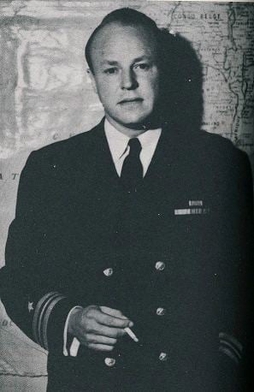
Frank Wisner
Intelligence agentWikipedia
13
MENTIONS
9
EPISODES
8
PODCASTS
Search complete. 13 mentions across 9 episodes found for "Frank Wisner".
Nov 25, 2026

Stephen KinzerGUEST
Immediately after the war ended, the Americans had decided That their future rival or enemy was going to be the Soviet Union.
Stephen KinzerGUEST
Frank Wisner, the first chief of covert operations for the CIA, decided that part of his project should be to make trouble for the Soviet Union inside the Soviet Union.
Stephen KinzerGUEST
And he decided Ukraine is the obvious spot.
Stephen KinzerGUEST
Ukraine has a large population that's Western oriented.

Joseph McBrideGUEST
And he named the three leading CIA outlets as the New York Times, CBS, and Time Life, Time Incorporated.
Joseph McBrideGUEST
And he went kind of soft on his former employees of The Washington Post, but they're one of the worst offenders, because in 1951, Phil Graham, the publisher of The Washington Post, helped found Operation Mockingbird for the CIA, which Frank Wisner of the CIA was running.
Joseph McBrideGUEST
And that was the infiltration of the media by the CIA.
Joseph McBrideGUEST
So this continues to the present day.
Walter HerbstGUEST
They looked at our race relation problems and different things in our country and they didn't appreciate that, especially countries where the people of color predominated and um so we what we wanted was to just show the world what the what the soviets were really like and had you know tanks marching down the streets of budapest and just slaughtering innocent people and uh um you know so yeah
William RamseyHOST
and the cia was behind that i think it was frank wisner one of the original
Walter HerbstGUEST
it was It was Frank Wisner.
William RamseyHOST
And he cracked.
William RamseyHOST
He didn't...

Stephen KinzerGUEST
So all this story begins at the end of the Second World War, when we had already concluded that our future rival or enemy was going to be the Soviet Union.
Stephen KinzerGUEST
The first director of covert operations for the CIA, Frank Wisner, decided probably quite correctly that if you want to make trouble for the Soviet Union inside the Soviet Union, the place to do it is Ukraine.
Stephen KinzerGUEST
That's where there's fertile ground for anti-Moscow agitation, subversion, and perhaps even war.
Stephen KinzerGUEST
So we wanted to build a network inside Ukraine of subversive activists, potential guerrilla fighters, anybody that would be willing to join an underground movement to fight against the Red Army and Russian power.

Stephen KinzerGUEST
So all this story begins at the end of the Second World War, when we had already concluded that our future rival or enemy was going to be the Soviet Union.
Stephen KinzerGUEST
The first director of covert operations for the CIA, Frank Wisner, decided probably quite correctly that if you want to make trouble for the Soviet Union inside the Soviet Union, the place to do it is Ukraine.
Stephen KinzerGUEST
That's where there's fertile ground for anti-Moscow agitation, subversion, and perhaps even war.
Stephen KinzerGUEST
So we wanted to build a network inside Ukraine of subversive activists, potential guerrilla fighters, anybody that would be willing to join an underground movement to fight against the Red Army and Russian power.

speaker_13SOUNDBITE_SPEAKER
The US project in Ukraine began just as the CIA was opening up for business in 1947.
speaker_13SOUNDBITE_SPEAKER
Chief Frank Wisner concluded, probably quite correctly, that if you wanted to make trouble for the Soviet Union inside the Soviet Union, Ukraine was the best place to do it.
speaker_13SOUNDBITE_SPEAKER
So beginning in 1947, we dropped armed commandos into Ukraine over a period of years.
speaker_13SOUNDBITE_SPEAKER
Almost all of them were immediately arrested and executed.

Stephen KinzerGUEST
I got to add one.
Stephen KinzerGUEST
I remember Ursula von der Leyen, the EU chief, saying that the Russians were taking the computer chips out of the washing machines to use them in their weapons.
Ted RallHOST
Right.
Jamarl ThomasHOST
Yes.
Stephen KinzerGUEST
So my book takes this story back to the beginning.
Stephen KinzerGUEST
It's a 75-year story, the history of American intervention in Ukraine.
Stephen KinzerGUEST
So the first chief of CIA covert operations, Frank Wisner, uh decided probably correctly that if you wanted to make trouble inside the soviet union ukraine was the place to do it and in 1947 the cia began dropping armed commandos into ukraine with the aim of fomenting war against the red army at this time there was already an active conflict in ukraine so The Nazi army surrendered in May 1945, but the Nazi's allies in Ukraine did not surrender.
Stephen KinzerGUEST
They kept fighting and that went on for several years.

Stephen KinzerGUEST
Um, the US project in Ukraine began, uh, just as the CIA was opening up for business in 1947.
Stephen KinzerGUEST
The first CIA covert action chief, Frank Wisner, concluded, probably quite correctly, that if you wanted to make trouble for the Soviet Union inside the Soviet Union, Ukraine was the best place to do it.
Stephen KinzerGUEST
So, uh, beginning in 1947, we dropped armed commandos into Ukraine over a period of years.
Stephen KinzerGUEST
Almost all of them were immediately arrested and executed, but we thought that would be the way to set off a war against, uh, against Russia.

Jay DyerHOST
extreme influence, I guess you could say, from British intelligence on how to structure it, how to set it up.
Jay DyerHOST
Several early figures were very, very well trained by the British, like Frank Wisner.
Jay DyerHOST
Yeah, he's a legend.
Jay DyerHOST
Yeah, a massive student of British counterintelligence.