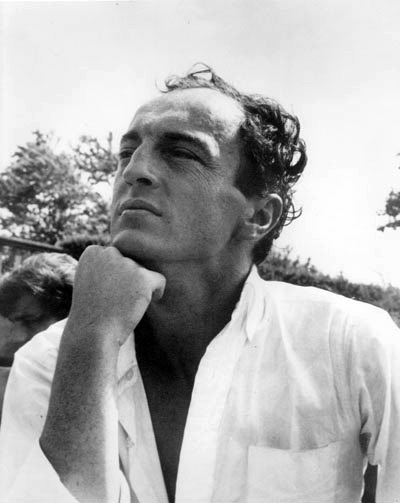
Frank O'Hara
American writer and poetWikipedia
17
MENTIONS
14
EPISODES
14
PODCASTS
Search complete. 17 mentions across 14 episodes found for "Frank O'Hara".
Nov 20, 2026

Medaya OcherHOST
Some of the language from Stay, you write, is modified from a tweet by Beth Sawin, a climate scientist.
Medaya OcherHOST
And one line in Crisis, you decided again and again and again whom you loved is a refraction of a line by Frank O'Hara.
Medaya OcherHOST
So that's just sort of a sampling of the people that you gather and the writers that you gather in this collection.
Medaya OcherHOST
And so I want to talk a little bit about how you think of reference.

Chris McMonigleHOST
He wasn't in the hall
Craig CartonHOST
yet, but you get my point, right? Frank O'Hara? Oh, my God.
Craig CartonHOST
Tom
Chris McMonigleHOST
Landry?

Yermiyahu Ahron TaubGUEST
And that edition came out, the translation came out in 08.
Yermiyahu Ahron TaubGUEST
So many poets, I would say Frank O'Hara is an inspiration.
Yermiyahu Ahron TaubGUEST
Who else? Mark Doty is an inspiration.
Yermiyahu Ahron TaubGUEST
The poet Tim Delucos is an inspiration.

Davy KnittleGUEST
So the first chapter is focused on the New York school poet, James Schuyler, who's often written about as part of the cohort of New York school poets, but writes very differently.
Davy KnittleGUEST
So if the sort of paradigmatic New York school example is Frank O'Hara's walking through the city, Schuyler isn't doing a lot of that for reasons of both neurodiversity and later physical disability.
Davy KnittleGUEST
And so I'm interested in thinking about with a disability studies frame about what's often referred to as Schuyler's window poems.
Davy KnittleGUEST
So he is writing about how the city changes as he looks out his window.

Melissa ClarkGUEST
We're doing things that you can do quickly because my cooking right now is just a little faster just because I have more on my plate, so to speak.
Melissa ClarkGUEST
So we do Frank O'Hara, Frederick Seidel, Theodore Retke, and then also short form gives him time to make me a cocktail, which I'm very into Manhattan's right now.
Maggie HoffmanHOST
I love it.
Melissa ClarkGUEST
And having one poem that you sort of think about while you cook is enough.

Mark FordHOST
So there's travel poems, but there are also poems of place which are very nationalistic as well.
Mark FordHOST
I'm thinking of Whitman's New York or Frank O'Hara's New York.
Mark FordHOST
In their different ways, they are celebrations of New York as the place where it happens, to borrow a line from Hamilton.
Seamus PerryHOST
And that's an interesting case, too, isn't it? Because O'Hara is an example of someone who is occupying a place that another writer has already made their own.

Mark FordGUEST
So there's travel poems, but there are also poems of place which are very nationalistic as well.
Mark FordGUEST
I'm thinking of Whitman's New York or Frank O'Hara's New York.
Mark FordGUEST
In their different ways, they are celebrations of New York as the place where it happens, to borrow a line from Hamilton.
Seamus PerryGUEST
That's an interesting case too, isn't it? Because O'Hara is an example of someone who is occupying a place that another writer has already made their own.
Seamus PerryGUEST
So he has to, as it were, remake New York for himself, almost in the way that Heaney has to, as it were, reimagine Ireland so that he can get it out of the clutches of Yeats.
Mark FordGUEST
Yeah, I think we should do it sort of in a sort of transhistorical way to create those connections.
Mark FordGUEST
Actually, O'Hara is writing exactly 100 years, more or less, after Whitman.
Mark FordGUEST
So it's 1855 and then to 1955 afterwards.

speaker_6SOUNDBITE_SPEAKER
And it was just immaculate.
speaker_6SOUNDBITE_SPEAKER
It was like Frank O'Hara is catching the past.
speaker_6SOUNDBITE_SPEAKER
Yeah, you're right.
speaker_6SOUNDBITE_SPEAKER
The immaculate conception.

Matt DalyGUEST
The place I live happens, like the county I live in is 97% public land.
Matt DalyGUEST
So there happens to be a lot of nature here, but we don't, you know, it's not like we call Frank O'Hara like, oh, he's one of those place poets or Emily Dickinson, you know, like we don't refer to some poets as, we don't sort of cordon them off into their little category.
Matt DalyGUEST
of like oh you're a you're this kind of poet or you're you're like a you know massachusetts poet or conquered poet or something like that so that's sometimes nature poetry feels that way to me like oh that's fine with your nature stuff but it's more i think so many great poems are informed by place and um And places that happen to have more of the natural world around them.
Matt DalyGUEST
That's just where I live.
Matt DalyGUEST
So it's infused with that in the way that like Frank O'Hara, who's a poet I love, right, the poems are infused with this kind of what like New York urban experience that I also love.
Matt DalyGUEST
But I feel like sometimes nature poetry gets kind of set aside as this quaint category.
Matt DalyGUEST
And I would just, I would put forward that the poets I love who the natural world is present in their poems, it's about, what, it's about clearly putting a person in a place, just like, just like all the other poems I love, whether they're urban or not, or, you know, more

Keegan Cook-FinbergGUEST
So this phrase, poetry in general, captures the process of poetry's interdisciplinary formation, while also, you know, hopefully thinking with scholars who have productively mapped poetry as a genre.
Keegan Cook-FinbergGUEST
So each poet that I discuss in the book, so this includes Yoko Ono, George Brecht, Amiri Baraka, Frank O'Hara, M. Narvaezé Philip, Polly Melgaard, Vanessa Jiménez Smith, and others, each of them employ language as an activity that moves between and through disciplines to fathom a public.
Keegan Cook-FinbergGUEST
And one of the things that I like about poetry as general rather than as poetry as genre, for example, is that it helps sort of signify this discourse both as it is and as it does.
Keegan Cook-FinbergGUEST
So, you know, as a process and a category.
4 more episodes mention Frank O'Hara.
Create an account to see the whole feed, search across every transcript, and follow the entities you care about.