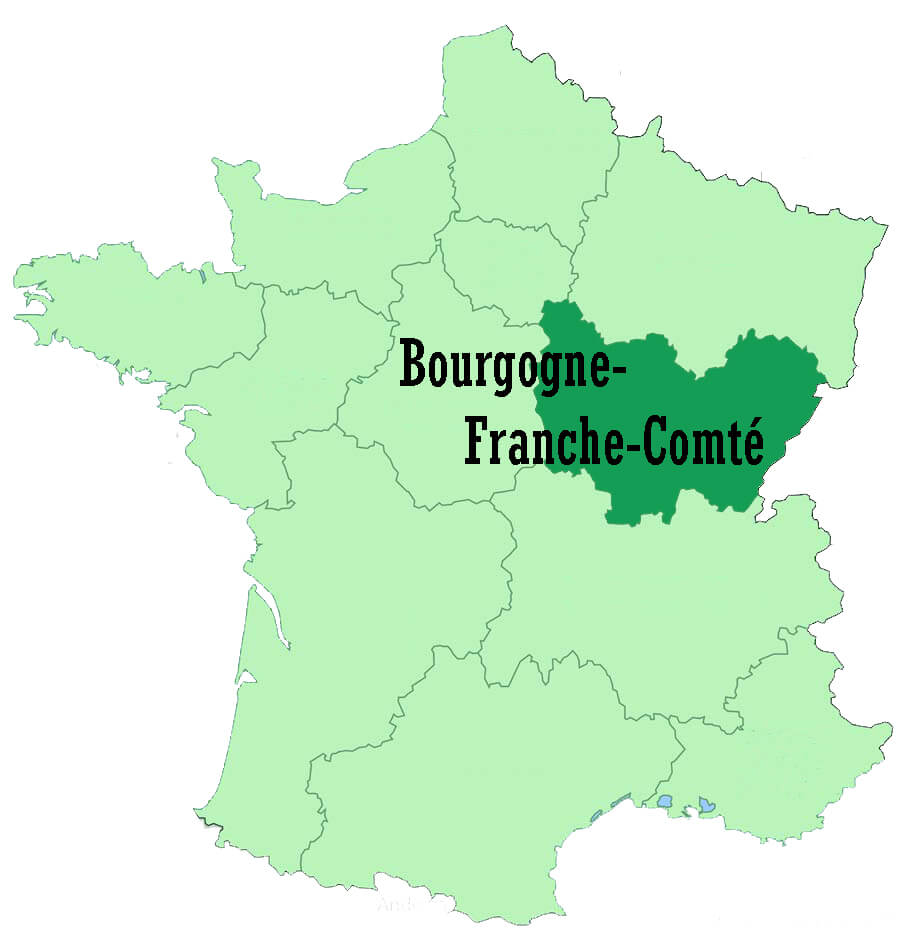
Franche-Comté
French RegionWikipedia
117
MENTIONS
36
EPISODES
29
PODCASTS
Search complete. 117 mentions across 36 episodes found for "Franche-Comté".
Sep 16, 2026

Pamela NagamiNARRATOR
When, therefore, the writers of the sixteenth or seventeenth century speak of the rights of the emperor in Germany, they really mean to speak of the rights of the emperor in his capacity of German king.
Pamela NagamiNARRATOR
Just as when they speak of the empire, they mean what we call Germany, together with certain surrounding districts such as Switzerland, the Netherlands, Lorraine, and eastern Burgundy or Franche-Comté, which are not now, if Alsace and the newly conquered part of Lorraine be excepted, included under that name.
Pamela NagamiNARRATOR
In the same way the mere fragments of feudal supremacy and the payment of feudal dues which the emperors claimed in Italy belonged to them not as emperors, but simply as Italian kings and as wearers of the iron crown of Lombardy, which, as the legends told, was formed of nails taken from the Saviour's cross.
Pamela NagamiNARRATOR
Not that it would be wise, even if it were possible, to do otherwise than to follow the practice of contemporaries.
32 MINS LATER
Pamela NagamiNARRATOR
They knew that they were the advanced guard of Protestantism.
Pamela NagamiNARRATOR
On the one flank was the Catholic duchy of Bavaria and the bishoprics of Würzburg and Bamberg.
Pamela NagamiNARRATOR
On the other flank were the ecclesiastical electorates on the Rhine and the Moselle, the bishoprics of Worms, Speyer and Strasbourg, the Austrian lands in Schwabia and Alsace, and the long line of the Spanish frontier in Franche-Comté and the Netherlands, garrisoned by the troops of the first military monarchy in Europe.
Pamela NagamiNARRATOR
What wonder if men so endangered were in haste to cut the knot which threatened to strangle them, and to meet the enemy by flying in his face rather than by awaiting the onslaught which they believed to be inevitable.

Pamela NagamiNARRATOR
And the papacy, passing into the hands of a succession of infamous popes, the paramours and bastard sons of two shameless women, bade fair to lose all moral influence in Europe.
Pamela NagamiNARRATOR
At this time, 888 to 912, there were two kingdoms of Burgundy, one, Transjurain, consisting of North Savoy and all Switzerland between the Reuss and the Jura, then under one king named Rudolf, and two, Cisjurain Burgundy, consisting of Provence, Dauphiné, the south of Savoy, and the country between the Saône and the Jura, afterwards called the County of Burgundy or Franche-Comté.
Pamela NagamiNARRATOR
This kingdom, founded by Bozo of Provence in 879, was then in the hands of his son Louis of Provence, 887 to 928, who after gaining the country west of the Rhone and most of Languedoc, had aspired to the dangerous bauble of the empire.
Pamela NagamiNARRATOR
He was half blinded by his rival Berenger and returned home to live in retirement till his death.
1 HR 19 MINS LATER
Pamela NagamiNARRATOR
Burgundy had been too long regarded a fief of the kingdom of Paris for this to be overlooked, and Robert, gaining material assistance from Richard, asserted his claim to the fief in 1003.
Pamela NagamiNARRATOR
Otto, however, was supported by nobles and clergy, and an obstinate war of twelve years ensued before Burgundy was restored to the Capetian king.
Pamela NagamiNARRATOR
Otto himself subsequently gained the county of Burgundy, Franche-Comté, part of his mother's inheritance, which, with its connected territories of Alsace, Lyon, Dauphiné, and Provence, henceforth definitely belonged to the German Empire.
Pamela NagamiNARRATOR
Eud II of Blois The dominions of Thibault of Blois, the old enemy of the kings of Paris, were now in the hands of his grandson Eud, second of that name.

Pamela NagamiNARRATOR
He was surrounded by great feudatories, all of whom he had offended bitterly.
Pamela NagamiNARRATOR
Charles the Bold, Duke of Burgundy, held in France Burgundy proper, with Artois and Franche-Comté.
Pamela NagamiNARRATOR
Beyond it, Brabant, Limburg, Hainaut, and the wealthy cities of Flanders, and was on the point of excluding France from all communication with the rest of Europe except through his states, by seizing the Provençal dominions of René of Anjou.
Pamela NagamiNARRATOR
The dukes of Bretagne and Bourbon, and the Count of Armagnac with his Gascons, were equally opposed to Louis, and there was not one of these potentates who would have scrupled for a moment to call in against him the English or any other foreigners.
1 HR 40 MINS LATER
Pamela NagamiNARRATOR
Indeed, René had been nominally King of Jerusalem as well, so that his claim too had been conveyed by the same cession.
Pamela NagamiNARRATOR
It is hardly possible to imagine a more irrational mode of opposing the victorious Turks, for Charles's plans were sure to shatter rather than consolidate the means of resistance by setting one Italian state against another.
Pamela NagamiNARRATOR
Besides this, it was necessary before he started to bribe other princes not to attack his own dominions during his absence, and for this purpose he surrendered to Maximilian Artois and Franche-Comté, and to Ferdinand Roussillon and the Cerdagne.
Pamela NagamiNARRATOR
Of these districts the first two had been given up to Louis XI in 1481, and their retrocession now laid France open on the north-east.

Kay HandNARRATOR
The custom houses at the gates of the provincial cities were demolished.
Kay HandNARRATOR
In Franche-Comté, a noble castle was burned every day.
Kay HandNARRATOR
All kinds of property were exposed to the most shameful robbery.
Kay HandNARRATOR
Then took place the emigration of the nobles, among whom were Condé, Polignac, Broglie, to organize resistance to the revolution which had already conquered the king.

Pamela NagamiNARRATOR
Louis Pasteur was descended from one of those ancient peasant families that were attached for centuries to the land they tilled, and who have given so many illustrious sons to France.
Pamela NagamiNARRATOR
In the seventeenth century, his ancestors were still serfs of the soil in Franche-Comté, and the first who rose from servitude was Louis Pasteur's great-grandfather, Claude Etienne, who, having abandoned the labor of the fields, was, in the middle of the eighteenth century, a tanner at Salon, and one of the bourgeoisie of that town.
Pamela NagamiNARRATOR
He came of a race distinguished for serious-mindedness and aptitude for toil, positive qualities which produced artisans solicitous of the good renown of their calling, and gifts of imagination which urged them on to raise themselves above their environment by a superior education.
Pamela NagamiNARRATOR
Louis Pasteur's father, Jean-Joseph, an orphan from early childhood, was born to Jean-Henri, the third son of Claude Etienne, on the sixteenth of March, 1791, in the midst of the Revolution.
Pamela NagamiNARRATOR
They convey an impression of stalwart courage and rugged honesty.
Pamela NagamiNARRATOR
Joseph Pasteur numbered among them several chosen friends.
Pamela NagamiNARRATOR
Dr. Dumont, retired army surgeon, M. Poisson de Meray, the historian of Franche-Comté, M. Romanet, the principal of the high school, and a few others besides who were frequent visitors at the tannery.
Pamela NagamiNARRATOR
Young Louis used to listen to their conversations in which duty, industry, and patriotism were exalted, and through the direct influence of his father he became imbued with high and noble sentiments.

Pamela NagamiNARRATOR
As the forest tree, for lack of proper nourishment for its roots, begins to wither and fall away at the tips of its branches, so did the extremities or outlying states of the empire.
Pamela NagamiNARRATOR
Burgundy ruled Franche-Comté, had annexed Guilders, and was ambitious of becoming an independent kingdom.
Pamela NagamiNARRATOR
France was turning her gaze toward the Rhine.
Pamela NagamiNARRATOR
The Swiss cantons were practically, though not yet legally, a republic.

Pamela NagamiNARRATOR
By inheritance and by fortunate marriages, the Burgundian dukes had acquired vast possessions in France and in the Empire.
Pamela NagamiNARRATOR
Charles the Bold, 1466-77, the last male representative of the family, ruled over Picardy, Artois, the Netherlands, the Duchy of Burgundy, and the County of Burgundy, Franche-Comté.
Pamela NagamiNARRATOR
He seems to have formed the ambitious scheme of creating a kingdom for himself on the borders of France and the Empire.
Pamela NagamiNARRATOR
His most determined opponent was Louis XI, who stirred up the military Swiss against him and thus caused his defeat at Grandson and Morat in 1476 and finally his death at Nancy in 1477.
58 MINS LATER
Pamela NagamiNARRATOR
Trade and industry had been revolutionized by its use, and the modern life of the commercial world had begun.
Pamela NagamiNARRATOR
End of Section 4 Section 5 of The Renaissance and the Reformation by Emmeline Tanner This LibriVox recording is in the public domain, read by Pamela Nagami Book 1, Chapter 3 The Reign of Maximilian in Germany 1493-1519 In 1493, on the death of Frederick III, his son Maximilian, who had been elected King of the Romans in 1486, succeeded to the Austrian territories and the empire.
Pamela NagamiNARRATOR
He had married in 1477 Mary, daughter and sole heiress of Charles the Bold, and was thus already Lord of the Netherlands and Franche-Comté.
Pamela NagamiNARRATOR
Maximilian was a typical character of the Renaissance period, possessing all the fascination, brilliance, and glamour of the time in which he lived.

speaker_1NARRATOR
However this may be, certain it is that Chamilly's own excuses for departure, referred to in the letters, were merely empty pretexts, and a reference to the history of the time will show this.
speaker_1NARRATOR
If Louis XIV needed his presence so much for the invasion of Franche-Comté, why not, it may be asked, for the important campaign in Flanders in 1667? He seems to have left Portugal, too, a little clandestinely, for no notice is to be met with, as in the case of other French officers, of his asking and obtaining leave from the Portuguese government, and he probably did not even embark in Lisbon.
speaker_1NARRATOR
already in the beginning of february sixteen sixty eight we find him with louis the fourteenth in dijon so that he must have quitted beja and the seat of war quite at the end of the preceding year it is now that the letters enter into the history of the lives of mariana and noel as is well known they were all written after the latter's retirement from portugal and probably between the december of sixteen sixty seven and the june of sixteen sixty eight and they express better than any remarks which we could make the stages of faith doubt and despair through which poor mariana passed As a piece of unconscious, though self-made, psychological analysis, they are unsurpassed.
speaker_1NARRATOR
As a product of the peninsular heart, they are unrivaled.
Pamela NagamiNARRATOR
He was surrounded by great feudatories, all of whom he had offended bitterly.
Pamela NagamiNARRATOR
Charles the Bold, Duke of Burgundy, held in France Burgundy proper, with Artois and Franche-Comté.
Pamela NagamiNARRATOR
Beyond it, Brabant, Limburg, Hainaut, and the wealthy cities of Flanders, and was on the point of excluding France from all communication with the rest of Europe except through his states, by seizing the Provençal dominions of René of Anjou.
Pamela NagamiNARRATOR
The dukes of Bretagne and Bourbon, and the Count of Armagnac with his Gascons, were equally opposed to Louis, and there was not one of these potentates who would have scrupled for a moment to call in against him the English or any other foreigners.
1 HR 34 MINS LATER
Pamela NagamiNARRATOR
even after he had made one attempt at escape but being afterwards imprisoned in the tower he was allowed to communicate with the captive earl of warwick the two plotted a new evasion and were then both executed the winding ivy of a plantagenet as lord bacon says thus killing the true tree itself mr gardiner from an appendix to whose work on richard the third the newer details here given upon warbeck have been taken is inclined to believe that the pretender was spared only that he might entrap lord warwick if henry really contrived this he must have been a graduate in treachery worthy to rank beside louis the eleventh and richard the third yet it is hard to see why warwick could not have been destroyed by simpler means and we should in justice remember that henry let simnel live without any such motive indeed with all his faults bloodthirstiness seems to have been foreign to his character at any rate when he felt himself safe without capital punishments there was a quaint kindliness too which sounds sincere in his reply to his counsel's condolence on his being so troubled with impostors it is he said the vexation of god himself to be vexed with idols and therefore let not this trouble any of my friends for myself i have always despised them and am only grieved that they have put my people to such great trouble and misery even before these events came to an end the prohibition had been removed against commerce with flanders the intermediate difficulties of the country had been much lightened by the patriotic conduct of the merchant adventurers a corporation dating from the fourteenth century who resolved to buy for cash goods for exportation exactly as they would have done if there had been trade as usual this of course locked up much of their capital and even hazarded their credit with foreign countries it was therefore most important that restrictions should cease and this was finally effected april fourteen ninety six by a treaty called by the flemings the intercursus magnus it guaranteed freedom of trade without licenses or passports and in all commodities between england ireland and calais on the one hand and brabant flanders hainaut holland and mechelen on the other each contracting nation was to be allowed to possess houses suitable for themselves and their merchandise in the dominion of the others and while the traders were to pay all customary dues they were also to be reinstated in all their former privileges so welcome was the treaty to both parties that the english merchants on arriving at antwerp were escorted to their house in a kind of triumph by the whole population it is not without regret that we find the merchant adventurers so far presuming on their services at a critical time as to make in fourteen ninety seven a determined attempt to engross to themselves the whole foreign trade of the country and to prevent all who did not belong to their corporation from resorting to countries abroad without its license they made the matter worse by claiming the license money for a fraternity of st thomas of canterbury an intrusion of religious pretenses which was not likely to commend their view to the general community especially as an old claim of three shillings fourpence was now raised to no less than five pounds besides further demands for entrance money from individuals yet most of this outrageous claim was conceded to them though with a proviso that six pounds thirteen shillings fourpence should be the highest sum which they were to demand from any one for a license to trade and the powers which they thus acquired remained for many years a source of ever recurring controversy end of section five section six of the early tutors by charles edward mobberly this librivox recording is in the public domain read by pamela nagami chapter five alliances against france death of henry fourteen ninety seven to fifteen oh nine to trace henry's connections with the french wars in italy and his reason for joining the italian league against charles the eighth in fourteen ninety six it is necessary to go back to events two years earlier charles had carried out in august fourteen ninety four the attempt on italy of which his ambassadors had spoken in england not heeding either the dissuasions of his wise sister or the dying advice of louis the eleventh to give france at least five or six years of rest he had in his mind a collection of the strangest and most confused motives and purposes that can be conceived the strongest feeling of all was the vanity which made him wish to stand forth as a youthful caesar or charlemagne at the head of a france which the late annexations had made stronger than it had been for centuries besides this he had a fitful belief that he was divinely ordained to break the power of the turks but his notions of the way to accomplish this were as indirect as those of his predecessor saint louis who landed at tunis in order to conquer jerusalem first naples must be subdued then the whole of italy after this it would be easy to become king of greece and to organize the whole for the conquest of the holy city as to the first step he might claim naples as being a titular position of rene of anjou who had ceded his dominions to louis the eleventh Indeed, René had been nominally King of Jerusalem as well, so that his claim too had been conveyed by the same session.
Pamela NagamiNARRATOR
It is hardly possible to imagine a more irrational mode of opposing the victorious Turks, for Charles' plans were sure to shatter rather than consolidate the means of resistance by setting one Italian state against another.
Pamela NagamiNARRATOR
Besides this, it was necessary before he started to bribe other princes not to attack his own dominions during his absence, and for this purpose he surrendered to Maximilian Artois and Franche-Comté, and to Ferdinand, Roussillon and the Cerdagne.
Pamela NagamiNARRATOR
Of these districts the first two had been given up to Louis XI in 1481, and their retrocession now laid France open on the north-east.

speaker_0HOST
So the army threads a needle instead.
speaker_0HOST
Over the Alps at the Mount Sinis Pass, through Savoy, along the edges of Franche-Comté, skirting Geneva and Basse-Asson, through the Duke of Lorraine's territory, and finally into Luxembourg.
speaker_0HOST
700 miles through country that is only barely friendly in 11 weeks.
speaker_0HOST
What Alba builds along that route will outlast everything else from his time in the Netherlands.
26 more episodes mention Franche-Comté.
Create an account to see the whole feed, search across every transcript, and follow the entities you care about.