Fort Necessity National Battlefield
Historical landmark in Fayette County, PennsylvaniaWikipedia
38
MENTIONS
19
EPISODES
17
PODCASTS
Search complete. 38 mentions across 19 episodes found for "Fort Necessity National Battlefield".
Oct 21, 2026

Pamela NagamiNARRATOR
realized that he was on an historic mission at several points on the ohio with great ceremony he buried leaden plates as la barandrie had done a few years earlier in the far west bearing an inscription declaring that in the name of the king of france he took possession of the country on trees over these memorials of lead he nailed the arms of france stamped on sheets of tin since that day at least three of the plates have been found celeron's expedition went well enough he advanced as far west on the ohio as the mouth of the great miami river then up that river and by difficult portages back to lake erie it was a remarkable journey but in the late autumn he was back again in montreal not sure that he had achieved much the natives of the country were he thought hostile to france and devoted to the english who had long traded with them this opinion was in truth erroneous for when the time of testing came the indians of the west fought on the side of france montcalm had many hundreds of them under his banner the expedition meant the definite and final throwing down of the gauntlet by france with all due ceremony she had declared that the ohio country was hers and that there she would allow no english to dwell le jardin de st pierre could hardly have known when he left the hard region of the saskatchewan in seventeen fifty two that a year later he would be sent to protect another set of outposts of france in the west in seventeen fifty three we find him in command of the french forces in the ohio country selouan had been sent to detroit if st pierre had played his part feebly on the saskatchewan he was now made for a brief period one of the central figures in the opening act of a world drama it is with a touch of emotion that we see on the stage as the opponent of this not great frenchman the momentous figure of george washington the fight for north america was now rapidly approaching its final phase in the struggle which we know as the seven years war during forty years commissioners of the two nations have been trying to reach some agreement as to boundaries each side however made impossible demands france claimed all the lands drained by the st lawrence and the great lakes and by the mississippi and its tributaries a claim which if made good would have carried her into the very heart of the colony of new york and would have given her also the mastery of the ohio and the regions beyond britain claimed all the lands ever occupied by the iroquois indians who had been recognized as british subjects by the treaty of utrecht as those indians had overrun regions north of the st lawrence the british thus would become masters of a good part of canada neither side was prepared for reasonable compromise the sword was to be the final arbiter events moved rapidly towards war in seventeen fifty three duquesne the new governor of canada sent more than a thousand men to build fort le beurre on upper waters flowing to the ohio and within easy reach of support by way of lake erie in the next year the french were swarming in the ohio valley stirring up the indians against the english and confident of success They jeered at the divisions among the English and believed their own unity so strong that they could master the colonies one by one.
Pamela NagamiNARRATOR
the two colonies most affected were pennsylvania and virginia either of them quite ready to see its own citizens advance into the ohio country and possess the land but neither of them willing to unite with the other in effective military action to protect the frontier it is at this crisis that there appears for the first time in history george washington of virginia in december seventeen fifty three in the dead of winter he made a long toilsome journey from virginia to the north through snow and rain by difficult forest trails over two ranges of mountains across streams sometimes frozen sometimes dangerous from treacherous thaws on the way he heard gossip from the indians about the designs of the french they boasted that they were come in numbers like the sands of the sea-shore that the natives would be no more an obstacle to them than the flies and mosquitoes which indeed they resembled and that not the breadth of a finger-nail of land belonged to the indians washington was told by one of the french that it was their absolute design to take possession of the ohio and by they would do it it was no matter that the french were outnumbered two to one by the english for the english were dilatory and ineffective in the end washington arrived at fort la berthe and presented a letter from dinwiddie the lieutenant-governor of virginia pointing out that the british could not permit an armed force from canada to invade their territory of the ohio and requiring that the french should leave the country at once le jardeur de st pierre to whom this firm demand was delivered an elderly gentleman says washington with much the air of a soldier gave of course a polite answer in the manner of his nation but he intended he said to remain where he was as long as he had instructions so to do washington kept his eyes open and made careful observations of the plan of the fort the number of men and also of the canoes of which he noted that there were more than two hundred ready and many others building the french tried to entice away his indians and he says i cannot say that ever in my life i suffered so much anxiety on the journey back he nearly perished when he fell into an ice-cold stream and was obliged to spend the night on a tyly island in frozen clothing he brought comfort as cold to the waiting dinwiddie the french meanwhile were always a little ahead of the english in their planning early in april seventeen fifty four french force of five or six hundred men from canada which had set out while quebec was still in the icy grip of winter reached the upper waters of the ohio they attacked and destroyed a fort which the english had begun at the forks where now stands pittsburg and in its place began a formidable one called fort duquesne after the governor of canada in vain was washington sent with a few hundred men to take possession of this fort and to assert the claim of the english to the land he fell in with a french scouting party under young glon de jumonville killed its leader and nine others and took more than a score of prisoners war fair bloody enough in a time of supposed peace but the french were now on the ohio in greater numbers than the english at a spot known as the great meadows where washington had hastily thrown up defenses which he called fort necessity he was forced to surrender but was allowed to lead his force back to virginia defeated in the first military adventure of his career the french took the view that his killing of the young officer jumonville was assassination since no state of war existed and raised a fierce clamor that washington was a murderer a strange contrast to his relations with france in the years to come What astonishes us in regard to these events is that Britain and France long remained nominally at peace while they were carrying on active hostilities in America and sending from Europe armies to fight.
Pamela NagamiNARRATOR
There were various reasons for this hesitation about plunging formally into war.
Pamela NagamiNARRATOR
Each side wished to delay until sure of its alliances in Europe.

LewisHOST
They march down.
LewisHOST
They force Washington to surrender at Fort Necessity.
LewisHOST
And suddenly what was essentially a regional turf war over a river fork just explodes.
speaker_5UNKNOWN
It goes completely global.

speaker_3NARRATOR
He fell in with a French scouting party under young Coulon de Jumonville, killed its leader and nine others, and took more than a score of prisoners, warfare bloody enough in a time of supposed peace.
speaker_3NARRATOR
But the French were now on the Ohio in greater numbers than the English at a spot known as the Great Meadows, where Washington had hastily thrown up defenses, which he called Fort Necessity.
speaker_3NARRATOR
He was forced to surrender, but was allowed to lead his force back to Virginia, defeated in the first military adventure of his career.
speaker_3NARRATOR
The French took the view that his killing of the young officer Jumonville was assassination, since no state of war existed, and raised a fierce clamor that Washington was a murderer, a strange contrast to his relations with France in the years to come.
speaker_0HOST
And one recently uncovered Native American account apparently states directly that Washington himself personally fired some of the first shots of that entire conflict.
speaker_0HOST
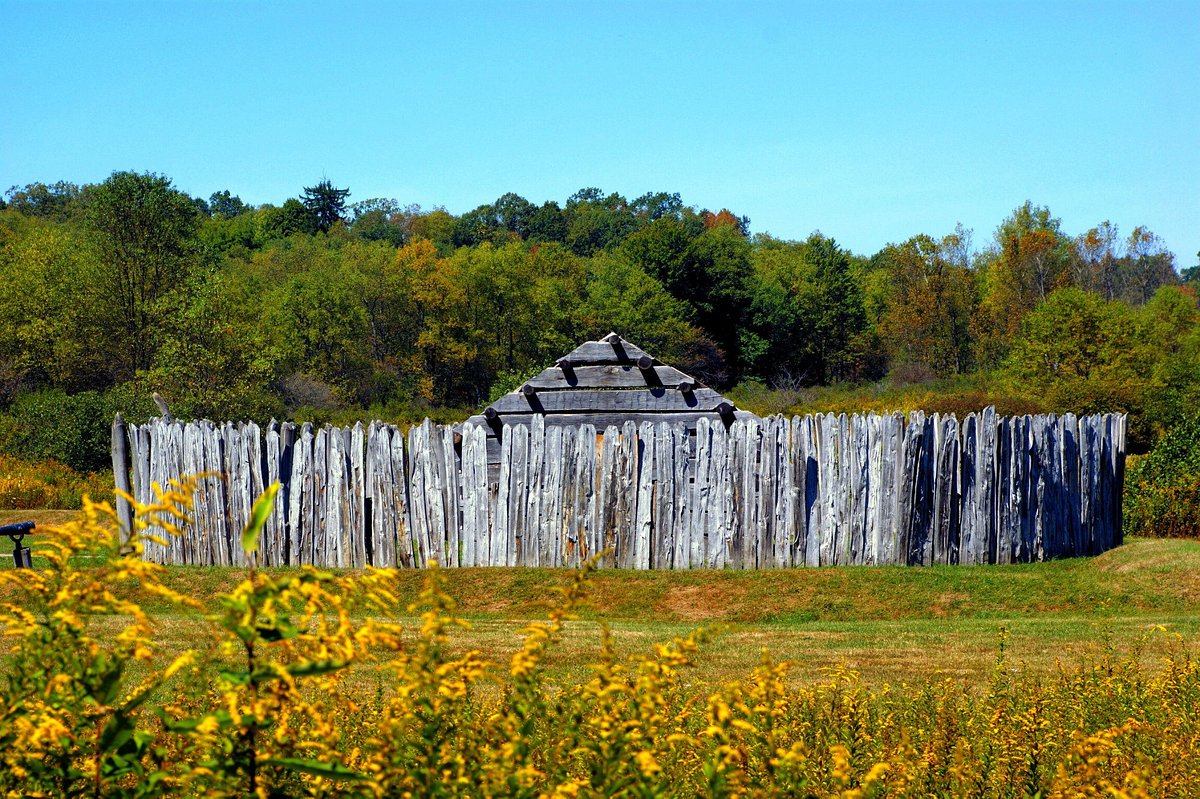
Knowing full well the French are going to want revenge, Washington retreats to Great Meadows and throws up a hasty circular wooden stockade, naming it with more honesty than most fort names ever manage, Fort Necessity.
speaker_0HOST
It's a genuinely flimsy structure, barely seven feet of upright split logs, built fast because there wasn't time to build it well, sitting in an open meadow that offered almost no natural defensive advantage and plenty of surrounding tree line for an enemy to use for cover.
speaker_0HOST
On July third, seventeen fifty-four, a French force of roughly six hundred men, along with a hundred allied native fighters, led by none other than Louis Coulon de Villiers, Jumonville's own half-brother, arriving with every personal reason imaginable to make this fight ugly, attacks Fort Necessity.
speaker_0HOST
It's raining hard, a settled, unrelenting rain that turns the fort's defensive trenches into flooded ditches.
speaker_0HOST
Washington's men are exhausted, outnumbered nearly two to one, running low on ammunition, and some of them, according to multiple accounts, have gotten into the fort's alcohol supply and are drunk in the middle of an active siege.

SarahHOST
Yeah.
SarahHOST
[upbeat jingle] It's Fort Necessity.
SarahHOST
Ha ha ha.
DavidHOST
Oh, that was, that was a great dad joke.
SarahHOST
Yeah.
DavidHOST
It's just a, like she said, a lot.
SarahHOST
So some history: Fort Necessity was George Washington's fort in the French and Indian War, and hence the name, it was built out of necessity.
SarahHOST
There was a clash between Britain, France, and the local indigenous people, and he had to build this fort in a clearing so that he could defend it, and the clearing is called the Great Meadows.

speaker_0HOST
He orders his men to build a fort.
speaker_0HOST
He calls it Fort Necessity.
speaker_0HOST
But honestly, he could have called it Fort Terrible Idea.
speaker_0HOST
He builds the fort in the middle of a literal swamp.

Tatiana ChichilaNARRATOR
Fort Duquesne.
Tatiana ChichilaNARRATOR
Washington at Fort Necessity.
Tatiana ChichilaNARRATOR
On the seventeenth of April, seventeen fifty-four, Ward was surprised by the appearance of a swarm of canoes and bateaux descending the Allegheny, carrying, according to Ward, about one thousand Frenchmen, who landed, planted their cannon, and summoned the ensign to surrender.
Tatiana ChichilaNARRATOR
He promptly complied and was allowed to depart with all his men.
Tatiana ChichilaNARRATOR
And so, on June 28th, he began to retreat.
Tatiana ChichilaNARRATOR
Not having enough horses, the men had to carry the baggage on their backs and drag nine swivels over miserable roads.
Tatiana ChichilaNARRATOR
Two days brought them to Great Meadows, and they had but one full day to strengthen the slight fortification they had made there, which Washington named Fort Necessity.
Tatiana ChichilaNARRATOR
The fighting began at eleven and lasted for nine hours.

speaker_0HOST
Next chapter, that military commission actually comes through, and it goes about as badly as a military career can possibly start.
speaker_0HOST
a humiliating surrender at a hastily built fort with the unfortunate name of Fort Necessity, a disastrous campaign under a British general who won't listen to a word the provincial colonial says.
speaker_0HOST
This is where Washington's actual military education begins, and it starts with him losing badly in public more than once.
speaker_0HOST
I'll catch you in the next one.

Carla ArnellNARRATOR
Warfare bloody enough in a time of supposed peace.
Carla ArnellNARRATOR
But the French were now on the Ohio in greater numbers than the English, at a spot known as the Great Meadows, where Washington had hastily thrown up defenses which he called Fort Necessity.
Carla ArnellNARRATOR
He was forced to surrender, but was allowed to lead his force back to Virginia, defeated in the first military adventure of his career.
Carla ArnellNARRATOR
The French took the view that his killing of the young officer Jumonville was assassination, since no state of war existed, and raised a fierce clamor that Washington was a murderer, a strange contrast to his relations with France in the years to come.
9 more episodes mention Fort Necessity National Battlefield.
Create an account to see the whole feed, search across every transcript, and follow the entities you care about.