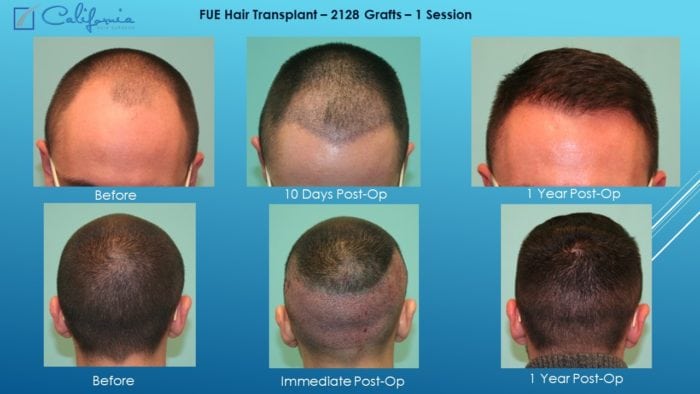
Follicular unit extraction
62
MENTIONS
8
EPISODES
7
PODCASTS
Search complete. 62 mentions across 8 episodes found for "Follicular unit extraction".
Oct 19, 2026

Larry HagnerHOST
Talk to me about it.
Goran JezicGUEST
Well, in a nutshell, it sounds like 14 years ago, the FUE procedure that you alluded to, which is what I do exclusively, is the follicular unit extraction, where we're able to extract individual follicular units one by one.
Goran JezicGUEST
Prior to that, the method of choice was FUT, or follicular unit transplantation, which involves taking a strip from the back of the scalp and then sewing that back together and then harvesting follicles from that piece of meat, if you will.
Goran JezicGUEST
So now, you know, the patient is laying in the equivalent of a massage table, you know, with a little donut hole, and we're able to just literally drill and punch individual follicles.
Goran JezicGUEST
the FUT method was great, uh, but just a bit more invasive, um, because, you know, you're left with a linear scar.
Goran JezicGUEST
So a lot of guys moving forward, if they want to do like a high fade or a bald fade, they're a little self-conscious about the, the linear scar and back.
Goran JezicGUEST
So that that's eliminated, but, but this is both methods, FUT and FUE are a far cry from the hair plugs of where, you know, you're pulling out six millimeter pieces of tissue with, you know, maybe 10 to 20 follicles.
Goran JezicGUEST
And so it looked more like a hedgerow and kind of pluggy.

John FrankGUEST
It just kind of blows my mind.
John FrankGUEST
So I, I've seen a lot, and this goes back even before FUE was even, uh, even born.
John FrankGUEST
But, you know, there's been advances in automation, of course, the FUE and devices and tourism and things, but there's still the basic, you know, the basic doctor-patient relationship and, you know, if I venture to say, transaction, where, where folks, um, they have an issue, and it's not a big issue.
John FrankGUEST
Like, in our practice, we, we really like to work with fo- folks that they're established.
John FrankGUEST
They, they, they're, they're, they're not 20 years old, which is, you know, can al- can be a red flag in a lot of practices.
12 MINS LATER
John FrankGUEST
Every doctor should, everybody doing this should have some gra- graft just to know what it feels like.
John FrankGUEST
And you've got amazing hair, so, um, I'm not gonna bait you, but, uh-
Ross KopelmanHOST
Maybe I'll have to come to you for an FUE so you can give me a few grafts.

Bobby LeeGUEST
What did you do there?
Theo VonHOST
This is when I got FUE hair transplant.
Bobby LeeGUEST
Oh, I see.
Bobby LeeGUEST
Yeah, but something's going on with your fucking-
Bobby LeeGUEST
Wait, wait, wait, that's not from your hair plug.
Bobby LeeGUEST
You got, like, Botox in your face?
Theo VonHOST
No, when they do, one of the things that they put some of the w- when they do the FUE, when they do, they take your blood out and they get the cells out of it, the white plasma, and then they inject that just into your head.
Theo VonHOST
And whenever they do, um, no wait, when they do the hair transplant, they have to put, like, saline or something in, saline solution.

Nate BruschiHOST
Yeah.
Nate BruschiHOST
So I know when we're doing scalp hair transplants, the big debate is do you do FUE? Do you do FUT? When you're doing body hair, is it FUE only, or can you also do FUT?
Gary PetrusGUEST
No, it's FUE only.
Gary PetrusGUEST
Yeah, you have to do just FUE.
Gary PetrusGUEST
Yeah, it's, um-- And, and the, the important thing is, like, for example, chest, the hair follicles sit very more superficial.
Gary PetrusGUEST
Same for the beard.
Gary PetrusGUEST
So the scalp hair is pretty thick, and the scalp-- the skin of the scalp is thick, and the hair follicles are relatively deeper in that area than they are in the chest, for example.
Gary PetrusGUEST
So we have to alter our techniques to, to match this, what donor area we're working in, you know? [chuckles] And like I said, you have to p- pay attention to the curl, not cut off any, not transect any follicles.
Blake BloxhamGUEST
That patient in particular is definitely, you know, he's, he's well outside of the normal bell curve there.
Blake BloxhamGUEST
I would say that for the average patient, if you just take a normal guy, younger guy, Caucasian patient, just thinking in terms of the average donor supply and things like that, what I usually tell them is if we're looking to absolutely maximize the donor, we do believe that we can get out more grafts doing FUT followed by FUE.
Blake BloxhamGUEST
I think there's a lot of people kind of challenging that narrative.
Blake BloxhamGUEST
I think as people sort of push the boundaries, I think as the shape of punches, ironically enough, kind of changes and it allows for more contraction of the wounds in the donor area, that sort of statement is being challenged a little bit.
Blake BloxhamGUEST
So I'll tell them that I'll say, look, you know, we can we can kind of continue down that road.
Blake BloxhamGUEST
But here's the reality of it.
Blake BloxhamGUEST
Or we can kind of switch to FUE at this point.
Blake BloxhamGUEST
And I find kind of two different answers.

Wayne YoungHOST
I'm Dr. Wayne Young, hair restoration doctor and founder of Young Hair.
Wayne YoungHOST
In each episode, I share clear evidence-based insights into FUE surgery, donor management, and the principles behind natural long-term results.
Wayne YoungHOST
If you're considering hair restoration or want to understand what truly determines a great outcome, this podcast is for you.
Wayne YoungHOST
Let's get started.
Wayne YoungHOST
Before we go further, let's clarify one important term.
Wayne YoungHOST
Donor hair refers to the permanent hair usually taken from the back and sides of the scalp that can be moved to areas affected by hair loss.
Wayne YoungHOST
One of the main techniques used to move this hair is FUE or follicular unit excision.
Wayne YoungHOST
During FUE, individual groups of hairs are carefully removed from the donor area and placed where they are needed.

Alan BaumanGUEST
cool.
Alan BaumanGUEST
And that's called FUE, follicular unit extraction.
Alan BaumanGUEST
And that's really the mainstay of therapy.
Alan BaumanGUEST
That's what we do today.
15 MINS LATER
Alan BaumanGUEST
But I mean, that was just one little exciting point of the journey.
Alan BaumanGUEST
But yeah, things started to move pretty quickly.
Alan BaumanGUEST
And then of course, later on with the minimally invasive style of hair transplant, as I described earlier, the FUE style and using, being the first to use the NeoGraft, for example, because you know hair transplant surgeons just in general back in that day they would never think to buy an expensive piece of equipment to do a hair transplant i would say it was a barrier to entry for most and i just didn't have that mindset i would just you know i for whatever reason maybe it's because i had a plastic surgeon friend who had a lot of toys and technologies and such But surgeons were always looking to try to save 50 cents on a piece of scalpel blade or something.
Alan BaumanGUEST
I mean, that was their mindset.

ElikaGUEST
No, we just have this robotic arm that helps with the outcome of the surgery.
ElikaGUEST
So when it comes to traditional hair transplants, you can have FUE or DHI.
ElikaGUEST
And most people, they experience scarring at the back where the extractions happen.
ElikaGUEST
So when we do the extraction with our robotic CII, the puncture is very, very small and we do partial extraction.
LizGUEST
Wow.
LizGUEST
Yeah, I have a huge team with me, everyone doing something different.
LizGUEST
For example, the downtime for the patient is, is minimum it's 10 days that I am pleased to don't do this you know like the normal things but for example swelling is less they can go back to work in 10 days without any problems because also with FUE you create incisions the HI doesn't create incisions.
LizGUEST
So grafts can be placed a little bit closer and the scalp doesn't have to recover from those incisions.