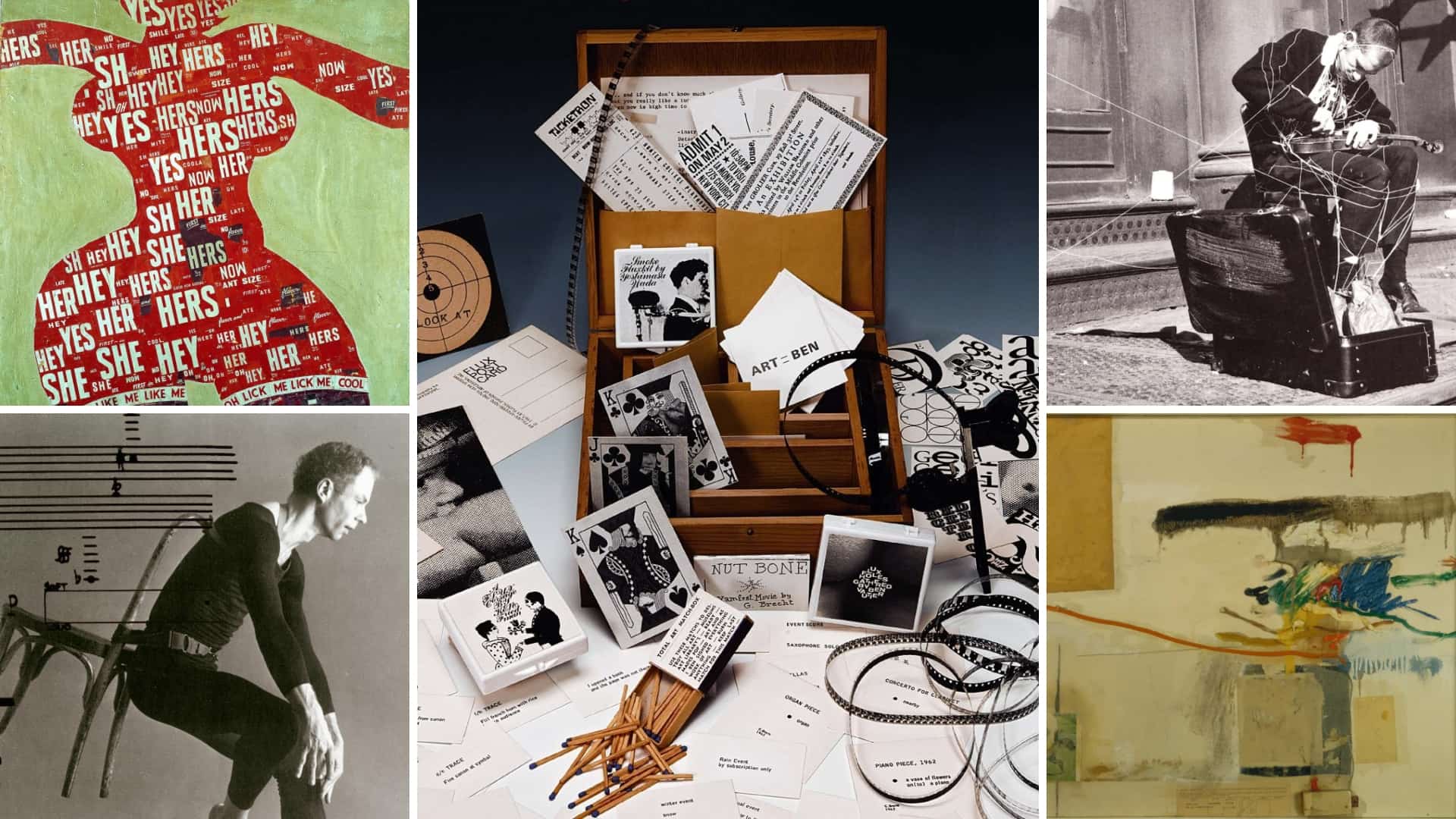
Fluxus
Art movementWikipedia
29
MENTIONS
18
EPISODES
18
PODCASTS
Search complete. 29 mentions across 18 episodes found for "Fluxus".
Nov 5, 2026

Janaina TschäpeGUEST
There is physical challenges that I think are interesting because as you mentioned, for a couple of years I was very interested in performance.
Janaina TschäpeGUEST
I think especially like when I studied in Hamburg, I started as a painter and throughout the years at the Academy, I got really drawn to Fluxus, to performance art.
Janaina TschäpeGUEST
I studied with Ursula Henning-Christiansen.
Janaina TschäpeGUEST
And Franz

Florian DomboisGUEST
I have a bit strange biography because I grew up in the arts and that means late 60s and then especially 70s and early 80s were formational for me.
Florian DomboisGUEST
and then when I wanted to go to the art school after school there was a moment when a painting came back and you had the Neue Wilden and all these things and I was kind of more on the Fluxus side and on the ephemeral and not I think for me very important is I think art cannot be owned it's something that happens to you or that you can prepare for so this whole dealing of artifacts is a question for me So then I didn't study art because I was interested in earthquakes and volcanoes and natural phenomena.
Florian DomboisGUEST
And then I studied geophysics and I realized from very early on that there's something wrong here.
Florian DomboisGUEST
And then it was also when...

Jack O'BrienHOST
Um...
Jack O'BrienHOST
But yeah, she was part of the Fluxus movement, which was inspired by John Cage and the 433 work of music, which do you know what that is? No.
Jack O'BrienHOST
It's a piece of music.
Jack O'BrienHOST
It's four minutes and 33 seconds long.
Jack O'BrienHOST
And so she's like staging these shows in like her shitty apartment.
Jack O'BrienHOST
And like John Cage is like coming to those and like she's creating this movement, which she then gets credited as like being a part of.
Jack O'BrienHOST
But like she puts on the first Fluxus shows.
Jack O'BrienHOST
It's not.

Mark HavensGUEST
Ira Gittler became the New York editor for Downbeat and one of the world's preeminent jazz historians, receiving a Guggenheim Fellowship in 1974.
Mark HavensGUEST
Scott Hyde went on to collaborate with such 20th century giants as Joseph Albers and John Cage and documented some of the earliest Fluxus events.
Mark HavensGUEST
He was awarded a Guggenheim Fellowship in 1965, and his work is in the collections of the Museum of Modern Art, the Metropolitan Museum of Art, and the International Center of Photography, among others.
Mark HavensGUEST
Esmond Edwards was variously a composer, arranger, and pioneering record executive, heading Verve Records and becoming vice president of A&R for Chess.

Keegan Cook-FinbergGUEST
So This was through morphing urban renewal, white flight, suburbanization in the US, and of course, imperialist practices abroad.
Keegan Cook-FinbergGUEST
And in that 60s framework, my discussion of Yoko Ono and George Brecht and Fluxus events illuminate this moment in terms of imperialism and bureaucracy.
Keegan Cook-FinbergGUEST
And later, you know, after the US economy restructured to favor finance, this looks different.
Keegan Cook-FinbergGUEST
And in the later chapters of the book, I you know, discuss the whittling down of welfare programs and, you know, public austerity, for example.
12 MINS LATER
Keegan Cook-FinbergGUEST
Some of them are a little bit larger than index cards, but pieces of paper roughly recognizable as index cards.
Keegan Cook-FinbergGUEST
with words on them.
Keegan Cook-FinbergGUEST
And he, George Brecht, like Yoko Ono, was part of this larger group of artists known as Fluxus, and it was a very international group.
Keegan Cook-FinbergGUEST
And he was creating these event scores, which are similar to Ono's instructions, but sometimes even more abstract.

Will LachGUEST
And then there was this dude, maybe he was 30, actively trying to meditate.
Will LachGUEST
And I was, you know, so you walk up and you're like, wow, Yoko Ono, the wizard of the Fluxus Mu movement, has done it.
Will LachGUEST
Like she's manifested this peace through this language and this cloud-like invitation.
Will LachGUEST
You know, it was magic.
Jonathan AlgerHOST
How do we do? Do we get everything? I think we got everything.
Jonathan AlgerHOST
Excellent.
Jonathan AlgerHOST
We even got a little Fluxus in there.
Jonathan AlgerHOST
It has been great to have you on the show.

Keegan Cook-FinbergGUEST
So this was through morphing urban renewal, white flight, suburbanization in the US, and of course imperialist practices abroad.
Keegan Cook-FinbergGUEST
And in that 60s framework, my discussion of Yoko Ono and George Brecht and Fluxus events illuminate this moment in terms of imperialism and bureaucracy.
Keegan Cook-FinbergGUEST
And later, after the U.S. economy restructured to favor finance, this looks different.
Keegan Cook-FinbergGUEST
And in the later chapters of the book, I discuss the whittling down of welfare programs and public austerity, for example.
10 MINS LATER
Keegan Cook-FinbergGUEST
Some of them are a little bit larger than index cards, but pieces of paper roughly recognizable as index cards.
Keegan Cook-FinbergGUEST
with words on them.
Keegan Cook-FinbergGUEST
And he, George Brecht, like Yoko Ono, was part of this larger group of artists known as Fluxus, and it was a very international group.
Keegan Cook-FinbergGUEST
And he was creating these event scores, which are similar to Ono's instructions, but sometimes even more abstract.

Keegan Cook FinbergGUEST
So This was through morphing urban renewal, white flight, suburbanization in the US, and of course, imperialist practices abroad.
Keegan Cook FinbergGUEST
And in that 60s framework, my discussion of Yoko Ono and George Brecht and Fluxus events illuminate this moment in terms of imperialism and bureaucracy.
Keegan Cook FinbergGUEST
And later, you know, after the US economy restructured to favor finance, this looks different.
Keegan Cook FinbergGUEST
And in the later chapters of the book, I you know, discuss the whittling down of welfare programs and, you know, public austerity, for example.
13 MINS LATER
Keegan Cook FinbergGUEST
And he, George Brecht, like Yoko Ono, was part of this larger group of
speaker_10ANNOUNCER
artists known
Keegan Cook FinbergGUEST
as Fluxus, and it was a very international group.
Keegan Cook FinbergGUEST
And he was creating these event scores, which are similar to Ono's instructions, but sometimes even more abstract.

Keegan Cook-FinbergGUEST
So this was through morphing urban renewal, white flight, suburbanization in the U.S., and of course imperialist practices abroad.
Keegan Cook-FinbergGUEST
And in that 60s framework, my discussion of Yoko Ono and George Brecht and Fluxus events illuminate this moment in terms of imperialism and bureaucracy.
Keegan Cook-FinbergGUEST
And later, after the US economy restructured to favor finance, this looks different.
Keegan Cook-FinbergGUEST
And in the later chapters of the book, I discuss the whittling down of welfare programs and public austerity, for example.
11 MINS LATER
Keegan Cook-FinbergGUEST
Some of them are a little bit larger than index cards, but pieces of paper roughly recognizable as index cards.
Keegan Cook-FinbergGUEST
with words on them.
Keegan Cook-FinbergGUEST
And he, George Brecht, like Yoko Ono, was part of this larger group of artists known as Fluxus, and it was a very international group.
Keegan Cook-FinbergGUEST
And he was creating these event scores, which are similar to Ono's instructions, but sometimes even more abstract.

Keegan Cook-FinbergGUEST
So this was through morphing urban renewal, white flight, suburbanization in the US, and of course imperialist practices abroad.
Keegan Cook-FinbergGUEST
And in that 60s framework, my discussion of Yoko Ono and George Brecht and Fluxus events illuminate this moment in terms of imperialism and bureaucracy.
Keegan Cook-FinbergGUEST
And later, after the U.S. economy restructured to favor finance, this looks different.
Keegan Cook-FinbergGUEST
And in the later chapters of the book, I discuss the whittling down of welfare programs and public austerity, for example.
10 MINS LATER
Keegan Cook-FinbergGUEST
Some of them are a little bit larger than index cards, but pieces of paper roughly recognizable as index cards.
Keegan Cook-FinbergGUEST
with words on them.
Keegan Cook-FinbergGUEST
And he, George Brecht, like Yoko Ono, was part of this larger group of artists known as Fluxus, and it was a very international group.
Keegan Cook-FinbergGUEST
And he was creating these event scores, which are similar to Ono's instructions, but sometimes even more abstract.
8 more episodes mention Fluxus.
Create an account to see the whole feed, search across every transcript, and follow the entities you care about.