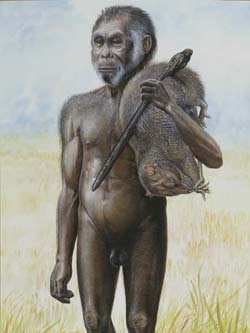
Flores man
AnimalWikipedia
21
MENTIONS
14
EPISODES
10
PODCASTS
Search complete. 21 mentions across 14 episodes found for "Flores man".
Oct 13, 2026

MeganHOST
"If the weather is not conducive, they should not give permission to sail," says Ms. Jemana.
MeganHOST
Her organization has been looking at other tourist attractions to promote, such as sites linked to Portuguese traders and missionaries who settled in the island in the sixteenth century, and the discovery there around twenty years ago of remains of Homo floresiensis, the extinct Hobbit man that is a relative of modern humans.
MeganHOST
Flores has other national parks and active volcanoes, but at the end of the day, the tourists wanna see the dragons.
MeganHOST
Unfortunately, many of them don't know how to behave once there.

Christopher BaeSOUNDBITE_SPEAKER
And then after that, you know, once we get into the Chibanian or the Middle Pleistocene, you see the appearance of Homo juluensis and Homo longi, the two newest, uh, uh, proposed species, uh, that are out there.
Christopher BaeSOUNDBITE_SPEAKER
And then when we get into, uh, the, the more recent time periods, the Late Pleistocene, we- we've got Homo floresiensis and then Homo luzonensis, uh, in the Philippines.
Erich FisherHOST
Okay, let's just pause for a second here and unpack everything that Chris just said, because he not only introduced a ton of new characters into our story about Asia, but he's also alluding to the backstory about Asian archaeology and paleoanthropology that's being challenged right now.
Helen FarrHOST
Exactly.
Erich FisherHOST
First off is Homo erectus, which we've already been talking about.
Erich FisherHOST
And if you want to learn more, then also check out episode two from season one with Josie Jordans and Irit Zohar.
Erich FisherHOST
Then there's Homo floresiensis, also known as the Hobbits, and relatedly, Homo luzonensis.
Erich FisherHOST
Now, who are they? Well, based on the current data, Homo floresiensis and Homo luzonensis seem to be descendants of Asian Homo erectus populations who were cut off from mainland Asia by rising sea levels.

Harini BhatHOST
And there's a serious version of this idea from a different island.
Harini BhatHOST
On Flores in Indonesia, home of the tiny extinct species Homo floresiensis, the local Leo people have long told stories about small, hairy human-like creatures.
Harini BhatHOST
An anthropologist named Gregory Fourth spent decades studying those stories and wrote a whole book arguing they might preserve a memory of a real hominin.
Harini BhatHOST
Most of his colleagues aren't convinced, but he's a legitimate scholar asking a real question.

speaker_7NARRATOR
These weren't diseased modern humans.
speaker_7NARRATOR
They were Homo floresiensis, a separate human species probably descended from Homo erectus populations that had reached the island maybe a million years ago and then evolved in isolation.
speaker_7NARRATOR
Island dwarfism is a well-documented phenomenon.
speaker_7NARRATOR
Large animals evolving on islands with limited resources tend to get smaller over generations.
7 MINS LATER
speaker_7NARRATOR
We know the outcome.
speaker_7NARRATOR
One human species survived.
speaker_7NARRATOR
Modern humans spread across the globe while Neanderthals, Denisovans, Homo floresiensis, Homo naledi, and all the ghost populations disappeared.
speaker_7NARRATOR
By 40,000 years ago, maybe earlier, we were alone, the last human species standing.

speaker_1HOST
What are they called?
speaker_2HOST
Homo floresiensis.
speaker_1HOST
Homo floresiensis.
speaker_1HOST
Found on Flora's Island.
speaker_1HOST
And they were tiny, right? Like three and a half feet tall?
speaker_0NARRATOR
This is ritual behavior from a small brained human that might have lived as recently as two hundred and fifty thousand years ago.
speaker_0NARRATOR
Homo floresiensis, the so-called Hobbit, discovered in Indonesia in two thousand and three.
speaker_0NARRATOR
Adults stood about three and a half feet tall with brains the size of grapefruits.
speaker_0NARRATOR
They evolved their small size through island dwarfism, a process where large animals evolve smaller body sizes when trapped on islands with limited resources.
speaker_0NARRATOR
The Neanderthals went extinct.
speaker_0NARRATOR
The Denisovans vanished.
speaker_0NARRATOR
Homo floresiensis disappeared from their island refuges.
speaker_0NARRATOR
Homo naledi, if they'd survived that long, were gone.

Dan RichardsGUEST
... pronunciation on that-
Joe RoganHOST
Island of Flores Man.
Dan RichardsGUEST
Yeah.
Joe RoganHOST
The, the Hobbit people.
speaker_1NARRATOR
Homo erectus was still hanging on in Indonesia, the last remnants of a species that had once spread across the Old World.
speaker_1NARRATOR
Small bodied humans, possibly Homo floresiensis, lived on isolated islands, having evolved into something unique and strange.
speaker_1NARRATOR
There might have been other species we haven't discovered yet, populations whose fossil remains are waiting to be found or have been destroyed by time and geology.
speaker_1NARRATOR
All of these humans shared a warming world, a planet that seemed to be settling into a comfortable equilibrium.

QuinnHOST
There were, however, obviously many species of humans who did not go on, who for whatever reason could not adapt to their environments well enough to carry on their DNA.
QuinnHOST
Examples include Homo neanderthalensis, Homo erectus, and Homo floresiensis.
QuinnHOST
Peter Watts, in his novel Blindsight, merely adds an additional species to that list.
QuinnHOST
They evolved in a different way.

Thomas GomersallHOST
Species like Neanderthals and, of course, homo sapiens were a lot more human-looking.
Thomas GomersallHOST
But then again, there was another hominid species, Homo floresiensis, the Hobbit man, three guesses as to why it's called that, which lived at around the same time as us and Neanderthals and had morphological features more similar to apes and more basal hominids.
Thomas GomersallHOST
Its shoulder joints were similar to Homo erectus.
Thomas GomersallHOST
It had longer toes like apes, wrist bones similar to australopithecines.
4 more episodes mention Flores man.
Create an account to see the whole feed, search across every transcript, and follow the entities you care about.