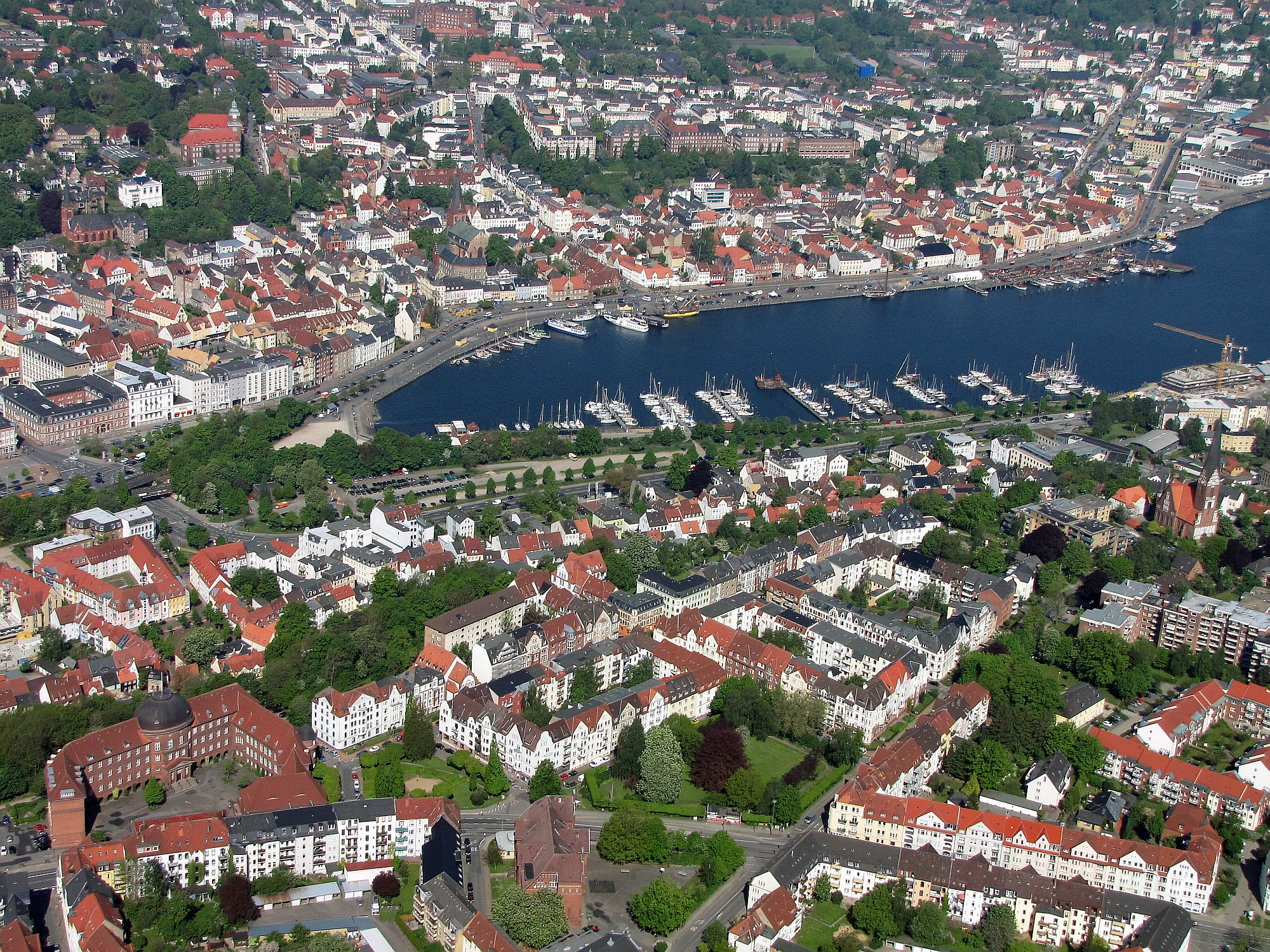
Flensburg
Town in GermanyWikipedia
23
MENTIONS
12
EPISODES
11
PODCASTS
Search complete. 23 mentions across 12 episodes found for "Flensburg".
Oct 24, 2026

Dan SnowNARRATOR
As German troops desperately fought on and destroyed anything of value to the enemy, Speer began a perilous journey.
Dan SnowNARRATOR
He traveled through the crumbling Reich to the doomed regime's final hiding place at Flensburg, near the Danish border.
Dan SnowNARRATOR
As Speer finally made it to the picturesque town of Flensburg, he would have known the Nazi hunters were already on his trail.
Dan SnowNARRATOR
In 1943, the big four allies, Britain, the US, France, and the Soviet Union, had decided that the Nazi elite must pay for their crimes.
Dan SnowNARRATOR
After bitter wranglings, they agreed that putting them in the dock, rather than summary execution, would be the best way to hold them to account.
11 MINS LATER
Dan SnowNARRATOR
It seems that Speer hadn't cared where the workers came from or how appallingly they were treated.
Dan SnowNARRATOR
All that mattered was keeping Hitler's war machine going.
Dan SnowNARRATOR
So as he awaited his fate in Flensburg, Speer knew the hangman's noose was near.
speaker_0NARRATOR
The Wehrmacht had laid down its arms in Italy and southern Germany, but not in Austria as a whole.
speaker_0NARRATOR
And the Reich government in Flensburg in northern Germany was still refusing to capitulate to the Soviet Union.
speaker_1NARRATOR
May the 6th, 1945.
speaker_1NARRATOR
On behalf of Admiral Dönitz, Colonel General Alfred Jodl had flown to Reims in France to sign the declaration of the unconditional surrender of Nazi Germany.
speaker_0NARRATOR
On May the 7th, a cameraman with Special Film Project 186 took these pictures somewhere in southeast Germany.
speaker_0NARRATOR
In Tyrol on the evening of May the 7th, author Erich Kessner wrote in his diary,
speaker_1NARRATOR
Flensburg radio station has announced that Jodl has signed the capitulation document and that it will come into force tomorrow.
speaker_1NARRATOR
But the radio station in Bohemia has called the report a fabrication concocted by the enemy.

Charles LachmanGUEST
But a very alert British sergeant saw something fishy about the identity papers.
Charles LachmanGUEST
It was like a smudge, and a lot of these phony papers were coming out of, Flensburg, Germany, which was the seat of the Donitz government.
Charles LachmanGUEST
They were handing him out like candy to help the Germans escape.
Charles LachmanGUEST
So he was suspicious and brought Himmler in for questioning.

Marcus DemuthGUEST
Maybe it does.
Marcus DemuthGUEST
I have a new friend here in Flensburg, and he paddled last week from Kiel to Flensburg, which took him 14 hours of paddling.
Marcus DemuthGUEST
He paddled 100 kilometers, and we spoke for two hours on the phone about that trip.
Marcus DemuthGUEST
And I had so many questions, and I was so energized by his account and what he did by...

FabHOST
They met working in the Block family business.
FabHOST
When they separated, Stefan Hansel moved to Grasten, formerly Grauenstein, in Denmark, just across the border from Flensburg in Germany.
FabHOST
One of the older daughters lives with her mother, and the other older daughter moved to her father.
FabHOST
Block and Hansel became embroiled in a custody battle about their two youngest children.
FabHOST
Six German men traveled to Denmark.
FabHOST
And this is where this guy lives.
FabHOST
It's just across the border from Flensburg.
FabHOST
It's just like you can basically walk there.

speaker_1NARRATOR
Licentiate Theology, Copenhagen 1837, Doctor of Divinity, Kiel 1840, Lutheran Bishop.
speaker_1NARRATOR
Born at Flensburg in the Duchy of Schleswig, August 19, 1808.
speaker_1NARRATOR
Died in Copenhagen, February 3, 1884.
speaker_1NARRATOR
He studied theology and philosophy in Copenhagen, 1827 to 1832, traveled 1834 to 1836, began to lecture on philosophy in the University of Copenhagen in 1838, was appointed Professor of Theology in 1840, and became Bishop of Zealand, that is, Primate of the Danish Church in 1854.

speaker_1NARRATOR
Licentiate Theology, Copenhagen 1837, Doctor of Divinity, Kiel 1840, Lutheran Bishop.
speaker_1NARRATOR
Born at Flensburg in the Duchy of Schleswig, August 19, 1808.
speaker_1NARRATOR
Died in Copenhagen, February 3, 1884.
speaker_1NARRATOR
He studied theology and philosophy in Copenhagen, 1827 to 1832, traveled 1834 to 1836, began to lecture on philosophy in the University of Copenhagen in 1838, was appointed Professor of Theology in 1840, and became Bishop of Zealand, that is, Primate of the Danish Church in 1854.

Peter KeutgensGUEST
And so he and I had a day together.
Peter KeutgensGUEST
I went to Flensburg, which is like a town in Germany, which is way up north, almost in Denmark.
Peter KeutgensGUEST
And we had a day and then back home and, you know, next day I was on cloud code and let's just plan this thing and see what my tech stack should look like to just build what Malte and I decided that it had to become.
Peter KeutgensGUEST
And, you know, I spent a day, you know, designing it and, you know, what sort of technology do we want it? And then at the end of it, I sort of said, you know, okay, now we know all of that.

AvailleNARRATOR
All LibriVox recordings are in the public domain.
AvailleNARRATOR
For more information or to volunteer, please visit LibriVox.org Hans Lassen Martensen Licentiate Theology, Copenhagen 1837 Doctor of Divinity, Kiel 1840 Lutheran Bishop Born at Flensburg in the Duchy of Schleswig, August 19, 1808 Died in Copenhagen, February 3, 1884 He studied theology and philosophy in Copenhagen, 1827 to 1832 Traveled 1834 to 1836 Began to lecture on philosophy in the University of Copenhagen in 1838 Was appointed Professor of Theology in 1840 and became Bishop of Zealand, that is, Primate of the Danish Church in 1854 He grew up and developed in close contact with and yet entirely independent of the various movements in the Danish Church and their representatives, Minster, Clausen, Grundtvig, etc.
AvailleNARRATOR
And though he never became a leader himself of any party, he brought into the Danish Church a strong but thoroughly digested influence from Hegel and Schelling on the one side and Father Bader and the mystics on the other, which leavened its whole life.
AvailleNARRATOR
His first lectures in the University created great enthusiasm, the natural result of the novelty of his standpoint and the charm of his talent.

SeanHOST
He's not an innocent character either, but it ultimately becomes Hitler's successor, strangely enough.
SeanHOST
But when Dönitz is basically up in Flensburg, he's trying to get Hitler to listen to him and get more U-boats.
SeanHOST
Because if he'd have listened, if they'd have spent the money they spent on, say, the V1 and V2, On U-boats, they could have wreaked havoc, absolute havoc, but they kind of don't.
Richard M. JonesGUEST
In the end, during the Second World War, at some point, there was about 1,200 U-boats I mean, that is a lot.
2 more episodes mention Flensburg.
Create an account to see the whole feed, search across every transcript, and follow the entities you care about.