First Intifada
AttackWikipedia
71
MENTIONS
29
EPISODES
27
PODCASTS
Search complete. 71 mentions across 29 episodes found for "First Intifada".
Sep 18, 2026

John GreenHOST
And these settlements are illegal, according to international law, but Israel counters by saying that they aren't really illegal because Palestine isn't really a state.
John GreenHOST
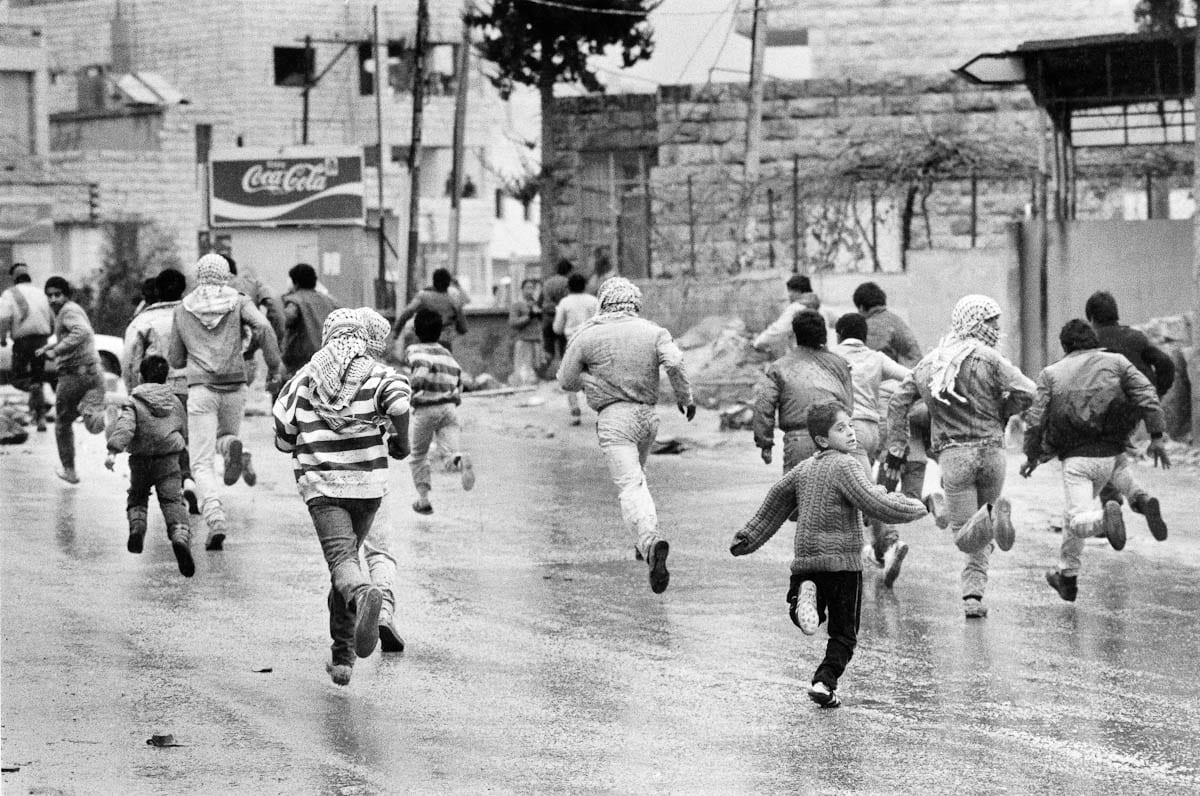
By the late 1980s, Palestinians launched the first intifada, which literally means shaking off.
John GreenHOST
And this began with, like, boycotts of Israeli products and services and refusing to pay Israeli taxes.
John GreenHOST
But when the Israeli armed forces cracked down on protesters, violence ensued.
John GreenHOST
And the First Intifada also saw the founding of Hamas, which launched the first suicide bombing against Israel in 1993.
John GreenHOST
Hamas gained support partly because of its militancy, but mostly because of its social welfare projects in Gaza.
John GreenHOST
It built and staffed schools, mosques, and clinics.
John GreenHOST
The most important legacy of the First Intifada was the emergence of peace talks between Palestinians and Israelis.

Noah EfronHOST
I, myself, disagree with it.
Noah EfronHOST
But, um, but looking for the signs of, of treason, I came away feeling really astonished by the degree to which, uh, these parties have, for years, been morally serious and been careful and have demonstrated what, to me, seems to be, um, a kind of exemplary citizenship in the face of really, really hard times ever since the First Intifada.
Noah EfronHOST
So I, I looked, trying to come up with things that I could say, "Well, here you should understand why the people who say we cannot sit with, with these parties, why they feel what they feel." And I, I came up with much, much less than, than I expected.
Noah EfronHOST
In a way, it made me hopeful about some shared future, um, with these parties, which I would not have allowed myself to feel fully until I heard y- you remind me that, um, minds can sometimes be changed.

Ezra LippHOST
Do you know what the impetus was for those permits?
Zachary FosterGUEST
Yeah, so this is during the First Intifada, right? So beginning in this period of the first uprising when Palestinians rose up in this leaderless uprising, sit-ins, boycotts, refusal to pay taxes, leafleting, flyering, burning tires, throwing stones, Molotov cocktails, right? It was basically an unarmed uprising, and it was causing Israel a lot of problems.
Zachary FosterGUEST
And during the first year of the uprising, Israel killed about 1,100 Palestinians, and I believe Palestinians killed about maybe 130 or 140 Israelis.
Zachary FosterGUEST
The vast majority of Israelis killed being soldiers and security forces.
41 MINS LATER
Zachary FosterGUEST
You wanna divide and rule the colonized society to make it weak and undefensible, and that's exactly what Israel does.
Zachary FosterGUEST
By empowering Hamas, at the time known as the Islamic Collective, they think they can weaken the PLO led by Yasser Arafat.
Zachary FosterGUEST
And obviously it blew up in their face, but in December 1987, you get this Israeli truck driver kills four Palestinians in Gaza, and this leads to the outbreak of the First Intifada.
Zachary FosterGUEST
And at that time, Hamas is still not called Hamas.

Adrian HarewoodHOST
Is that a legitimate question to ask?
Yafa JarrarGUEST
Yeah, I think so, and I mean, I think I can anticipate maybe what they would answer is they lived, I mean, through the First Intifada.
Yafa JarrarGUEST
That's when they were young and active.
Yafa JarrarGUEST
And my dad, one of the main reasons he was arrested in university is because he was president of student council.

speaker_1HOST
It was a perfect storm.
speaker_0HOST
Internally, you have the outbreak of the First Intifada.
speaker_1HOST
Yes, starting in December 1987, so just a few months prior to this broadcast.
speaker_1HOST
The Intifada erupted across the West Bank and the Gaza Strip.
speaker_0HOST
Right.
speaker_1HOST
And what this did was fundamentally shatter the internal stabilization assumptions of the Israeli security establishment.
19 MINS LATER
speaker_1HOST
He warned the NBC panel that prolonging the military occupation of the territories would do two things, neither of which enhanced Israeli security.
speaker_0HOST
What were they?

Sari NusseibehGUEST
I mean, maybe there was one or two people, but, you know, people were totally anti-Israeli, right? And then suddenly, uh, by the '80s, things changed.
Sari NusseibehGUEST
There was a kind of, uh, total transformation, and slowly people, and especially through the First Intifada, I think, came to, uh, change their views about their lives and that of Israel, and, uh, came to the point of view that we must now reconcile, we must make negotiations.
Sari NusseibehGUEST
So there was a major transformation at that time.
Sari NusseibehGUEST
Then it went down again, as you said, two thousand and three, four, five.

Janessa Gans WilderHOST
I first learned about Ali 20 years ago, watching the film Encounterpoint.
Janessa Gans WilderHOST
And I was so struck by his transformation from this young guy throwing stones during the first intifada to spending four years in prison, where ironically he learned and read up on the power of nonviolence.
Janessa Gans WilderHOST
to then being shot by an Israeli settler during the Second Intifada and having his brother Yusuf killed by an Israeli soldier.
Janessa Gans WilderHOST
So Ali had every excuse to exact revenge and take up arms, but instead he chose the harder path, the path of reconciliation and nonviolence.
31 MINS LATER
Ali Abu AwwadGUEST
You know, Israel fear, freak out from nonviolence activism in Palestine.
Ali Abu AwwadGUEST
But we have never did it the right way.
Janessa Gans WilderHOST
Ali, wouldn't you call the first intifada nonviolence in the right way or no?
Ali Abu AwwadGUEST
Not exactly, because it was like uprising.

Ayman DeanHOST
Including the Polisario, including, you know, many other groups like, you know, the Red Brigades or whatever, the Basques, you know, we could talk on and on about like, you know, how many of these networks like, you know, were left orphans.
Ayman DeanHOST
Why do you think the PLO decided to see the writing on the wall and decided to seek peace with the Israelis just immediately after the collapse of the Soviet Union? And the First Intifada.
Ayman DeanHOST
Exactly.
Ayman DeanHOST
So therefore, I mean, we can see that even the beginning of the peace process between the Palestinians and the Israelis actually started because of the collapse of the Soviet Union and President George Bush, the father, more or less mandating that there will be a new world order.

Raja ShehadehGUEST
Well, I've been always careful about this diary and, uh, fearful that the Israeli army would come to my house and destroy it.
Raja ShehadehGUEST
So I first moved it during the First Intifada to the office, the law office, and they came to the office, but they didn't see it, and then I took it back to the house and put it in a fireproof cabinets in the garage.
Raja ShehadehGUEST
And then in 2002 they came to the house, but they didn't go to the garage, and I was very worried.
Raja ShehadehGUEST
In '82, of course, they went to Beirut and carted off all the Palestine Research Center documents and took them back to Israel.

Khalid MalikiHOST
That was enough, 3,000, 4,000 deaths, was enough for Britain to actually cut all arms trade with Israel.
Khalid MalikiHOST
And that only resumed in 1994 after the First Intifada, after the Oslo Accords were signed.
Khalid MalikiHOST
And so it does show that there is a degree of flexibility to British foreign policy.
Khalid MalikiHOST
Right.
19 more episodes mention First Intifada.
Create an account to see the whole feed, search across every transcript, and follow the entities you care about.