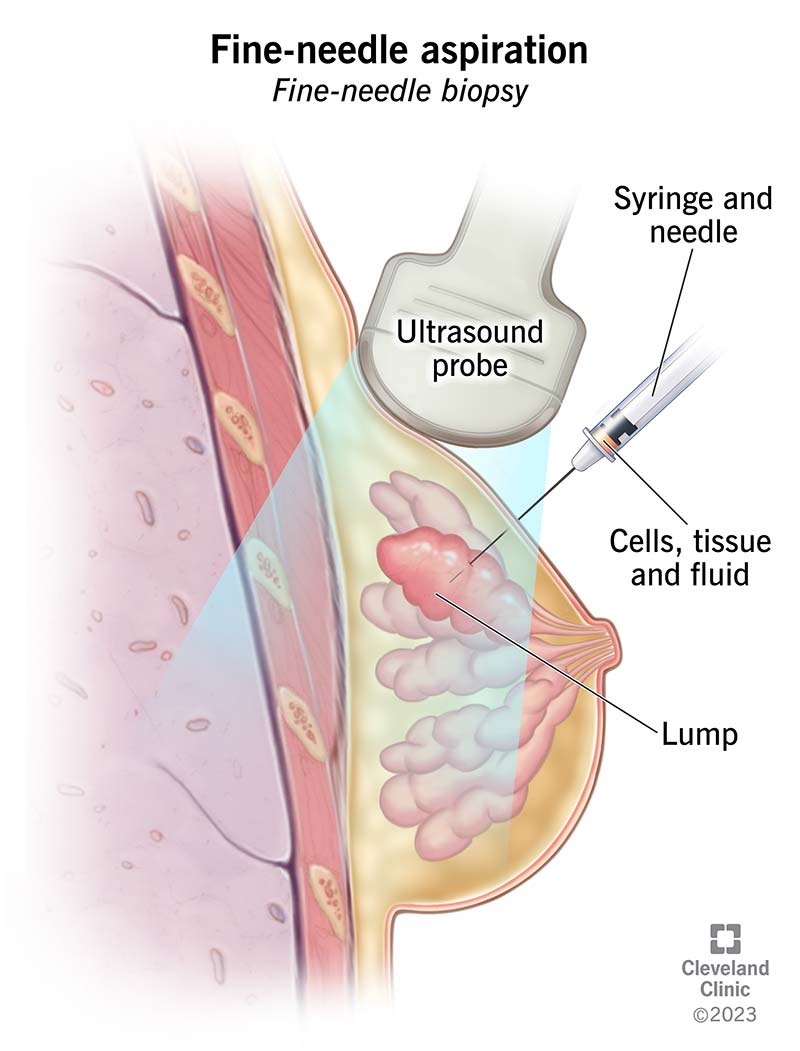
Fine-needle aspiration
Diagnostic procedureWikipedia
33
MENTIONS
11
EPISODES
9
PODCASTS
Search complete. 33 mentions across 11 episodes found for "Fine-needle aspiration".
Sep 15, 2026

speaker_1HOST
The historical evolution of our nomenclature here directly impacts the surgical decisions we make for you and the counseling we provide.
speaker_1HOST
Taking a granular look at the biological and molecular mechanisms behind these cells, well, it fundamentally changes how you interpret your next fine needle aspiration report.
speaker_0HOST
OK, let's unpack this.
speaker_0HOST
We have to start by addressing the name itself.
7 MINS LATER
speaker_1HOST
Just to avoid apoptosis, exactly.
speaker_0HOST
This brings us to the immense dilemma we face in clinical practice.
speaker_0HOST
So what does this all mean for us? A patient presents with a palpable nodule, we perform a fine needle aspiration, and the cytopathologist reports a hypercellular specimen composed almost entirely of oncocytes.
speaker_0HOST
Right,

Susan MandelGUEST
So the use of the app is for the clinician.
Susan MandelGUEST
Like your-- you know, someone has referred to you for an FNA, or you're doing your own ultrasound for the first time, you can categorize the nodule with an evidence-based system, recategorize it, and then make FNA-- make decisions about FNA based upon your use of the ATA 2026 sonographic pattern system, which may differ from how the ultrasound image was interpreted- By a radiologist.
Susan MandelGUEST
So but we think the app will make it easier for clinicians.
Susan MandelGUEST
The clinicians there are specifically clinicians who are performing FNAs or making decisions about doing FNAs who are non-radiologists, 'cause radiologists are not going to be using this.
Susan MandelGUEST
Um, but since many FNAs are done by endocrine surgeons, head and neck endo- you know, head and neck thyroid surgeons, endocrinologists, it will be very important, I think, for those clinicians.
Susan MandelGUEST
It will be very important for primary care doctors for the fol- like we just talked about, the follow-up of nodules, because most nodules are biopsied by radiologists, and at least if you're biopsying a nodule that probably maybe is more likely a TI-RADS 2 nodule than TI-RADS 5 nodule, if it had been accurately read, you'll get a benign cytology, and that patient will go back to their primary care doctor, who will now have better guidance for how to follow the patient.
Susan MandelGUEST
So we suspect that there are certain parts of these guidelines that will be very helpful for primary care doctors, and that will have to do with the initial evaluation, when to do a screening ultrasound, how to follow patients, what to do with molecular testing.
Susan MandelGUEST
We had, um, some information about molecular testing in 2016.
speaker_0HOST
So to kick this off, let's ground ourselves in the daily grind of the clinic.
speaker_0HOST
When we do an FNA biopsy, what exactly is the statistical trap we fall into that makes these specific molecular tests so absolutely vital?
speaker_1HOST
Well, it's, uh, it's that frustrating middle ground of cytology.
speaker_1HOST
I mean, FNA is a brilliant tool, don't get me wrong, but it has this massive blind spot.
speaker_0HOST
Yeah, the indeterminate category.
speaker_1HOST
Exactly.
speaker_1HOST
The overtreatment was staggering.
speaker_0HOST
But the introduction of reliable molecular testing has fundamentally changed our entire workflow.

DanHOST
And a CT of her neck and chest shows three left cervical nodes extending to level four, the largest of which is four centimeters.
DanHOST
And FNA, one of those nodes, shows invasive squamous cell carcinoma.
DanHOST
It is P16 negative.
DanHOST
With all that information, what are our next steps? Where do we start?
RonakHOST
And this includes things like PD-L1 CPS score, because this will have implications on what options are available to our patient.
RonakHOST
In this day and age, we also want to consider sending molecular profiling and NGS information in the event that there are targetable mutations or to assess for trial eligibility, because as we know, clinical trials may also be an option for patients in this setting.
RonakHOST
I think as a practical point for our listeners to think about, can you get CPS off of an FNA? In general, we want to try and get a core biopsy if we're trying to send off for PD-L1 testing, and it's simply because you want to ensure that there's adequate tissue to make that decision.
RonakHOST
More tissue is always going to be better in that situation.

Jenny LeeGUEST
I guess it's not uncommon these days to be asked to do repeat biopsies.
Jenny LeeGUEST
As the pathology tests become more sophisticated and as it becomes really important from a clinical context, quite often we're asked, could you do another biopsy? Can you do a core this time, not just an FNA, et cetera? But it's hugely important because like I said, it really does guide the treatment, especially from our perspective.
Pranav DhawalGUEST
Yeah.
Pranav DhawalGUEST
To add to it, I think now liquid biopsies, they've been there for a decade now.

Amanda SteffenHOST
Sometimes your vet may think, oh, well, maybe it has abscess or maybe it's something that's not cancerous at all, okay? Cool thing about most of these guys is there's a very easy test we can do often in-house and look at the sample and be able to determine if it is something that we need to send out to be evaluated by a specialist, or if we need to do something more in depth.
Amanda SteffenHOST
So that first test is a fine needle aspirate or an FNA.
Amanda SteffenHOST
So an FNA basically means taking a small needle like we would give an injection with, and we're going to poke it into that mass.
Amanda SteffenHOST
And then we're going to either pull back on the plunger, on the needle, or we're going to kind of stab that little needle around in that mass.
Amanda SteffenHOST
Typically, this is not a painful process for these guys.
Amanda SteffenHOST
We're going to put it inside of a tube, and then we're going to send that out to a lab to have them evaluate it.
Amanda SteffenHOST
And they're going to be able to look at those cells a little bit more in depth and tell us whether those cells are something to be of concern or not.
Amanda SteffenHOST
A biopsy is going to be better than an FNA because we're getting a bigger chunk of tissue, right? We're getting an actual like chunk of tissue to evaluate.

Amanda K WagnerGUEST
I had a, a, a patient comes to mind that initially diagnosed as locally advanced disease.
Amanda K WagnerGUEST
We just had an FNA from a pancreas mass.
Amanda K WagnerGUEST
Um, insufficient tissue for, uh, t-testing.
Amanda K WagnerGUEST
We did a liquid biopsy.

Amanda K WagnerGUEST
I had a, a, a patient comes to mind that [clears throat] initially diagnosed as locally advanced disease.
Amanda K WagnerGUEST
We just had an FNA from a pancreas mass, um, s- insufficient tissue for, uh, t-testing.
Amanda K WagnerGUEST
We did a liquid biopsy.
Amanda K WagnerGUEST
Again, didn't really show anything s-

Amanda K WagnerGUEST
I would comment on that.
Amanda K WagnerGUEST
I had a patient comes to mind that initially diagnosed as locally advanced disease, we just had an FNA from a pancreas mass test.
Amanda K WagnerGUEST
insufficient tissue for testing.
Amanda K WagnerGUEST
We did a liquid biopsy.

Amanda K WagnerGUEST
I would comment on that.
Amanda K WagnerGUEST
I had a patient comes to mind that initially diagnosed as locally advanced disease, we just had an FNA from a pancreas mass test.
Amanda K WagnerGUEST
insufficient tissue for testing.
Amanda K WagnerGUEST
We did a liquid biopsy.
1 more episode mentions Fine-needle aspiration.
Create an account to see the whole feed, search across every transcript, and follow the entities you care about.