Fight-or-flight response
105
MENTIONS
21
EPISODES
17
PODCASTS
Search complete. 105 mentions across 21 episodes found for "Fight-or-flight response".
Sep 14, 2026

Jenna FreeHOST
It is tied to ADHD, but if you've been around for a while or if this is your first episode, around here we're always considering ADHD.
Jenna FreeHOST
How does us being in fight or flight affect this? Because if you're a neurodivergent living in a neurotypical world, it's very likely your system is in fight or flight, and that is going to affect your relationship with time as well.
Jenna FreeHOST
So when we are in survival mode or fight or flight, we will experience temporal distortions, meaning time distortions.
Jenna FreeHOST
It adds to our inaccuracy with how we experience time, so it's making it worse.
Jenna FreeHOST
So if right now you're feeling like the level of time blindness you're experiencing is so huge, just consider part of that could very well be your nervous system state, not just how your brain functions.
Jenna FreeHOST
And I was like, okay, I see that I'm going to have to up the hours because you can't see that far out.
Jenna FreeHOST
Nobody can.
Jenna FreeHOST
The next consideration in our relationship with time is is the fact that if you're in fight or flight, this tells the brain there isn't enough, enough time, enough resources, not safe enough.

Ania SmithGUEST
Yeah, no, I love this concept.
Ania SmithGUEST
You know, we teach the kids if this sort of fight or flight instinct is very real.
Ruth PenfoldHOST
Yeah.
Ania SmithGUEST
And I teach the kids.
Ania SmithGUEST
Right.
Ania SmithGUEST
And then unfortunately, I was in this situation not that long ago.
Ania SmithGUEST
And this sort of fight or flight really takes over.
Ania SmithGUEST
So logically, I know what I'm supposed to do.

Katharina BötschGUEST
So the sympathetic activation.
Katharina BötschGUEST
And that's this fight or flight.
Katharina BötschGUEST
So I fight or I flee.
Katharina BötschGUEST
And that's where it comes from, because our nervous system makes the assessment, okay, something is not safe right now.
Katharina BötschGUEST
So I think both are the most important things, but yeah, it's just super complex.
Katharina BötschGUEST
Are there people
JanaHOST
who are more like fight or flight and others who are more of a shutdown?
Katharina BötschGUEST
I would say you can't really separate that from each other.

StephanieHOST
There's a term for what Andy's brain was doing, and it's not just avoidance.
StephanieHOST
Although researchers call this pattern experiential avoidance as well, this is called fight, flight, freeze, or fib.
StephanieHOST
Researchers and ADHD coaches have identified a fourth stress response beyond the classic three, and it's exactly what it sounds like.
FayleneHOST
Fibbing, but not as a character flaw, as a nervous system doing its job a little too well.

Jen PfleghaarHOST
So most people with mast cell symptoms, they all say the same thing.
Jen PfleghaarHOST
My body is stuck in fight or flight.
Jen PfleghaarHOST
And this feeling that they're having, it's not imagined.
Jen PfleghaarHOST
They might be gas lit over it, but mast cell and nervous systems, they're physically and chemically connected.
Jen PfleghaarHOST
Perceived threat or physiological stress leads to hypothalamic CRH and autonomic activation, which leads to mast cell activation in those susceptible tissues.
Jen PfleghaarHOST
which then leads to histamine, tryptase, prostaglandins, and cytokines, which then leads to nerve activation, poor sleep, that increased arousal, which then wraps around in the circle to more stress signaling and sympathetic activation.
Jen PfleghaarHOST
So you feel like you're stuck in this pattern of fight or flight that nothing can break and you feel kind of hopeless.
Jen PfleghaarHOST
And this is these mast cell activation patients, whether we're seeing the mast cells in their skin with rashes or showing up in their general urinal system with, increased urination or endometriosis type symptoms.
Jenna FreeHOST
Because this is not about ignoring your neurodivergence, ignoring the things that you've connected with and have really helped you feel seen and understood and like it's not your fault.
Jenna FreeHOST
But there are three reasons we're going to be getting into why if you keep these diagnoses at the forefront, it's really going to interact negatively with your attempts to get out of fight or flight.
Jenna FreeHOST
Whether this is your first episode or your 70th, let's do a little refresher of why do we care about regulation? Why do we want to get out of fight or flight? With ADHD in particular, you are going to find being in fight or flight increases those ADHD symptoms that we hear so much about, decreases your executive functioning, which I know is kind of intertwined in those symptoms.
Jenna FreeHOST
So your ability to prioritize, plan, perceive time accurately, think logically, all of that is impaired.
Jenna FreeHOST
you are going to be biologically blocked from enjoying life.
Jenna FreeHOST
So if you're feeling or hearing this from your clients, that life is just get through it, rush to get it over with so I can go lay down and I have to wake up and do it again.
Jenna FreeHOST
This is not a fulfilling, rewarding life and you're feeling resentful of life.
Jenna FreeHOST
That is all what fight or flight does.

Rachel de SimoneGUEST
Just imply that what we're doing is we're accessing the nervous system through intentionally being present and through these sensory exercises.
Amy HartshornHOST
I'm curious because I know somebody that went to a network chiropractor and they did some evaluations and they told him that he was in fight or flight all the time.
Amy HartshornHOST
Are you finding that with your clients? And what do you do for somebody that's kind of stuck in fight or flight?
Rachel de SimoneGUEST
Yeah, I think that that's very common for people to be in a survival response.
Rachel de SimoneGUEST
And there's a lot of reasons for that.
Amy HartshornHOST
So what are some of the other things that you're talking to your clients about as far as limiting their closures? Oh,
Rachel de SimoneGUEST
yeah.
Rachel de SimoneGUEST
The nervous system, it is designed to activate or to be in what we call fight or flight mode, right? I think about that as a mobilized or activated state or to be in rest and digest mode.

Amanda JepsonGUEST
People that have survived trauma, their nervous system is activated.
Amanda JepsonGUEST
We will talk a lot about fight or flight.
Amanda JepsonGUEST
And if you are in fight or flight, it's hard to be in the nervous system setting that we need to get sexy.
Amanda JepsonGUEST
I noticed when I talked to generalist therapists, they talk about rest and digest.
Amanda JepsonGUEST
nervous system.

Tijana BundaloHOST
All right.
Tijana BundaloHOST
Tiana, what have we got today? What's the title and do you want to read it out? The title of this one is Fight or Flight in My Own House, Walking on Eggshells with My Stepdaughter, When Does It Get Easier?
Ashy BinesHOST
Oh, stepdaughter.
Ashy BinesHOST
Okay.
Tijana BundaloHOST
I love that little girl so much, but I've endured endless amounts of drama because of her mum's manipulation, which is now massively affecting my feelings towards my stepdaughter.
Tijana BundaloHOST
I really can't do this forever.
Tijana BundaloHOST
I live in fight or flight 24-7.
Tijana BundaloHOST
I get anxious, I can't sleep, and when it's change every day to come to her house, as if I don't know I'm already going to be ignored and have a horrible note thrown at me by my stepdaughter.

speaker_2NARRATOR
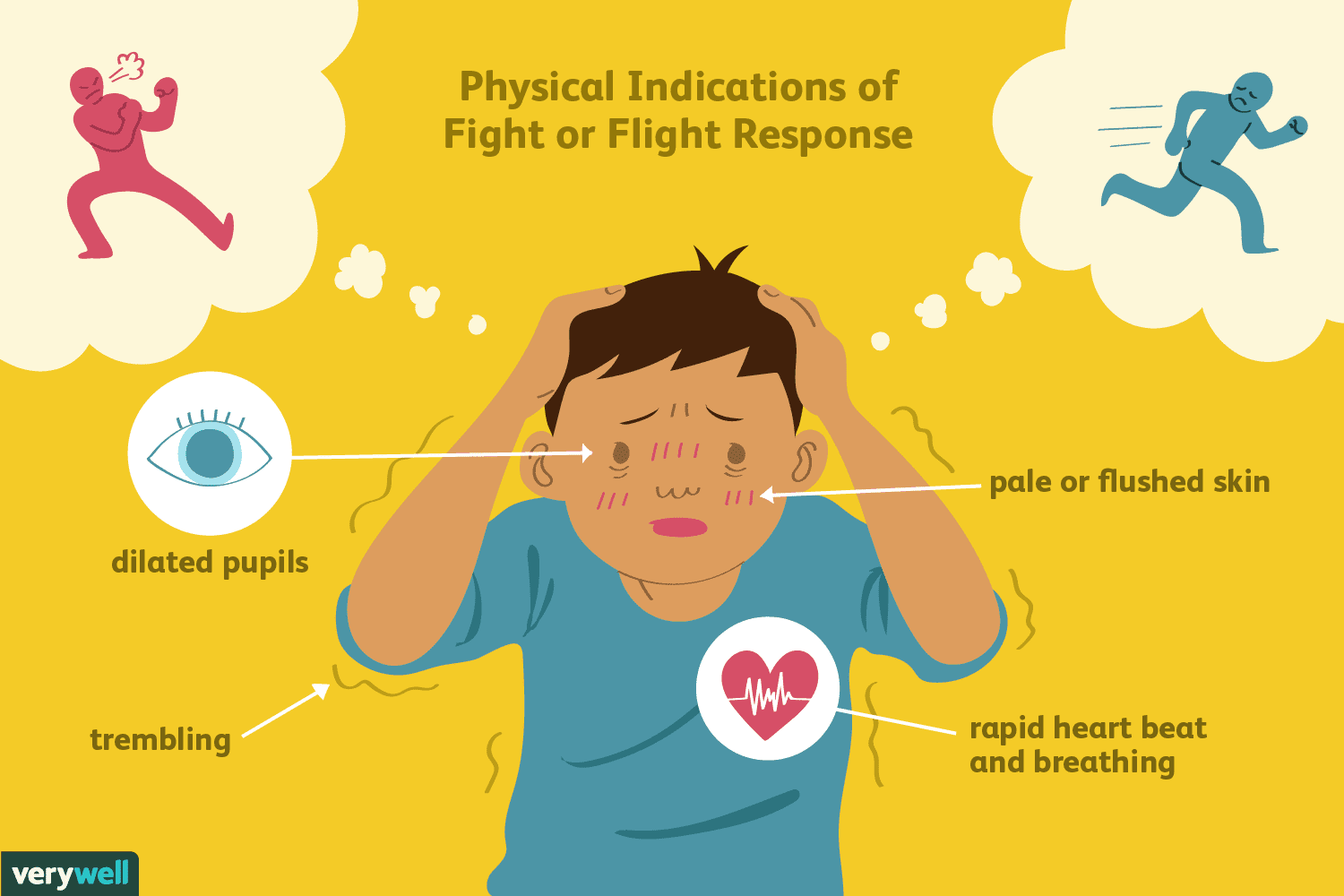
It enters a state of readiness, primed to respond to whatever threat has been detected.
speaker_2NARRATOR
This is the fight-or-flight response.
speaker_2NARRATOR
The ancient survival mechanism that prepares the body either to stand and fight or to turn and run.
speaker_2NARRATOR
It readies us to act, flooding the body with adrenaline and making dozens of adjustments to our physiology in the space of a few seconds.
speaker_2NARRATOR
The heart beats faster, pumping more blood to the muscles.
speaker_2NARRATOR
Breathing quickens, taking in more oxygen to fuel the body's heightened activity, and the hairs stand on end, the erector pili muscles contracting across the skin as part of this comprehensive mobilization.
speaker_2NARRATOR
The fight-or-flight response is automatic, triggered by the brain's detection of a threat and carried out by the nervous system without any conscious input from us.
speaker_2NARRATOR
It is run by the nervous system, specifically by the part of the nervous system that handles automatic involuntary functions.
11 more episodes mention Fight-or-flight response.
Create an account to see the whole feed, search across every transcript, and follow the entities you care about.