fibrosis
11
MENTIONS
10
EPISODES
9
PODCASTS
Search complete. 11 mentions across 10 episodes found for "fibrosis".
Sep 16, 2026

Amin AfrasiabiHOST
Leydig cell numbers can decline.
Amin AfrasiabiHOST
Fibrosis develops.
Amin AfrasiabiHOST
Early orchopexy removes the extra-scrotal environment during a vulnerable developmental window.
Amin AfrasiabiHOST
But some testes are already abnormal before surgery.

Aleksander KragGUEST
So when I went to school, and I'm not that old, but then we had an understanding of fibrosis, which is scarring of the liver, as something that was not, that was static, that could not be reversed.
Aleksander KragGUEST
But as many of the other beliefs we've had And sort of truths, they turn out to be wrong.
Aleksander KragGUEST
Fibrosis tissue, scarring tissue, and many are very active tissue, and active mean that it actually can be reversed to make.
Aleksander KragGUEST
So even quite advanced stages of disease, we've seen that with hepatitis B and hepatitis C, but also now with steatotic liver disease.
Aleksander KragGUEST
And that's, I think, is, is really the key to hope.

Michelle TarboxHOST
If you have perifollicular inflammation, that means the disease state is active.
Michelle TarboxHOST
Fibrosis is the end stage of the disease.
Michelle TarboxHOST
That is something you can't treat with anything besides scalp reduction.
Michelle TarboxHOST
So the inflammatory signs, perifollicular erythema, peripilar casts, follicular keratotic plugs, and sometimes blue-gray targetoid pigmentation, which is pigment incontinence because of interface dermatitis.

Christina HansonGUEST
MasLD means there is excess fat in the liver without inflammation or fibrosis.
Christina HansonGUEST
MASH refers to the subset of MasLD where, in addition to steatosis, there is inflammation and ballooning or injury to the liver cells with or without fibrosis.
Christina HansonGUEST
Fibrosis is staged from F0 to F4.
Christina HansonGUEST
F0 indicates no fibrosis, F1 reflects mild early scarring, F2 represents moderate fibrosis, and F3 indicates advanced fibrosis.
Christina HansonGUEST
And then with F4, this corresponds to cirrhosis, where scarring is extensive and liver function may be compromised.

Robert WhitfieldHOST
The study may also give us a more better idea on how to model this.
Robert WhitfieldHOST
Fibrosis is not simply just too much scar.
Robert WhitfieldHOST
It can involve communication among immune cells, fibroblasts, blood vessels, extracellular matrix, mechanical forces, and tissue injury signals.
Robert WhitfieldHOST
A capsule can change over time too.

Vincent ChenGUEST
There's steatohepatitis, which involves inflammation of the liver.
Vincent ChenGUEST
And then there's fibrosis, which is scarring.
Vincent ChenGUEST
Fibrosis is generally the hardest thing to reverse than steatohepatitis, and steatosis is generally the most reversible thing.
Vincent ChenGUEST
So when we think about mast cell, generally the earlier you can catch people, before they have a lot of fibrosis, the more likely it is that you can fully reverse this process.
Vincent ChenGUEST
Fibrosis can be reversed too, but it's just harder.
Vincent ChenGUEST
It takes more in terms of reduction in cardiometabolic comorbidities to reach that.
Vincent ChenGUEST
But it is reversible with intentional interventions.

Peter AttiaHOST
This is also where cancer risk starts to climb dramatically.
Peter AttiaHOST
Fibrosis is where the really durable, uh, clinical risk lives.
NickHOST
And when talking about metabolic dysfunction, we often hear visceral fat as well.
NickHOST
So what do we know about visceral fat and the liver? Does visceral fat affect the liver specifically?

speaker_1HOST
Now, Attia describes the disease process unfolding in four stages: metabolic stress, steatosis, steatohepatitis, and fibrosis.
speaker_1HOST
The first three can often be reversed, but fibrosis is different.
speaker_1HOST
As he puts it, "Fibrosis is what predicts cardiovascular disease, cancer, and liver-specific mortality."
speaker_0HOST
So early detection becomes essential.
speaker_0HOST
Can you walk through how this injury actually develops?

speaker_1GUEST
That is the dark side of tissue remodeling we promised to look at.
speaker_0HOST
Let's look at fibrosis first.
speaker_0HOST
Fibrosis is at its core a wound-healing response that just refuses to shut off.
speaker_1GUEST
Right.
speaker_1GUEST
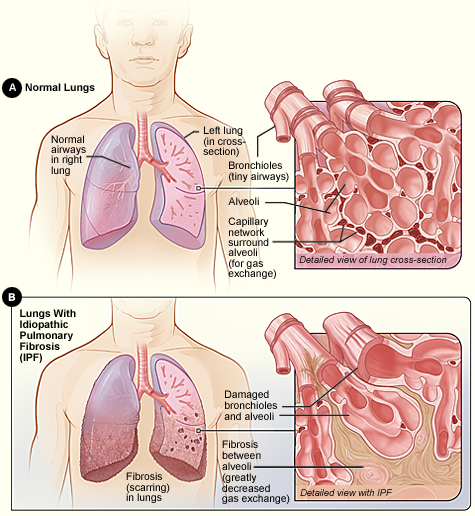
If you have severe lung fibrosis, your tissue is replacing itself with rigid scar tissue, making it impossible to breathe.
speaker_0HOST
Is that why polynucleotides don't cause the hyperproliferation we see in fibrosis?
speaker_1GUEST
What's fascinating here is that precise dose-dependent signaling is the exact first vital step in avoiding scar tissue.
speaker_1GUEST
Fibrosis, which is what a scar is, is often the result of cellular panic.
speaker_1GUEST
It's a biological system running at maximum capacity with the brakes cut.
speaker_0HOST
Wow.