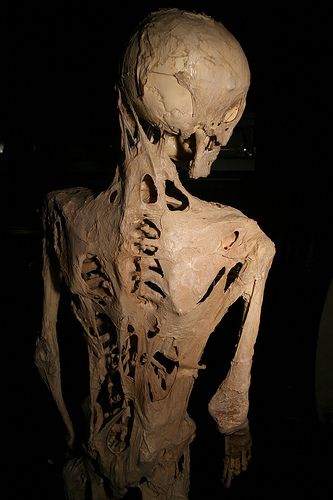
fibrodysplasia ossificans progressiva
DiseaseWikipedia
42
MENTIONS
3
EPISODES
3
PODCASTS
Search complete. 42 mentions across 3 episodes found for "fibrodysplasia ossificans progressiva".
Nov 15, 2026

Simon WhistlerNARRATOR
It sounds dramatic, it sounds memorable, but it's also really rather reductive.
Simon WhistlerNARRATOR
The medical name for this is fibrodysplasia ossificans progressiva, or FOP, which is what I'll be referring to it as in this video, because the full name is yikes.
Simon WhistlerNARRATOR
What makes it extraordinary and devastating is a process called heterotropic ossification.
Simon WhistlerNARRATOR
That's when real bone forms where it shouldn't, in muscles, tendons, ligaments, the connective tissue that lets us move about.
Simon WhistlerNARRATOR
And this is actual bone, with marrow, being laid down by cells that have simply received the wrong information.
Simon WhistlerNARRATOR
Fortunately, FOP is extremely rare.
Simon WhistlerNARRATOR
A 2021 study estimated prevalence in the United States at roughly 0.88 cases per million people, which is likely an undercount given how often it's missed early on.
Simon WhistlerNARRATOR
Globally, we're talking hundreds to low thousands of confirmed cases.

Richard KeenGUEST
I'm a consultant in metabolic bone disease working in London.
Richard KeenGUEST
I've been looking after people with FOP probably for the last 25 years.
Richard KeenGUEST
And I'm the global investigator for the Optima clinical trial.
speaker_1MODERATOR
What is FOP and how does heterotopic ossification affect patients?
Richard KeenGUEST
So FOP is an ultra rare genetic disorder.
Richard KeenGUEST
It's caused by a single gene mutation in the active receptor type one gene or something called ACVR1.
Richard KeenGUEST
People with this condition suffer with sort of progressive disease flare-ups where they get these soft tissue swellings.
Richard KeenGUEST
So it demonstrated really strong disease control of the disease.

speaker_1NARRATOR
Together with progressive heterotopic ossification, this raises strong suspicion for what they call fibrodysplasia ossificans progressivae.
speaker_1NARRATOR
or FOP.
speaker_1NARRATOR
The biopsy is canceled because tissue injury can trigger additional bone formation in patients with this condition.
speaker_1NARRATOR
A genetic specialist orders targeted ACVR1 gene sequencing using a blood or saliva sample.
speaker_1NARRATOR
The result identifies the pathogenic variant.
speaker_1NARRATOR
The variant accounts for more than 97% of classic FOP cases.
speaker_1NARRATOR
Let me repeat that.
speaker_1NARRATOR
Of classic FOP cases.