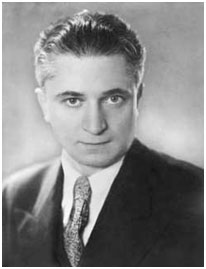
Fernand Braudel
French historianWikipedia
11
MENTIONS
8
EPISODES
8
PODCASTS
Search complete. 11 mentions across 8 episodes found for "Fernand Braudel".
Oct 28, 2026

Brion McClanahanHOST
Again, fascinating.
Brion McClanahanHOST
You put this in the longue durée, as Braudel called it, the long view.
Brion McClanahanHOST
And we're talking a thousand years in how this developed.
Brion McClanahanHOST
Not just a couple of hundred years with the French Revolution, but a thousand years.

Jeffrey SachsGUEST
They're long, but I need your comments back because I think they're interesting.
Jeffrey SachsGUEST
It is about the long durée of world history, as Fernand Braudel would have called it, the long sweep of world economic history.
Jeffrey SachsGUEST
A point that Smith made that's quite fundamental is he said that the, we'll see it in a moment, the discovery of the sea routes from Europe to the Americas, Christopher Columbus, and the sea route from Europe to Asia, Vasco da Gama, which were within six years of each other, 1492 and 1498, he said were the two most significant events in the history of mankind.
Jeffrey SachsGUEST
Wow, what a weird statement.

Jeffrey D. SachsGUEST
They're long, but I need your comments back because I think they're interesting.
Jeffrey D. SachsGUEST
It is about the long durée of world history, as Fernand Braudel would have called it, the long sweep of world economic history.
Jeffrey D. SachsGUEST
A point that Smith made that's quite fundamental is he said that the, we'll see it in a moment, the discovery of the sea routes from Europe to the Americas, Christopher Columbus, and the sea route from Europe to Asia, Vasco da Gama, which were within six years of each other, 1492 and 1498, he said were the two most significant events in the history of mankind.
Jeffrey D. SachsGUEST
Wow, what a weird statement.

Richard MorrisonHOST
And, you know, you quote from a sort of like, you know, kind of short list in addition to the long list of all the sources, a sort of like frequent short list of popular history works for some of your examples.
Richard MorrisonHOST
So this is books like Christian Olson's Daily Life in the 18th Century and Fernand Braudel's.
Richard MorrisonHOST
Civilization and Capitalism in the 15th and 18th Century, and William Manchester's A World Lit Only by Fire, popular nonfiction bestseller that a lot of people have probably heard of, if you're a history nerd.
Richard MorrisonHOST
How did you go about doing this research and trying to sort of figure out where do I start and where do I find the, especially the short, attention-grabbing, illustrative anecdotes that are nevertheless properly sourced? you know, reliable.

David HydeHOST
But, yeah, so in any case, our guest today looks at these fights.
David HydeHOST
Who's the French historian who talked about the longue durée, Sandeep?
Sandeep KaushikHOST
Oh, God, I don't know who you're asking.
David HydeHOST
Is that...
Emma PettitGUEST
Thanks so much for having me.
Emma PettitGUEST
I'm really excited to be here.
Sandeep KaushikHOST
By the way, Braudel.
Sandeep KaushikHOST
Braudel is your longue durée in Alice school.

Chris StewartHOST
In this case, select, indeed adopt, a philosophy of history.
Chris StewartHOST
Fernand Braudel.
Chris StewartHOST
But not all exclusions are bad, the conventional wisdom of our time will be quick to remind us, and we are all left with the responsibility for deciding where to try to draw circles, with whom, and around what.
Chris StewartHOST
David A. Hollinger.

Greg LaBlancHOST
in scope, but they had this, this view that the Industrial Revolution was built on the backs of the colonized people, right?
Trevor JacksonGUEST
Yeah, I mean, I don't know that there's such a robust sociological theory in the new history of capitalism to really point to a, a lineage that goes to a, a Braudel and a Wallerstein.
Trevor JacksonGUEST
I tend to think of them, this is actually a, a line from Brad DeLong, who's also an economic historian here at Berkeley, where I've heard him say that the new history of capitalism is work that would have come from Harvard Business School in the '50s, but with the moral polarity flipped.
Trevor JacksonGUEST
And so everybody who would have been a good guy in the '50s is now a villain-

Rudyard LynchHOST
And so it's the same era of history under the opposite selection pressures.
Rudyard LynchHOST
And Fernand Braudel, potentially the greatest historian of the 16th century, said the core theme of it was...
Rudyard LynchHOST
the, uh, the increasing population across the Mediterranean and Europe where he's in every single country over the course of the 16th century, the population went up and the entire society got wealthier.
Austin PadgettHOST
Right.