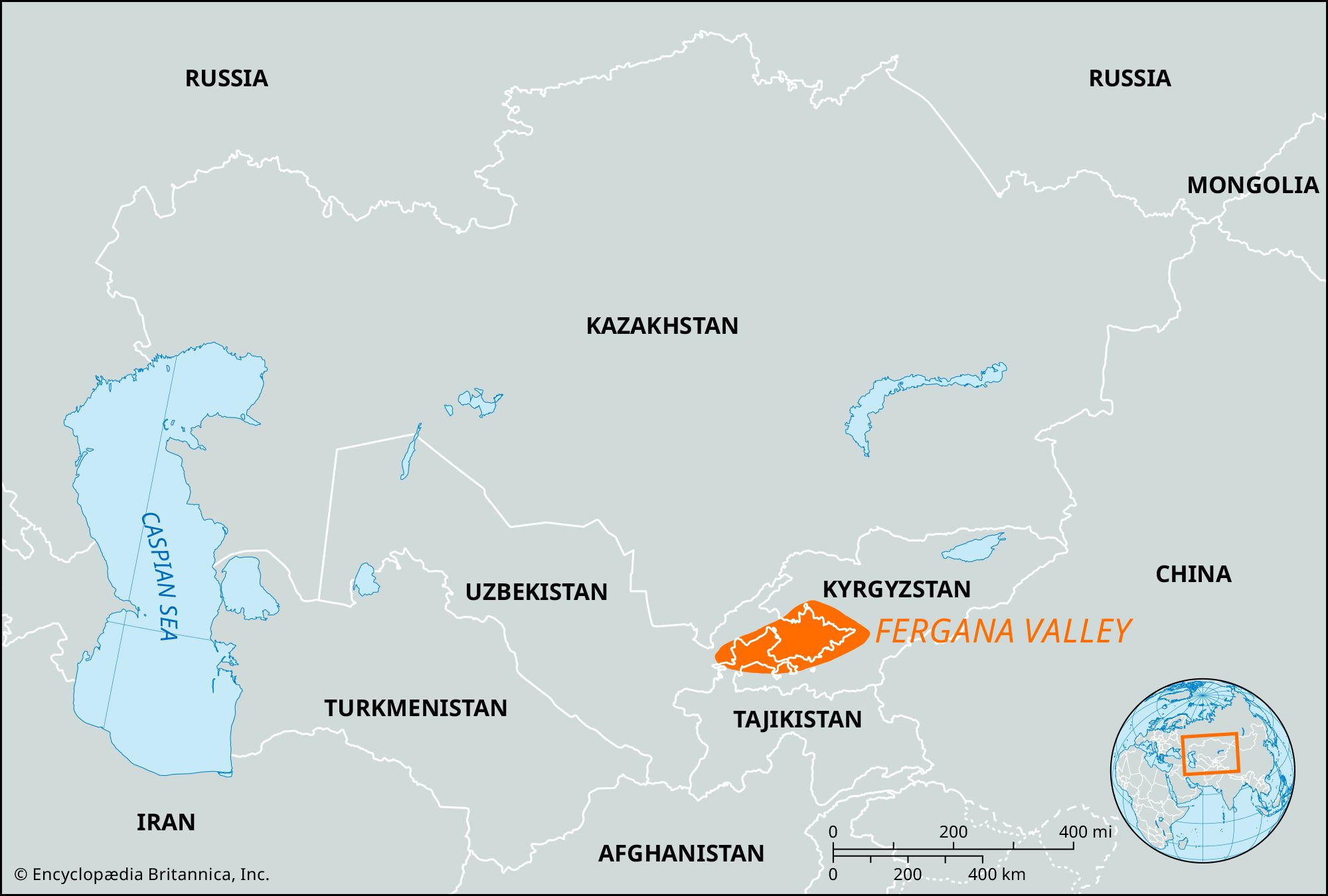
Fergana Valley
26
MENTIONS
13
EPISODES
13
PODCASTS
Search complete. 26 mentions across 13 episodes found for "Fergana Valley".
Sep 27, 2026

Pamela NagamiNARRATOR
Then early in 1220, Genghis Khan struck his opening blow, a shrewdly conceived diversion.
Pamela NagamiNARRATOR
Chepe with two tumans, 20,000 men, had passed by the southern route from Kashgar into Fergana and was advancing on Kojent, which covered the southern end of the Syr Darya line.
Pamela NagamiNARRATOR
Thus Chepe directly threatened the Shah's right flank, as well as Samarkand and Bokhara, which lay beyond, the two centers of his power.
Pamela NagamiNARRATOR
It was a dagger pointing at the heart of the enemy.
16 MINS LATER
Pamela NagamiNARRATOR
He divided his forces into four armies, each roughly of three tumans.
Pamela NagamiNARRATOR
Three of these he assigned to the main operation, and the fourth he used to achieve his secondary or auxiliary objective, the removal of the danger on his right flank.
Pamela NagamiNARRATOR
This last, under the Prince Kaidu, moved first, as had Chepe's detachment into Fergana.
Pamela NagamiNARRATOR
At the beginning of March 1241, it crossed the Vistula at Sandumir, which it took by storm.

Pamela NagamiNARRATOR
Then early in 1220, Genghis Khan struck his opening blow, a shrewdly conceived diversion.
Pamela NagamiNARRATOR
Chepe with two tumans, 20,000 men, had passed by the southern route from Kashgar into Ferghana and was advancing on Kojent, which covered the southern end of the Syr Darya line.
Pamela NagamiNARRATOR
Thus Chepe directly threatened the Shah's right flank, as well as Samarkand and Bokhara, which lay beyond, the two centers of his power.
Pamela NagamiNARRATOR
It was a dagger pointing at the heart of the enemy.
Pamela NagamiNARRATOR
Genghis Khan had distributed his main striking force into three armies, two of three tumans each under his sons Juji and Jagatai, and the third of three tumans and the guard under his direct control with Sabutai as his advisor or chief of staff.
Pamela NagamiNARRATOR
Chepe's southern detachment comprised two tumans, while there were 30,000 auxiliaries distributed between the four armies.
Pamela NagamiNARRATOR
While Chepe was striking his first blows in Ferghana, The three armies which formed the main force traversed the devastated route in the north, and in February suddenly debouched on the left flank of the Syr Darya line.
Pamela NagamiNARRATOR
The speed of this move was the more remarkable when we remember that it was made by a mounted force of more than one hundred thousand, without counting the pack animals of the train, and across a country that had been turned into a desert.

Alexander MorrisonGUEST
In logistical terms, this is easier.
Alexander MorrisonGUEST
If you're moving through a region like Fergana or the Zarshan Valley, there's plenty of food.
Alexander MorrisonGUEST
You can live off the land.
Alexander MorrisonGUEST
There's plenty of water, there's plenty of forage for your animals.
9 MINS LATER
Alexander MorrisonGUEST
And it has to be recaptured by the Bolsheviks.
Alexander MorrisonGUEST
And the Bolsheviks are fighting against local resistance, the so-called Bazmachi, Kurbashi.
Alexander MorrisonGUEST
So these are local guerrilla leaders like Ibrahim Bek in Istanbul, Bukhara, or Ergash in Fergana.
Alexander MorrisonGUEST
They're fighting against local non-Bolshevik Russian forces.

Peter LeonardHOST
What other kind of things? does an exporter face? What are the agencies that are struggling to coordinate between themselves?
Zebo IsakovaGUEST
Just imagine I am a textile producer in Namangan, in Fergana Valley, and I have received an order from a customer abroad, and I need to get my goods from the factory across the border.
Zebo IsakovaGUEST
So the truck does not simply leave the factory and arrive at customs.
Zebo IsakovaGUEST
According to Uzbekistan's official procedure for exporting fabrics by road, I first have to deal with the foreign trade arrangements and I may need documents confirming the origin of the goods and I have to arrange transport.

Pamela NagamiNARRATOR
Then early in 1220, Genghis Khan struck his opening blow, a shrewdly conceived diversion.
Pamela NagamiNARRATOR
Chepe with two tumans, 20,000 men, had passed by the southern route from Kashgar into Ferghana and was advancing on Kojent, which covered the southern end of the Syr Darya line.
Pamela NagamiNARRATOR
Thus Chepe directly threatened the Shah's right flank, as well as Samarkand and Bokhara, which lay beyond, the two centers of his power.
Pamela NagamiNARRATOR
It was a dagger pointing at the heart of the enemy.
Pamela NagamiNARRATOR
Genghis Khan had distributed his main striking force into three armies, two of three tumans each under his sons Juji and Jagatai, and the third of three tumans and the guard under his direct control with Sabutai as his advisor or chief of staff.
Pamela NagamiNARRATOR
Chepe's southern detachment comprised two tumans, while there were 30,000 auxiliaries distributed between the four armies.
Pamela NagamiNARRATOR
While Chepe was striking his first blows in Ferghana, the three armies which formed the main force traversed the devastated route in the north, and in February suddenly debouched on the left flank of the Syr Darya line.
Pamela NagamiNARRATOR
The speed of this move was the more remarkable when we remember that it was made by a mounted force of more than 100,000 without counting the pack animals of the train and across a country that had been turned into a desert.

Laszlo MontgomeryHOST
A month after leaving, Zhang Qian arrived in Dayuan and met with the king there.
Laszlo MontgomeryHOST
Dayuan, aka Ferghana, was one of the three most powerful kingdoms of Central Asia at that time.
Laszlo MontgomeryHOST
You also had the Bactrians to the south and the Parthians to the west in what is present-day northern Iran.
Laszlo MontgomeryHOST
So the Yuezhi were at that time occupying the Ferghana Valley, which spread through Uzbekistan, Kyrgyzstan, and Tajikistan.
Laszlo MontgomeryHOST
They spoke Indo-European languages and had strong Greek influences.
Laszlo MontgomeryHOST
The meeting between Zhang Qian and the Dayuan people marked the first time China had come in contact with any of these people speaking these Indo-European languages.
3 more episodes mention Fergana Valley.
Create an account to see the whole feed, search across every transcript, and follow the entities you care about.