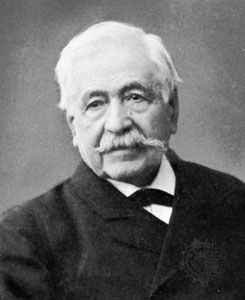
Ferdinand de Lesseps
French diplomatWikipedia
18
MENTIONS
16
EPISODES
16
PODCASTS
Search complete. 18 mentions across 16 episodes found for "Ferdinand de Lesseps".
Oct 19, 2026

Sherlock HolmesVOICE_ACTOR
My friend Mr. Hamish insists that the Suez Canal was built by a Dutchman in 1870.
Sherlock HolmesVOICE_ACTOR
I'm convinced that it was built by Lesseps, a Frenchman, in 1869.
Sherlock HolmesVOICE_ACTOR
We thought you'd know.
Sherlock HolmesVOICE_ACTOR
You flatter me.

Barry EadesNARRATOR
But I didn't defeat him.
Barry EadesNARRATOR
The building of a ship canal across the isthmus of Suez made famous the Frenchman, Ferdinand de Lesseps.
Barry EadesNARRATOR
So the opening up of the mouth of the Mississippi River has distinguished Captain Eades.
Barry EadesNARRATOR
Today, both these men are struggling for the rare honor of joining, at the isthmus of Panama, the waters of the great Atlantic and Pacific, a magnificent scheme which, if successful, will save annually thousands of miles of dangerous sea voyage around Cape Horn, besides millions of money.

Thelma MeyerNARRATOR
In fact, two official commissions had already approved that location.
Thelma MeyerNARRATOR
Another group favored cutting the way through Panama after purchasing the rights of the old French company, which under the direction of de Lesseps, the hero of the Suez Canal, had made a costly failure some twenty years before.
Thelma MeyerNARRATOR
After a heated argument over the merits of the two plans, preference was given to the Panama route.
Thelma MeyerNARRATOR
As the Isthmus was then a part of Colombia, President Roosevelt proceeded to negotiate with the government at Bogota a treaty authorizing the United States to cut a canal through its territory.

Jan EijkingGUEST
But in the case of the Suez Canal, um, we see how it slowly makes a difference to be able to claim somethings, something as an international project as opposed to an imperial or a national project.
Jan EijkingGUEST
So just to sort of rehash that Suez Canal history a little bit, in the 1850s, the French entrepreneur Ferdinand de Lesseps wins a concession by the Egyptian government after a longer history that I won't have time to delve into here to build a canal cutting through the Isthmus of Suez.
Jan EijkingGUEST
But to get people to invest in the Suez Canal company, he first needed to persuade these people that this was technically feasible and a realistic undertaking with reasonable returns.
Jan EijkingGUEST
So he's trying to sort of come up with a good sales pitch.

Jan EijkingGUEST
But in the case of the Suez Canal, um, we see how it slowly makes a difference to be able to claim somethings, something as an international project as opposed to an imperial or a national project.
Jan EijkingGUEST
So just to sort of rehash that Suez Canal history a little bit, in the 1850s, the French entrepreneur Ferdinand de Lesseps wins a concession by the Egyptian government after a longer history that I won't have time to delve into here, to build a canal cutting through the Isthmus of Suez.
Jan EijkingGUEST
But to get people to invest in the Suez Canal company, he first needed to persuade these people that this was technically feasible and a realistic undertaking with reasonable returns.
Jan EijkingGUEST
So he's trying to sort of come up with a good sales pitch.

Jan EijkingGUEST
But in the case of the Suez Canal, um, we see how it slowly makes a difference to be able to claim somethings, something as an international project as opposed to an imperial or a national project.
Jan EijkingGUEST
So just to sort of rehash that Suez Canal history a little bit, in the 1850s, the French entrepreneur Ferdinand de Lesseps wins a concession by the Egyptian government after a longer history that I won't have time to delve into here to build a canal cutting through the Isthmus of Suez.
Jan EijkingGUEST
But to get people to invest in the Suez Canal company, he first needed to persuade these people that this was technically feasible and a realistic undertaking with reasonable returns.
Jan EijkingGUEST
So he's trying to sort of come up with a good sales pitch.

WillHOST
The paper examines five historical case studies illustrating the TCTF dynamic.
WillHOST
Let us start with Ferdinand de Lesseps, the man who built the Suez Canal, a national hero in France who had done the impossible once and believed he could do it again.
WillHOST
So he set his sights on Panama, a sea-level canal through the jungle, no compromises.
WillHOST
The problem was that Panama is not the Suez Desert.

Jan EijkingGUEST
But in the case of the Suez Canal, we see how it slowly makes a difference to be able to claim something as an international project as opposed to an imperial or a national project.
Jan EijkingGUEST
So just to sort of rehash that Suez Canal history a little bit, in the 1850s, the French entrepreneur Ferdinand de Lesseps wins a concession by the Egyptian government after a longer history that I won't have time to delve into here, to build a canal cutting through the isthmus of Suez.
Jan EijkingGUEST
But to get people to invest in the Suez Canal company, he first needed to persuade these people that this was technically feasible and a realistic undertaking with reasonable returns.
Jan EijkingGUEST
So he's trying to sort of come up with a good sales pitch.

Thelma MeyerNARRATOR
All LibriVox recordings are in the public domain.
Thelma MeyerNARRATOR
For more information or to volunteer, please visit LibriVox.org. Recording by Thelma Meyer history of the united states by charles a beard and mary part seven progressive democracy and the world war section one the evolution of republican policies nineteen o one to nineteen thirteen chapter twenty one the evolution of republican policies nineteen o one to thirteen the personality and early career of roosevelt on september fourteenth nineteen o one when theodore roosevelt took the oath of office the presidency passed to a new generation and a leader of a new type recalling if comparisons must be made andrew jackson rather than any republican predecessor roosevelt was brusque hardy restless and fond of action a young fellow of infinite dash and originality as john hay remarked of him combining the spirit of his old college harvard with the breezy freedom of the plains interested in everything a new species of game a new book a diplomatic riddle or a novel theory of history or biology though only forty-three years old he was well versed in the art of practical politics coming upon the political scene in the early eighties he had associated himself with the reformers in the republican party but he was no mugwump from the first he vehemently preached the doctrine of party loyalty if beaten in the convention he voted the straight ticket in the election for twenty years he adhered to this rule and during a considerable portion of that period he held office as a spokesman of his party he served in the new york legislature as head of the metropolitan police force as federal civil service commissioner under president harrison as assistant secretary of the navy under president mckinley and as governor of the empire state political managers of the old school spoke of him as brilliant but erratic they soon found him equal to the shrewdest in negotiation and action foreign affairs the panama canal the most important foreign question confronting president roosevelt on the day of his inauguration that of the panama canal was a heritage from his predecessor the idea of a water route across the isthmus long a dream of navigators had become a living issue after the historic voyage of the battleship oregon around south america during the spanish war but before the united states could act it had to undo the clayton bulwer treaty made with great britain in eighteen fifty providing for the construction of the canal under joint supervision this was finally effected by the hay ponsfort treaty of nineteen o one authorizing the united states to pursue a loan on condition that there should be no discriminations against other nations in the matter of rates and charges this accomplished it was necessary to decide just where the canal should be built one group in congress favored the route through nicaragua in fact two official commissions had already approved that location another group favored cutting the way through panama after purchasing the rights of the old french company which under the direction of de lesseps the hero of the suez canal had made a costly failure some twenty years before after a heated argument over the merits of the two plans preference was given to the panama route as the isthmus was then a part of columbia president roosevelt proceeded to negotiate with the government at bogota a treaty authorizing the united states to cut a canal through its territory the treaty was easily framed but it was rejected by the columbian senate much to the president's exasperation you could no more make an agreement with the columbian rulers he exclaimed than you could nail jelly to a wall he was spared the necessity by a timely revolution On November 3, 1903, Panama renounced its allegiance to Colombia.
speaker_1NARRATOR
And three days later, the United States...
Thelma MeyerNARRATOR
recognized its independence this amazing incident was followed shortly by the signature of a treaty between panama and the united states in which the latter secured the right to construct the long-discussed canal in return for a guarantee of independence and certain cash payments the rights and property of the french concern were then bought and the final details settled a lock rather than a sea-level canal was agreed upon construction by the government directly instead of by private contractors was adopted scientific medicine was summoned to stamp out the tropical diseases that had made panama a plague spot finally in nineteen o four as the president said the dirt began to fly after surmounting formidable difficulties engineering labor and sanitary the american forces in nineteen thirteen joined the waters of the atlantic and the
6 more episodes mention Ferdinand de Lesseps.
Create an account to see the whole feed, search across every transcript, and follow the entities you care about.