Federalist
270
MENTIONS
72
EPISODES
62
PODCASTS
Search complete. 270 mentions across 72 episodes found for "Federalist".
Nov 23, 2026

William G. Thomas IIIGUEST
But you're pointing to something that I think I'd hoped would come up today, which is the political dynamic of the judiciary in American politics and in American legal culture.
William G. Thomas IIIGUEST
So by that, I mean, know in the early republic not only in maryland uh in these cases with the emergence of a new jurisdiction in washington dc right um but also in in not only in the maryland legislature which um maneuvers as john just mentioned maneuvers at several points in the 1790s to close off these freedom suits, to close off the avenues to the courts for these freedoms, to change the jurisdictions of the courts to forestall further freedom suits or, you know, make them less likely or less likely to succeed, right? So that's happening in the 1790s, but the parties that emerged, the Federalists and the Jeffersonian Republicans emerge in, in many ways around what is the role of the judiciary and what is American legal culture? What is that legal culture? And they're competing visions around what this culture should look like and be like.
William G. Thomas IIIGUEST
And that is, I hadn't realized the extent of it.
William G. Thomas IIIGUEST
I mean, you know, the repeal of the Judiciary Act of 1801 in 1802 closes the Supreme Court for two terms.

Casey HendricksonHOST
We are in the middle of a political shift where new terms have not been invented to describe the various factions.
Casey HendricksonHOST
Are we Federalists, Whigs, Republicans, Tories, Accelerationists, Preservationists, Revolutionaries, Reformers? What do those words mean anyway? How do we describe our country's problems or what kind of identity we have because of them? We can't quite put it into words, even if we can express our feelings in memes.
Casey HendricksonHOST
What we need is time.
Casey HendricksonHOST
Time to figure out our terms and our battle lines.

Johnny CirucciGUEST
Ultimately, however, the vast majority of harm comes from an overwhelming centralization of power.
Johnny CirucciGUEST
So I much prefer to – to lean in the other direction, even though I accept that there may have been well-meaning people, who knows what was in the actual mind and heart of Abraham Lincoln, Alexander Hamilton, and so-called Federalists.
Johnny CirucciGUEST
And how ironic is this that the so-called federal society today is – and I'm thinking of Antonin Scalia, Mr. Opus Dei, who died under queer circumstances, no pun intended, at a remote ranch.
Johnny CirucciGUEST
That's – he's – His supposed – his Catholic conservatism, the Federalist Society, when the reality is, is that in the founding of the nation, the Federalists were for centralization.
Johnny CirucciGUEST
And the anti-Federalists were the ones doing what I'm doing, which is waving the red flag and saying, hey, centralization is not a good thing.
Johnny CirucciGUEST
Centralization is –
Pete OhlingerHOST
State's power was key.

Michael TroyHOST
For the last few weeks, we've been covering the various laws that Congress passed in the wake of the XYZ affair, which led to a national panic that the U.S. would go to war with France.
Michael TroyHOST
Federalists dominated Congress, passed bills that created a large-standing army and navy, and amended naturalization laws to disenfranchise most immigrants, permitted the president to remove any aliens for almost any reason, and gave the administration the power to arrest and imprison pretty much anyone who criticized the government.
Michael TroyHOST
President Adams happily signed these bills into law.
Michael TroyHOST
His administration wasted no time arresting newspaper editors, regular citizens, even opposition members of Congress, prosecuting and imprisoning them for criticizing his policies.
Michael TroyHOST
Large rallies took place in places like Virginia, Pennsylvania, and New York.
Michael TroyHOST
In Lexington, Kentucky, a crowd of 5,000 rallied to denounce the new acts as unconstitutional, and that was twice the size of the town's population.
Michael TroyHOST
Even in New England, where Federalists were at their most popular, people in many towns erected liberty poles in protest, just as they had done against the British during the Revolution.
Michael TroyHOST
These new poles contained placards that made clear the objects of their wrath.

Cory MorganPANELIST
Everybody knows Gord.
Cory MorganPANELIST
Well, and Gord's also a hardcore Federalist.
Cory MorganPANELIST
He was a thorn in my butt through that whole campaign in opposition to me.
Cory MorganPANELIST
He was always trolling me on
5 MINS LATER
Derek FildebrandtHOST
be on.
Derek FildebrandtHOST
It's like a full-time job for the guy.
Derek FildebrandtHOST
And he's a hardline Federalist.
Derek FildebrandtHOST
He was against the independent side hard during the campaign.

Mark LevinHOST
One of the great sites, Washington Free Beacon.
Mark LevinHOST
I used to like the Federalists.
Mark LevinHOST
Now I've taken them off my system.
Mark LevinHOST
I want nothing to do with them.

Lukas K. B. NagelGUEST
She labels them as the Democrats that basically just want to go to the pre-election results, NLD.
Lukas K. B. NagelGUEST
And then you have the Federalists who want a little bit of reform or inclusion of minorities.
Lukas K. B. NagelGUEST
the people that I talk to most would probably be what she categorizes as intersectionalists.
Lukas K. B. NagelGUEST
Really radical, post-colonial, feminist, inclusive ideas of creating a state that is radically transformed and much more inclusive.

Ron LangHOST
If
Jeff KikelHOST
you think that there is a big divide in government today, go back and read about, yeah, go back and read about the Federalists and the Anti-Federalists.
Jeff KikelHOST
They carried
Ron LangHOST
pistols in.

Ron LangHOST
If
Jeff KikelHOST
you think that there is a big divide in government today, go back and read about, yeah, go back and read about the Federalists and the Anti-Federalists.
Jeff KikelHOST
They carried
Ron LangHOST
pistols in.

Nick GiordanoHOST
In 1787, a new federal constitution emerged from Philadelphia, and John Leland spotted this massive flaw.
Nick GiordanoHOST
When the Constitutional Convention wrapped up in September of 1787, Federalists and Anti-Federalists immediately clashed over the scope of the new national government.
Nick GiordanoHOST
And yes, Article VI banned religious tests for federal office, but the original constitution contained no bill of rights, no explicit ban preventing Congress from establishing a national religion.
Nick GiordanoHOST
So Leland saw exactly where that silence could lead.
Nick GiordanoHOST
What would stop a future Congress, future president from favoring one powerful denomination and forcing every American to fund that powerful denomination? Now, there was a reason that the founders didn't include a Bill of Rights in the original Constitution, and we have to be honest about that.
Nick GiordanoHOST
There was many that felt it was unnecessary, even dangerous.
Nick GiordanoHOST
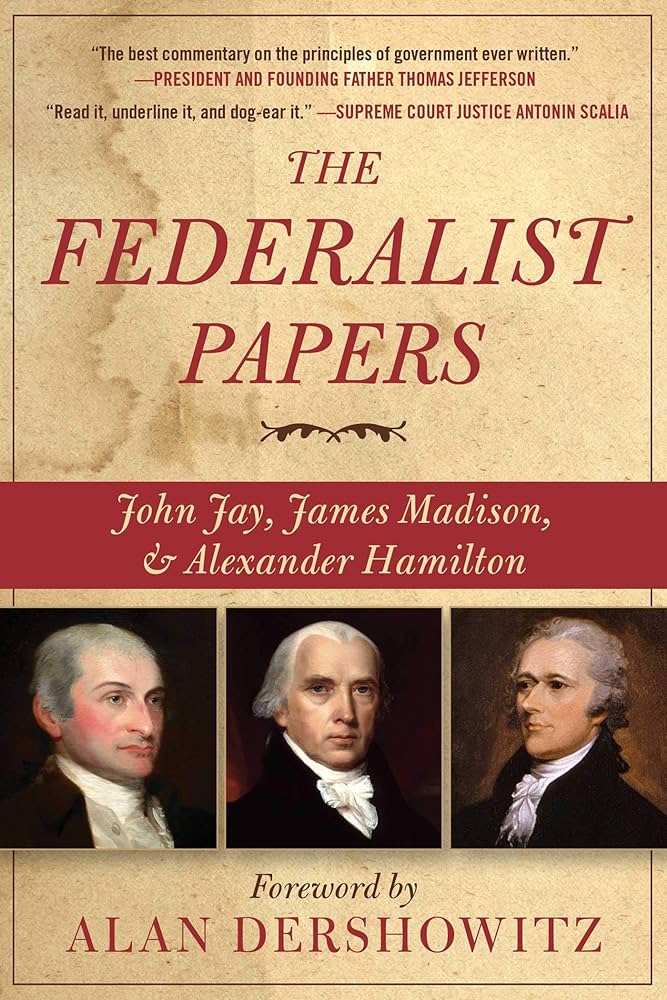
You had Federalists like Alexander Hamilton who argued that the federal government was granted only specific, limited powers.
Nick GiordanoHOST
And because the government was not given the power to infringe on things like freedom of speech or religion, They believed an explicit list of protected rights was redundant to the Constitution.
62 more episodes mention Federalist.
Create an account to see the whole feed, search across every transcript, and follow the entities you care about.