Fealty
15
MENTIONS
11
EPISODES
11
PODCASTS
Search complete. 15 mentions across 11 episodes found for "Fealty".
Sep 17, 2026

YuqingNARRATOR
The dangers that especially threaten a republican form of government are anarchy, communism, and religious bigotry, and two of these found their fullest expression in this country in the Mormon creed and practice.
YuqingNARRATOR
Fealty to Mormonism was disloyalty to the United States government.
YuqingNARRATOR
Thus, the introduction of women's suffrage within our borders was not only undemocratic, it was anti-democratic.
YuqingNARRATOR
Women's suffrage was secured in Wyoming by means that bring dishonor upon democracy.

Geraldine DoogueHOST
You see what I think?
Latika BourkeHOST
Fealty.
Latika BourkeHOST
Yes, exactly.
Latika BourkeHOST
It's all so much more important than any outcomes, really.

Bob CescaGUEST
Donald's.
Bob CescaGUEST
Fealty to Vladimir Putin on so many levels.
Bob CescaGUEST
And now Don Jr.'s got oligarchs paying for his wedding after party.
Bob CescaGUEST
Can

GuyHOST
Mm-hmm.
JudeHOST
And on each of the shipments, there are notes that include, uh, a line item for Mark of Fealty, all workers.
JudeHOST
Another one says Oath of Fealty, all workers.
GuyHOST
Mm-hmm.
JudeHOST
Essentially the idea of loyalty is now a line item.

HannahHOST
And on page 173 he writes, quote, "We pressure people to conform to cultural scripts, imply that faithful disciples never struggle or question, treat leaders' preferences or opinions as divine mandates, and lean on fear to steer our choices, and perhaps most damaging, we sometimes make our love conditional." Close quote.
HannahHOST
Fealty, in his account, produces fragile people who flee adversity instead of growing from it, and it rewards appearance over substance.
HannahHOST
It teaches people to pretend so that they can belong and avoid being othered.
HannahHOST
On relationships specifically, he says, quote, "Compliance becomes a measure of love.

Pamela NagamiNARRATOR
We require therefore that neither you nor any other public judicial power shall presume at any time to enter into the lands of the same Church anywhere in our kingdom either those granted by royal bounty or by that of private persons or those which shall in future be granted either for the sake of hearing altercations or to exact fines for any causes or to obtain sureties But whatever the treasury could expect either of fines or other things, either from freemen or from servants or other nations who are within the fields or boundaries or dwelling upon the lands of the aforesaid church.
Pamela NagamiNARRATOR
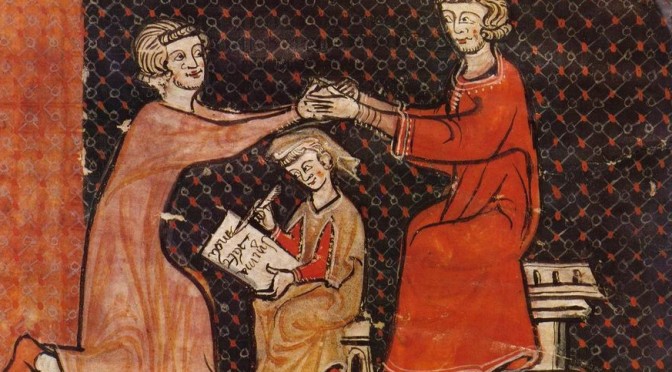
By our indulgence for our future welfare shall be profitable for the expenses of the same church by the hand of those ruling it forever." It was usual in granting a fief to include the immunity and such a combined grant reads We have decreed that so-and-so should have conceded to him such and such a place in its entirety with the lands houses buildings villains slaves vineyards woods fields meadows pastures waters or watercourses grist mills additions appurtenances or any kind of men who are subjected to our treasury who dwell there In entire immunity And without the entrance Of any one of the judges For the purpose of holding The pleas of any Kind of causes Thus he may Have hold and possess it In proprietary right And without expecting The entrance of Any of the judges And may leave The possession of it To his posterity By the aid of God From our bounty Or to whom He will And by Our permission He shall have Free power To do Whatever he May wish With it For the Future By the end of the ninth century feudalism had become established throughout the lands which had formed the Carolingian Empire Practically the whole territory Was divided into Fiefs or benefices All freemen Were either Vassals or lords Many were vassals And at the same time Lords On almost Every fief The possessor Had the right Of immunity This condition Of affairs Continued For several Centuries The period From the Ninth To the Fourteenth Century Is called Frequently The age Of feudalism Generally A lord Had a number Of vassals And these Together With their Lord Or suzerain Formed A feudal Group When vassal Served as Soldiers The feudal group Became an army In times of peace The group Formed A little State The lord With the Aid and advice Of his vassals Administered justice And governed The fief The inhabitants Of his Lands owed Service only To the lord Except for The Church They were practically Free from all Other authority The vassals Were the most Important class But they formed Only a small Part of the Population They were all Held to be Noblemen And they were All warriors Consequently Others had to Support them The others Were the Villains and the Serfs Who cultivated The soil Or who carried on The handicrafts And trade In the cities And by Their labor Furnished the Means of Subsistence For the Whole group They were Subject to the Lord or vassal On whose Estate they lived And from Whom they held Their lands But not By futile Tenure For instead Of aiding In welfare Or by Counsel They paid Rent in Money and Produce And also Worked for Their lord Their life Will be Described Later In addition To the Nobles Who formed The ruling Class and did The fighting And the serfs In the country Or towns There was A third class In the Community The members Of the clergy Although they As well as The inhabitants Of the Cities Belonged Originally Either to the Nobility Or the Peasantry They were In some ways Distinct from Either The chief Officials of the Church were the Equals of The nobility The parish Priests Were in many Respects The equals Of the peasantry Among whom They lived But no Impassable Barrier existed Between the Pope And the humblest Member of the Clergy By ability The son of A serf might Rise to Be pope The church Was always Democratic in Theory And offered A chance for Any bright boy To rise To the highest Rank Each vassal Was obliged To do homage And take the Oath of fealty To his lord The act of Homage was As follows The count Asked If he was Willing to Become completely His man And the other Replied I am willing And with clasped Hands Surrounded by The hands of The count The vassal and Lord were bound Together by A kiss Homage was Followed and Completed by the Oath of Fealty I promise On my faith That I will In future Be faithful To Count William And will observe My homage to Him completely Against all Persons in Good faith And without Deceit In addition The vassal Usually gave To his lord Some object As a visible Symbol of his Obligations For example A weapon Such as a Sword or a Lance A horse Or some article Of wearing Apparel In addition To the general Obligation of Faithful service Contained in His oath of Fealty The vassal Owed to his Lord other Very definite Services In the first Place he must Fight for him When summoned Ordinarily he was Obligged to Serve at his Own expense In the lord's Army for Forty days each Year If the lord Wished him to serve For a longer Time the lord Must pay His expenses In case of A foreign war He was not Obliged to serve Outside of the Kingdom after forty Days were completed Unless he was Willing to Do so In the second Place the vassal Must aid his Lord in Holding court When he was Summoned he must Act as judge Or assistant If he was engaged as plaintiff or defendant in a lawsuit, he must take the suit to the lord's court and submit to the judgment of the lord and his own peers.
Pamela NagamiNARRATOR
That is, his fellow vassals.
Pamela NagamiNARRATOR
In the third place, the vassal must assist the lord with his advice.
46 MINS LATER
Pamela NagamiNARRATOR
In 867 all of the Vikings who had been plundering the western coast of Europe joined together for an attack upon the English, who made a brave resistance.
Pamela NagamiNARRATOR
This year nine general battles were fought against the army in the kingdom south of the Thames besides which Alfred [the king's brother] and single aldermen and king's thanes oftentimes made incursions on them which were not counted: And within the year Nine earls and one king was slain." The king who was slain was Ethelred, whom his brother Alfred succeeded For a time the Danes were successful everywhere subduing Mercia, Northumbria & compelling Alfred To retreat to the woods&to the fastnesses Of the moores.
Pamela NagamiNARRATOR
From his fortress Which he built at Athelney He made repeated attacks Upon the danes Finally being Joined By the Men of three shires He Fought Against All the Army,&put it to flight After a siege of two weeks the Danes Were compelled to surrender Their Fortress—To take Oath To leave Alfred's kingdom,—and To promise to Be Baptized this Was the celebrated Peace of Wedmore By which the land was divided between Alfred &The Danes Alfred Retained only wessex Sussex Kent &,half of mercia The rest of england Was surrendered to the danes &became Known As Danelaw Or Land Under the law of the danes In Eight Ninety Three He Had to confront a fresh Invasion of the danes But after about three years Of continuous fighting He was again victorious In order to be ready to repel A Danish invasion at any Time Alfred Ordered That in each district One half of the men should always Be Ready to march at a moment's notice While the other Half Should cultivate the soil He Built a navy to Attack the danes Upon the water &was the First english king to defeat Them On their Own element Besides providing for the defence Of His land He strove earnestly to improve its Government He gathered together and published a code of laws which consisted for the most part of such old laws and customs as seemed to him suitable with a very few additions of his own.
Pamela NagamiNARRATOR
Before all else, Alfred was a teacher and was anxious to educate his subjects.

AlistairNARRATOR
Que l'amour de la patrie, l'amour de l'ordre et une harmonie inaltérable d'un vos vues soient l'âme de vos délibérations et la bénédiction du ciel viendra descendre sur vous pour diriger, pour éclairer vos travaux.
AlistairNARRATOR
It will be noted that the Tsar speaks in the past tense when he refers to his pledge to maintain the Finnish constitution although the assurance was not publicly uttered until the following day The reason is no doubt that as we have said the document had been approved and signed by him on the previous night And the speech was In its author's mind A kind of oratorical appendix To it For the great ceremonial Of the following day Of which A painted representation Hangs in the Senate House At Helsingfors No schoolroom or hall In the so-called Palace would suffice The whole ceremonial Was elaborately drawn up Under Alexander's personal direction And signed with his approval The Cathedral of Borgo Was chosen The sanctuary of the supreme being As he afterwards called it As the place where A czar of Russia Should for the first time Solemnly pledge himself And his successors To maintain a constitutional government In one of the lands under his sceptre And where the representatives Of his new subjects Having heard the pledge Should in return Take the oath of homage To their grand duke And as if Alexander foresaw That one day there might Be a Monsieur Orden Who would deny that a Czar could possibly Pledge himself to a Constitution in the singular The order of the ceremony Written under his Direction in French And not in Swedish And formally Approved by him Describes the Ceremony thus Après quoi Le gouverneur général Déclarera Que Sa Majesté Impériale A daigné Confirmer Solennellement La Constitution De la Finlande En la sanctionnant De sa signature Il lira À haute voix L'acte Des confirmations Et le remettra Au maréchal De la noblesse On the morning of March seventeenth twenty ninth the Imperial heralds again made their appearance in the quiet streets of Borgu and the estates were summoned to the cathedral to hear the Tsar's pledge and do homage all being assembled the tsar entered and took his seat on a throne specially prepared for the occasion and adorned with the golden lion of finland here there was a certain alteration in the procedure the original order of the ceremony was that the emperor seated on the throne should deliver a speech that the estate should then in order take the oath of fealty and that finally the governor should read the act of assurance It does not seem to be recorded anywhere that the Estates objected to this arrangement, or required the Tsard to first pledge himself to Finland; but for some reason the order of events was reversed.
AlistairNARRATOR
The Act of Assurance came first, then the Oath of Fealty, and finally the Speech: and that the alteration was not decided on suddenly is shown by the fact that from the draft of the Speech (which still exists in the Archives) with the Tsard's pencil corrections, it is clear that it was intended to follow the taking of the Oath.
AlistairNARRATOR
The Act of Assurance From the official Swedish text Read to the estates in Borge Cathedral By the Governor General For and in the presence of The Tsar Runs as follows We Alexander I By the grace of God Emperor and autocrat Of all the Russias Etc etc Do make known That Providence having placed us in possession of the Grand Duchy of Finland we have desired hereby to confirm and ratify the religion and fundamental laws of the land as well as the privileges and rights which each class in the said Grand Duchy in particular and all the inhabitants in general be their position high or low have hitherto enjoyed according to the constitution we promise to maintain all these benefits and laws firm and unshakable in their full force in confirmation whereof we have signed this act of assurance with our own hand given in borga march fifteenth twenty seventh eighteen o nine alexander This being read in Swedish and the Russian Original Being handed to the Marshal of the Nobles As representative Of all the estates That official who Had already been sworn As speaker of his Order And all the speakers In succession Took an oath To have and to consider As their lawful authority The Great Puercent Prince and Lord Alexander I Emperor and Autocrat Of all the Russias And Grand Duke of Finland And keep inviolable The Fundamental Laws And the Constitution of the Land Such as they are now Adopted and enforce The Tsar Who had hitherto Remained silent Then spoke as follows Governor Springporten Translating into Swedish
AlistairNARRATOR
SwedishJe reçois avec sensibilité les serments de fidélité que les habitants de la Finlande viennent de me prêter par l'organe de leurs représentants.

Andrew OverbyHOST
Page 119, uh, the Skeletor's doing one of his yelling things, and it says, um, "Ba-ba-ba-ba, your long reprieve has come to an end.
Andrew OverbyHOST
If you would live to see another morning, I now demand your fealty." Fealty? Who uses words like that? Don't like it.
Hannah BlechmanHOST
Not the best part of the book, but how about when they're flying through the sky and Adam says to Teela, "You're doing great, Teela," parentheses positive reinforcement is important.
Hannah BlechmanHOST
I'm just, I'm just trying to convince you that it's there so that you'll change your mind, but you don't have to because obviously you're your own man.

Noel BrownHOST
Well, haven't we seen a ton of weird crossover with that, with like kind of cleaning house and getting rid of a lot of generals that seemed to represent the old guard or something like that and installing sort of maybe more, I don't know, sycophantic.
Noel BrownHOST
Fealty, cronyism.
Noel BrownHOST
Yes, exactly.
Noel BrownHOST
And also, guys, I mean, I don't mean to derail, but this just totally ties into that.
1 more episode mentions Fealty.
Create an account to see the whole feed, search across every transcript, and follow the entities you care about.