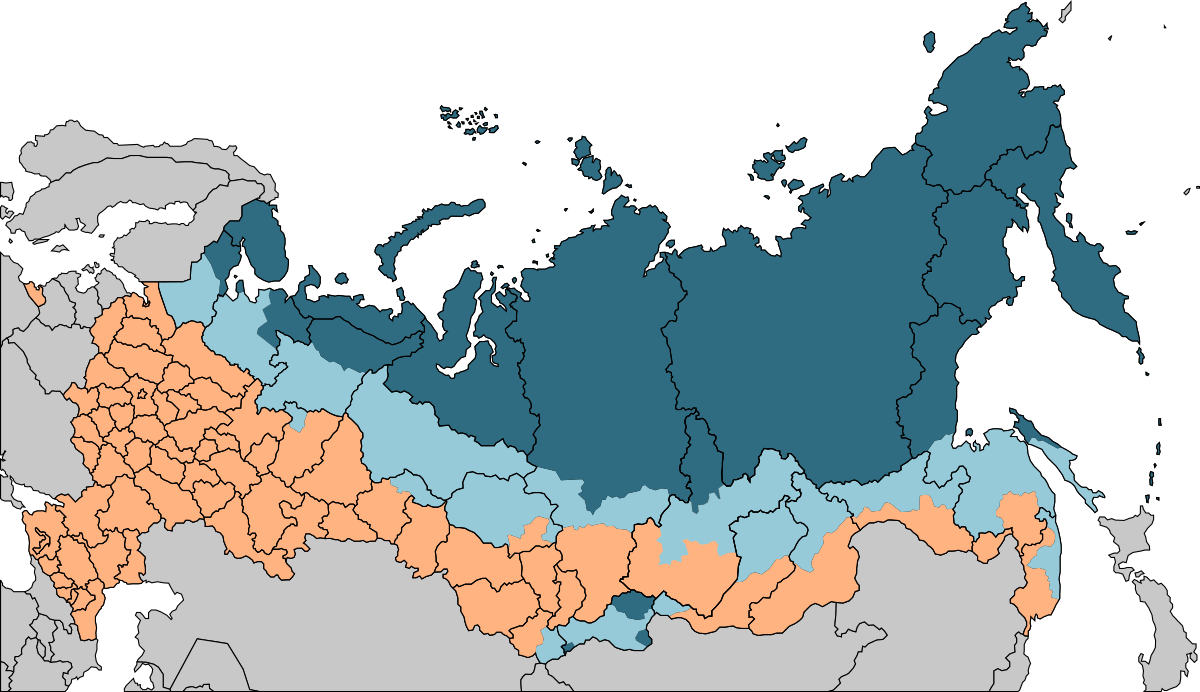
Far North
Area in RussiaWikipedia
245
MENTIONS
6
EPISODES
5
PODCASTS
Search complete. 245 mentions across 6 episodes found for "Far North".
Sep 20, 2026

Ken BerryHOST
Weston Price would go in and look at these indigenous cultures that ate either a moderate protein ketogenic diet or a very high protein ketogenic diet.
Ken BerryHOST
And then other explorers as well and medical researchers would go and look at Inuit tribes and tribes in Northern Russia and Northern Scandinavia.
Ken BerryHOST
These people ate nothing but fat and protein, and they never had a complaint of a kidney stone or of kidney failure or shown any signs of kidney disease whatsoever.
Ken BerryHOST
Many healthcare providers believe that eating a high protein diet or a diet rich in meat will cause you to have kidney stones.

Steve HankeGUEST
So that one performed very well.
Steve HankeGUEST
There's no problem even with the North Russian currency board.
Steve HankeGUEST
So you get to the question, well, if these things never fail and perform well, why did they get started getting rid of them after the Second World War?
Jon HartleyHOST
This is the Capitalism and Freedom in the 21st Century podcast, an official podcast of the Hoover Institution's Economic Policy Working Group, where we talk about economics, markets, and public policy.
19 MINS LATER
Steve HankeGUEST
And that's including the one that Keynes designed and put in in North Russia in 1918 during the Civil War.
Steve HankeGUEST
So that one performed very well.
Steve HankeGUEST
There's no problem even with the North Russian currency board.
Steve HankeGUEST
So you get to the question, well, if these things never fail and perform well, why did they start getting rid of them after the Second World War? And you have three reasons.

Pete QuiñonesHOST
The Kor- the Kornilov putsch is a clear example.
Pete QuiñonesHOST
Lavr Kornilov, a general in charge of an army group in Northern Russia, attempted to seize the then Petrograd, St. Petersburg, in order to establish a fighting regime that would prosecute the war.
Pete QuiñonesHOST
Had he succeeded, the city would perhaps have borne his name instead of Lenin, as it did until nineteen ninety-one.
Pete QuiñonesHOST
Liberation.
Matthew Raphael JohnsonGUEST
They liked, you know, liberal dissidents like, you know, Brodsky and, and people like that.
Matthew Raphael JohnsonGUEST
But here you have a man who won the Nobel Prize for Literature, as we all know, for The Gulag, uh, Archipelago, and he has written, 15 years ago now, um, something like that, 20, a book on, uh, Jews in Russian history, and it caused a tremendous stir.
Matthew Raphael JohnsonGUEST
It took ages to have it translated.
Matthew Raphael JohnsonGUEST
I've, I've been using this book for a long time.
Pete QuiñonesHOST
In this book, the presence of the Jews in Russia prior to 1772 will not be discussed in detail.
Pete QuiñonesHOST
However, for a few pages, we want to remember the older epochs.
Pete QuiñonesHOST
One could begin that the paths of Russians and Jews first crossed in the wars between the Kiev Rus' and the Khazars, but that isn't completely right, since only the upper class of the Khazars were of Hebraic descent, the tribe itself being a branch of the Turks that had accepted the Jewish faith.
Pete QuiñonesHOST
If one follows the presentation of J.D. Br- uh, I'm gonna need your help with some of the pronunciations on the names, 'cause I'm just terrible, um, o- on some of these, so, um, I believe it's J.D. Br-

speaker_1HOST
There is the formation and constitution of the Whites.
speaker_1HOST
Then there are the various battles in which the Red Army defeated the Whites in Siberia, Northern Russia, the Don and Volga regions, and Central Asia.
speaker_1HOST
We have the reintegration of Ukraine and Belarus into the Soviet sphere after the nullification of the Brest-Litovsk Treaty in November 1918, with a special look at the Soviets' dealings and relationship with the anarchist movement in Ukraine.
speaker_1HOST
Then, of course, we have to talk about the economic policies of war communism and its effects, the activities of the Cheka during this period, and the Red and White Terrors, which I know I said was going to be part of the pre-Civil War batch of episodes, but it made more sense to include the Terrors in the discussions of the Civil War, because without the war, there would not have been either Terror.

Lance GeigerNARRATOR
The 339th was immediately thrown into the fray when they arrived on September 4th to save lost American sailors somewhere in the wilderness.
Lance GeigerNARRATOR
Soon they were engaged with Bolsheviks and American soldiers were dying in the far north of Russia.
Lance GeigerNARRATOR
To make matters worse, a British officer had deposed the anti-Bolshevik sovereign government of northern Russia.
Lance GeigerNARRATOR
Though quickly reinstated, the locals became wary of the Allied forces.
Lance GeigerNARRATOR
Frederick Poole, the British commander of the theater, thought he would be able to seize Vologda easily, gathering an army of 100,000 white Russians, meet up with the Czechoslovakian Legion and sweep west to Moscow and Europe.
Lance GeigerNARRATOR
As November approached, news of German entreaties for a treaty to end the war in Europe reached the Northern Expedition.
Lance GeigerNARRATOR
And as early as October, French forces on the Western Front simply refused to fight, shouting that the war is over.
Lance GeigerNARRATOR
On November 11th, the same day that the armistice took hold in Europe, American forces were engaged in the bloody Battle of Tolgas in northern Russia.