Extract, load, transform
21
MENTIONS
9
EPISODES
8
PODCASTS
Search complete. 21 mentions across 9 episodes found for "Extract, load, transform".
Oct 28, 2026

Elizabeth ChristensenGUEST
We can just mirror your stuff to analytics.
Elizabeth ChristensenGUEST
I mean, and five years ago we were talking about, is it like ELT? Is it ETL? Where do we do the transforms? But it was like a given that you were going to pay a data engineer, that you were going to have a data engineering pipeline, that you were going to do some kind of transformation logic.
Elizabeth ChristensenGUEST
You were going to move this data somewhere.
Elizabeth ChristensenGUEST
And like,

Mirko PetersHOST
That whole chain from raw logs to a finished report is exactly the kind of job Azure Data Factory was built to run.
Mirko PetersHOST
You'll hear two acronyms in this space, ETL and ELT, and neither one should scare you.
Mirko PetersHOST
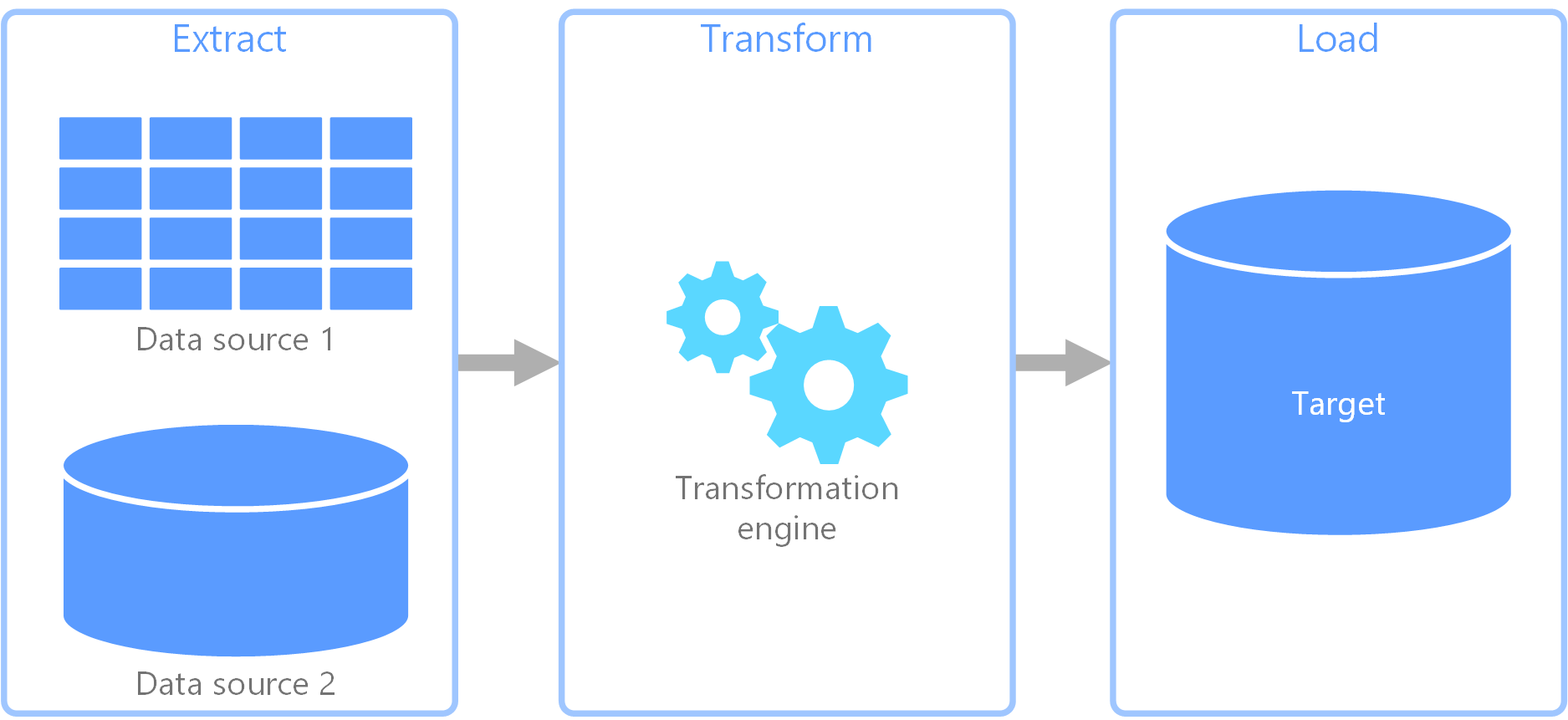
ETL stands for extract, transform, load, and it's really just the order of operations.
Mirko PetersHOST
Extract means grab the data, transform means clean and shape it, and load means put it where it needs to go.
Mirko PetersHOST
ELT does the same three things in a slightly different order.
Mirko PetersHOST
Once you've got the idea, the letters take care of themselves.
Mirko PetersHOST
The building blocks, pipelines and activities.
Mirko PetersHOST
Opening, the data is moving, but who is in control? Your sales file arrives at 7am, customer records update at 8, and the app data shows up whenever it feels like it, while someone on your team is opening spreadsheets, pressing refresh, fixing columns, and hoping the report tells the same story as yesterday.
Mirko PetersHOST
You might think ETL and ELT are coding terms for data engineers, but they're just two different ways to order the same data handling.
Mirko PetersHOST
The real tension here is who decides what happens first, what waits, and what happens when a step fails.
Mirko PetersHOST
Welcome to the M365FM podcast, where we explore the people, ideas, and technologies shaping the future of work.
Mirko PetersHOST
We're looking at fabric data pipelines, simply explained.
Mirko PetersHOST
from raw data at the source to data people can actually use.
Mirko PetersHOST
ETL and ELT, two routes for the same data.
Mirko PetersHOST
Imagine you run a chain of stores, and every morning each store sends yesterday's sales file that looks close enough but not quite the same.

JoannePANELIST
Many, many companies are using that.
JoannePANELIST
No ETL, no ELT.
JoannePANELIST
Let's use the data where it lives, so to speak.
JoannePANELIST
And then the third one is ignoring the organization's capacity to act on the intelligence.

Dmitrii PolovinkinHOST
So first thing, it's ETL versus LT.
Dmitrii PolovinkinHOST
Usually, medallion architecture approach is used when we have an ELT data processing.
Dmitrii PolovinkinHOST
ELT works in such a way that we firstly load all of our data and then we're doing the transformations like we're doing in a silver or gold layer.
Dmitrii PolovinkinHOST
So it's not an ETL, it's an ELT when we talk about medallion architecture.
Dmitrii PolovinkinHOST
Then, just a small example how those layers would work.
Dmitrii PolovinkinHOST
We have orders, let's say, in our database.

Christian BremeauGUEST
And that's basically how we got into that.
Tobias MaceyHOST
It's definitely a long history and metadata has gained a lot of visibility in recent years, particularly starting around 2018 when we had the fragmentation of the ecosystem away from a lot of the monolithic vertically integrated platforms like Informatica, et cetera, and into a lot of the cloud data warehouses, the introduction of tools like DBT and ELT workflows and a lot of the investment in the various open source components that caused the knowledge of the data estate to be fragmented across all of them.
Tobias MaceyHOST
And so then there was a push to try and stitch that back together through these various metadata systems.
Tobias MaceyHOST
And I'm wondering if you can talk through some of the key pieces of friction and fragmentation that exist in the data ecosystem in particular, and some of the ways that your long history maybe shows that everything old is new again, or maybe some of the new tensions that are arising up because of the proliferation of new tools and new systems.
10 MINS LATER
Christian BremeauGUEST
So first of all, there is another differentiator that I forgot to mention on the first part, which is how do you get the data lineage within each of those? And a lot of what we ask for is what we call data lineage by design.
Christian BremeauGUEST
So meaning that you have to prove where it comes from, from the design.
Christian BremeauGUEST
You can have an ETL tool, an ELT tool.
Christian BremeauGUEST
You can have a script.

James SerraGUEST
So I started building this deck.
James SerraGUEST
But then I found when I was talking about the architectures and I talk about things like data governance and cleaning the data and ELT versus ETL and mastering data and customers within, wait a minute, I don't know what those concepts are.
James SerraGUEST
So I would start explaining those concepts before they jumped into architecture.
James SerraGUEST
And I said, you know what? This would be good in the book.

Juan SequeiraHOST
And this will always ultimately believe that our dashboards are dead or something.
Juan SequeiraHOST
OK, so when it comes to the The main issue about dashboards, and I think going back to the modern data stack and just the analytics world, is that our goal as a community and where we live has been to pull data in, ETL, ELT, whatever, into my data warehouse, build my dashboards, and I am done.
Juan SequeiraHOST
Success.
Juan SequeiraHOST
And therefore, I want Power BI.

Juan SequedaHOST
Agents don't need them." Now, this will always ultimately be that our dashboards are dead ourselves.
Juan SequedaHOST
So, um, okay, so when it comes to the, the, the main issue about dashboards, and I think going back to, like, the modern data stack and, and just the analytics world, is that our goal as a community and a kind of a, and where we live in, has been to pull data in, ETL, ELT, whatever, into my data warehouse lake, so build my dashboards, and I am done.
Juan SequedaHOST
Success.
Juan SequedaHOST
And, and therefore, I want Power BI, I want this thing, I want...