Extended producer responsibility
344
MENTIONS
65
EPISODES
48
PODCASTS
Search complete. 344 mentions across 65 episodes found for "Extended producer responsibility".
Nov 3, 2026

Christine YeagerHOST
Alyssa Vettelson brings a master's from the University of Pennsylvania and a background in chemistry, materials engineering, and polymer physics to a company that makes both durable circular products and food packaging.
Christine YeagerHOST
Between them, they sit right on the fault line EPR is exposing.
Christine YeagerHOST
Recycled resin only matters if someone can design it into a product.
Christine YeagerHOST
And that product only matters if it performs.

Michael LeBlancHOST
Now, what I'm looking at is how retailers are going to start dealing with this.
Michael LeBlancHOST
And because I start to think, and I can throw buzzwords out here until the cows come home, EPR, extended producer responsibility that exists in canada and in many places for things like electronics so you have to pay a fee the retailer collects those fees the brands collect them then they give them back to the governments to do final end of life for electronics right so holt renfrew is doing something interesting so holt renfrew is a luxury department store not i don't know how would you compare them like a bird off goodman or
Andrew LipsmanGUEST
like a neiman marcus something like that more like neiman marcus
Michael LeBlancHOST
More like a Neiman Marcus.
Michael LeBlancHOST
So they've gotten into that.
Michael LeBlancHOST
But on the radar screen is if...
Michael LeBlancHOST
EPR, Extended Producer Responsibility, starts to take place for textiles.
Michael LeBlancHOST
Watch out.

Elisabeth SkodaHOST
And yeah, with me to do that, I have Alexander Reitz, who is Head of Consulting at PreZero Packaging.
Elisabeth SkodaHOST
And he will share tips and insights and discuss pitfalls to avoid from the unique perspective of a consultancy business that was in charge of building the largest EPR system in Germany.
Elisabeth SkodaHOST
also is a sister company to Lidl and Kaufland, major retailers in Germany, in case you're not familiar with those.
Elisabeth SkodaHOST
So yeah, welcome, Alexander.
Alexander ReitzGUEST
Some want their packaging data in order.
Alexander ReitzGUEST
Some want their portfolio redesigned.
Alexander ReitzGUEST
Some want their EPR costs to stop climbing.
Alexander ReitzGUEST
I think what ties it together is that we are advising on infrastructure and supply chains that we also actively run ourselves within PreZero or Schwartz Group.

Bonnie EstesHOST
And it's putting a lot of pressure on packaging decisions and for a lot of produce companies operating in multiple markets.
Bonnie EstesHOST
So PPWR, is now moving from policy into implementation while the US states are going crazy building different EPR systems.
Bonnie EstesHOST
What changes are your customers actually making today because of these regulations? Not five years from now, but right now they're having to make changes.
Bonnie EstesHOST
What are you seeing?
Chad HarrisonGUEST
point? Not an expert, not a lawyer.
Chad HarrisonGUEST
So I'm just capable of reading what I have available to me and also participating in the working group with the RPA for policy.
Chad HarrisonGUEST
I would say that PPWR is a little bit more focused on design of the package itself, whereas EPR here in the States and in Canada is more about responsibility and reporting.
Chad HarrisonGUEST
Both of them consider end of life, but PPWR seems a little bit more concerned with, can we design for less waste? And EPR is more about who is going to be responsible for bearing the cost of all of this waste.

Max PattenHOST
So when it comes to direct sales, or in general, what scouts bring to market between EVs and EREVs, what are some of the trends that you guys have seen, maybe both amongst yourselves and some of your colleagues in the industry?
Shannon FenderGUEST
Yeah, I think separate from direct sales, we are seeing a trend towards EV battery EPR.
Shannon FenderGUEST
EPR stands for extended producer responsibility.
Shannon FenderGUEST
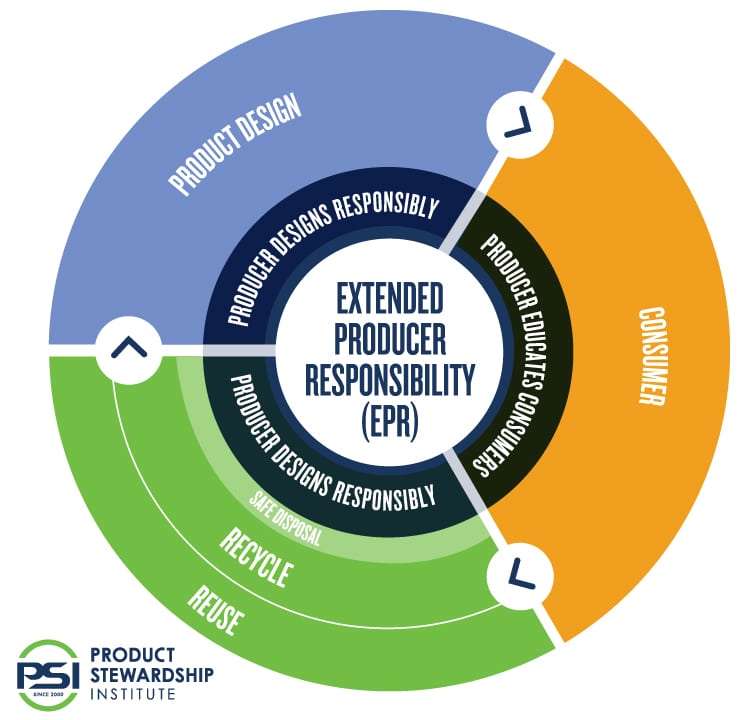
And basically, this is the idea that producers need to be responsible for the end of life of their products.
Shannon FenderGUEST
We've seen this in other industries, packaging, individual use batteries, paint, carpet mattresses, basically making sure that consumer products have a place to go.
Shannon FenderGUEST
They don't just get thrown away necessarily at the end of their lives.
Shannon FenderGUEST
In Colorado, actually, another first mover here enacted battery EPR, EV battery EPR law this year that you really saw industry largely get behind EPR.
Shannon FenderGUEST
Some reasons for that, I think, first of all, we recognize that EV batteries have precious materials that should be recaptured.

Adam RappGUEST
But then the industry has also started to choose lighter weight to begin with.
Adam RappGUEST
Just because we have these EPR laws, we have the reality of just shipping is getting expensive.
Adam RappGUEST
So it's not a difficult thing to get them to change bottles because they're thinking about changing already.
Adam RappGUEST
The difficulty is getting them to think differently about their responsibility for the packaging that they choose and leverage the opportunities that come with reuse.
ColeHOST
And what would you like listeners to take away from your talk tomorrow? And what do you see as a future for your company and reusable systems? You talked about the deposit reuse system, maybe opening the door to other formats.
Adam RappGUEST
I hope so.
Adam RappGUEST
Right now, policy does treat EPR materials and bottle build materials very separate.
Adam RappGUEST
And I think that is a lost opportunity, especially as we're looking at meeting EPR targets, mandated reuse targets through EPR models, source reduction targets through reuse, where these other systems, we know how they operate.

Ryan FogelmanGUEST
All they find is more cheaper-made regular vapes.
Ryan FogelmanGUEST
So to me, again, EPR needs to focus on training, technology, and education.
Ryan FogelmanGUEST
And that is where it gets into the book, right? So I appreciate it.
Ryan FogelmanGUEST
Hopefully that was a...
Ryan FogelmanGUEST
So, but like every dollar goes to buy more books and get them into kids' hands.
Ryan FogelmanGUEST
So, you know, we have municipalities that have gotten funding.
Ryan FogelmanGUEST
I've talked to a number of states that have worked on EPR that have, are trying to get it as part of their education solution.
Ryan FogelmanGUEST
And a lot of the, um, I mean, we've just had so much, um, positive, um, And I think everyone's really saying the same thing.

Justin RineyHOST
So I'm really, really excited about what you're talking about here because these proof points are how we grow this and how we get bigger.
Justin RineyHOST
So from PureCycle's perspective, how do you look at things like EPR? And do you feel like you are going to be able to get a benefit in growth for your technology through that?
Christian BrueyGUEST
I believe if it's done the right way, right? That's always the key.
Christian BrueyGUEST
And that's a big
Christian BrueyGUEST
So we believe there should be more of that out there because there is a difference in price because what goes into turning recycled content into food contact packaging, it's extensive.
Christian BrueyGUEST
So- The mandates help with that.
Christian BrueyGUEST
I think the EPR legislation can help with that, right? There are going to be PCR bonuses in California.
Christian BrueyGUEST
Okay.
Sean RileyHOST
So we were talking at Pack Expo.
Sean RileyHOST
And again, we're going to hit on EPR because it seems like we talk about it all the time, but it's a topic that's up in the news.
Sean RileyHOST
So it makes sense that we would talk about it a lot.
Sean RileyHOST
And Like I said, he deals with a lot of bigger brands that he didn't really mention by name, but he has a reputation that kind of speaks for himself.
Sean RileyHOST
And we went off on a bit of a sidebar when we were talking about EPR and how are these big brands adapting to having to create different packages for the different states that are going to have different EPR rules and different legislation that's going to come in, especially with different deadlines.
Sean RileyHOST
It's not like it's all going to hit immediately.
Sean RileyHOST
November 1st, all of our rules are going to go into place.
Matt ReynoldsHOST
There's no question that brands will be in compliance for the most part with all of these state rules and regulations.

Ryan FogelmanGUEST
So I just left electronic scrap and I was with someone from the EPA.
Ryan FogelmanGUEST
And again, these are the issues right now that we're seeing with like EPR and all the things that we're trying to solve this problem by.
Ryan FogelmanGUEST
And again, this is where it's education, operational best practice, and then the technology.
Ryan FogelmanGUEST
Technology is going to catch up and like we need to have places to drop these off as the public.
Eric ProvostHOST
Yeah.
Eric ProvostHOST
And you talk about EPR is going to produce responsibility.
Eric ProvostHOST
There's going to be a lot of conversations that are going to need to be that are going to need to be had.
Eric ProvostHOST
And especially when it comes to what you were just talking about, like the hazmat considerations and trying to make sure that the batteries are get to where they need to be.
55 more episodes mention Extended producer responsibility.
Create an account to see the whole feed, search across every transcript, and follow the entities you care about.