expressive aphasia
InjuryWikipedia
14
MENTIONS
5
EPISODES
5
PODCASTS
Search complete. 14 mentions across 5 episodes found for "expressive aphasia".
Oct 2, 2026

Ian SchulteGUEST
Um, so I figured you might, uh, write a question about it.
Ian SchulteGUEST
I think the region that you're talking about is something along the line of Broca's region.
Ian SchulteGUEST
I might be mispronouncing that, not sure.
Ian SchulteGUEST
Uh, but that, that's what we locked in with is Broca's region.
Ian SchulteGUEST
Um, I hope you'll be generous on pronunciation.
Ian SchulteGUEST
And as far as, uh, wagers, we went three and three.
Tim DippelHOST
Locking in with the LFO, the great Larry Bird, jersey 33.
Tim DippelHOST
Um, and Broca's region.

speaker_0HOST
So when you think of Broca, think of Broca equals broken speech.
speaker_0HOST
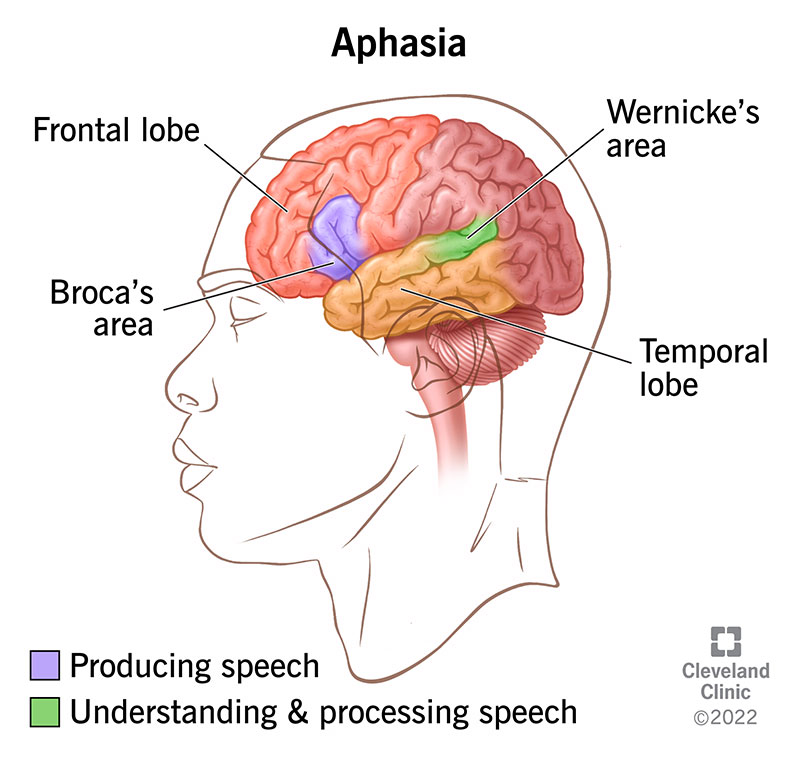
A person with Broca's aphasia generally understands much of what other people are saying, but has difficulty producing fluent speech.
speaker_0HOST
So they understand it, but can't produce fluent speech.
speaker_0HOST
Their speech may be slow, effortful, and abbreviated.
speaker_0HOST
Instead of saying, I went to the grocery store this morning to buy some milk, they might say morning store milk.
speaker_0HOST
The meaning is there, but producing the language is difficult.
speaker_0HOST
This is why Broca's aphasia is often called expressive aphasia or non-fluent aphasia.
speaker_0HOST
Patients are also frequently aware that something is wrong with their speech, which can produce considerable frustration.

Hank GreenHOST
Maybe they can sing but barely speak, or write but not read.
Hank GreenHOST
The region of the brain known as Broca's area in the left frontal lobe is involved with the production of speech.
Hank GreenHOST
If I suffered a trauma to this area, I might still comprehend speech, but struggle to speak.
Hank GreenHOST
Although, I might still be able to sing, because that's conducted elsewhere in the brain.

Brandon FieldingGUEST
So we end up doing and saying things out of reaction instead of slowing down and doing it in action.
Brandon FieldingGUEST
Something as well that's important for people to understand is the Broca's area, the part of the brain, it's like the temple area.
Brandon FieldingGUEST
It's the language part of your brain.
Brandon FieldingGUEST
When the prefrontal cortex turns off and the limbic system takes over, that Broca's area also disengages.
Brandon FieldingGUEST
It's when we say stupid stuff.
Brandon FieldingGUEST
We link social situations to survival because we're humans.

speaker_2HOST
Since 1907, there have only been about a hundred confirmed cases.
speaker_2HOST
That being said, one theory is that neurogenic FAS is caused by some sort of malfunction within the Broca's area, which is, along with the Wernicke's area, one of the two areas of the brain that help formulate speech.
speaker_2HOST
For example, The sound tree and the concept of the word is stored in the Wernicke's area, and that information is transferred to the Brocke's area, where the physical process of pronouncing the sounds in tree are stored.
speaker_2HOST
That information is then passed onto your lips and tongue to finally come out of your mouth as a full-fledged word.
speaker_2HOST
In the case of Neurogenic FAS, the concept of language stored in Wernicke's area is intact, but the motor programs in Broca's area have been damaged and, therefore, language comes out slanted.
speaker_5HOST
What the hell was that? It's French.
speaker_7SOUNDBITE_SPEAKER
Yeah, sounds made up.